
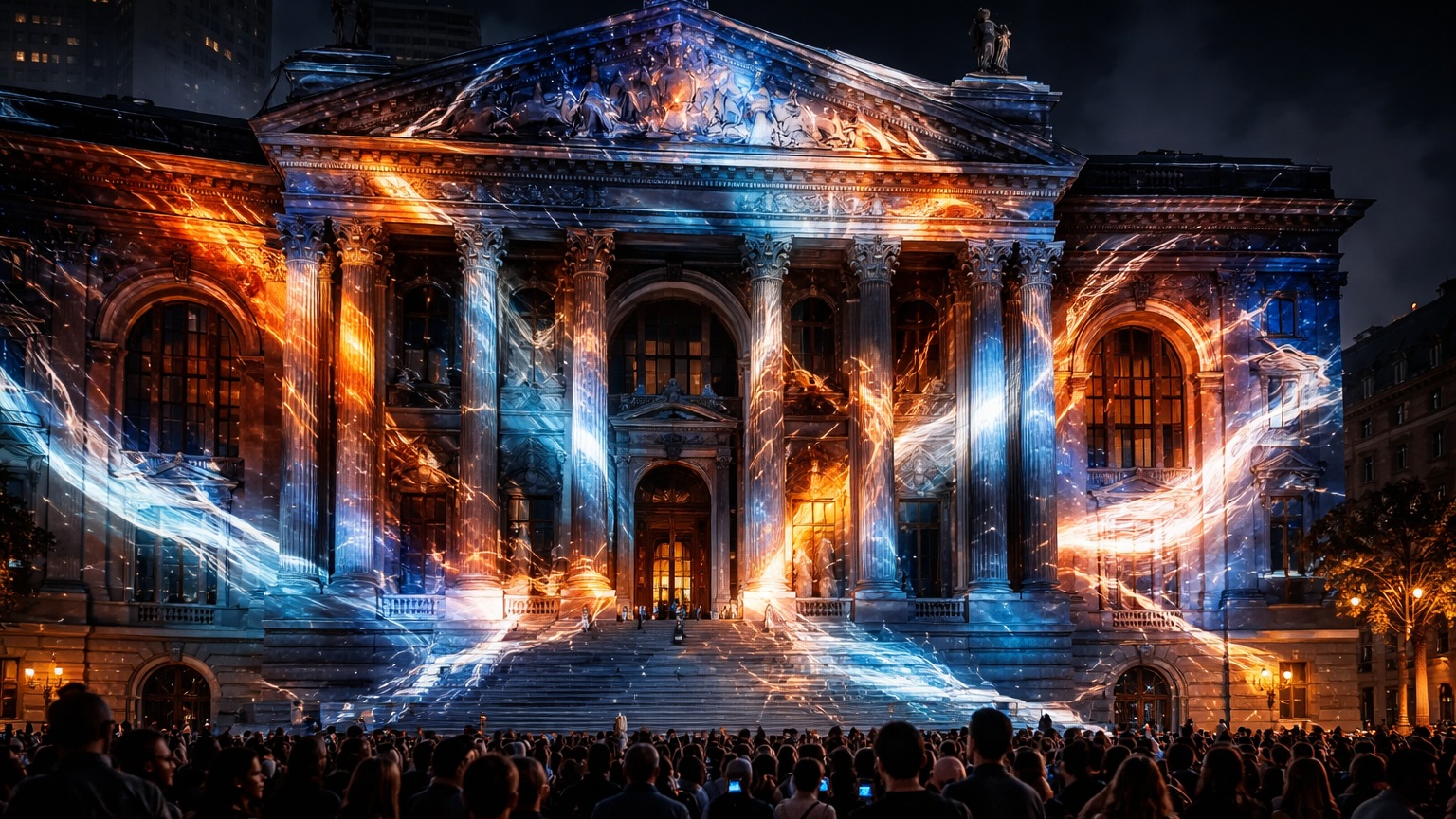
Projection Mapping on Theme Street is where imagination breaks free from flat surfaces and turns architecture, objects, and environments into living, moving stories. This sub-category explores the art and science of transforming walls, facades, stages, sculptures, and immersive spaces into dynamic visual canvases that respond to light, motion, and narrative. Projection mapping blends design, technology, storytelling, and spatial awareness, allowing creators to reshape reality without physically altering a space. From large-scale building takeovers and themed attractions to intimate installations and experiential retail, projection mapping has become a cornerstone of modern immersive design. Here, you’ll discover articles that dive into creative concepts, technical foundations, mapping techniques, software workflows, lighting considerations, and real-world applications across themed entertainment, events, museums, and brand experiences. Whether you’re a designer, fabricator, technologist, or creative director, this section is designed to spark ideas and deepen understanding. Projection mapping is not just about visuals—it’s about choreography between space, sound, light, and story. On Theme Street, we explore how projected light can guide emotion, enhance atmosphere, and turn ordinary environments into unforgettable experiences.
A: It’s non-destructive and fully reversible.
A: Yes, with high-lumen projectors and controlled lighting.
A: No—complex 3D shapes are ideal.
A: From hours to weeks, depending on scale.
A: Easily—without changing physical construction.
A: When engineered properly, it’s highly reliable.
A: No—it enhances and extends it.
A: Yes, with sensors or real-time inputs.
A: Modern laser projectors are very efficient.
A: It delivers dynamic storytelling without physical wear.