
Sound is one of the most powerful — yet often invisible — storytellers in any themed world. In Soundscapes and Sensory Design, imagination is not just seen, it is felt. From the gentle hum of bioluminescent forests to the echoing nostalgia of a vintage train station, sound has the power to guide mood, sculpt atmosphere, and fully transport guests beyond reality. This sub-category explores how orchestrated audio, spatial acoustics, ambient layers, and even sonic illusions work together to create emotional immersion — the kind that makes people forget the world they came from. Whether it’s a whispering underwater realm, a futuristic AI metropolis alive with data pulses, or a cozy fantasy tavern crackling with laughter and fire — sound is the heartbeat behind the illusion. Here, we uncover how audio meets psychology, technology, and storytelling to shape entire experiences without a single word spoken. Step into the art of designing what you hear, and discover how sound becomes memory, movement, and pure magic.
A: It’s an intentional auditory layer crafted to enhance storytelling and immersion.
A: Yes—tempo and rhythm can subtly affect walking speed and time perception.
A: Directional or parabolic speakers allow tight control in open spaces.
A: Increasingly—floor vibrations and rumble seats add a visceral sensory layer.
A: Use acoustic baffling, smart zoning, and fade layers for sonic separation.
A: Yes—especially in headset-based or intimate guided experiences.
A: Typically 3–5 minutes to avoid listener fatigue or repetition detection.
A: Use lossless or high-bitrate compressed files (WAV, FLAC, or 320kbps MP3).
A: Absolutely—tools like AIVA, Endel, and Soundraw are revolutionizing themed audio.
A: Yes—music and branded sound cues impact browsing, emotions, and purchasing behavior.

Immersive Soundscapes: How Audio Shapes Emotional Experience in Themed Spaces
The Invisible Architecture of Emotion When people step into a beautifully designed themed environment—a theme park land, a museum exhibit, an immersive theater production, or a carefully crafted retail experience—they often notice the visuals first. Towering facades, glowing lights, moving characters, and elaborate scenery dominate attention. Yet what truly transforms these spaces from mere environments into living worlds is something less obvious: sound. Immersive soundscapes act as the invisible architecture
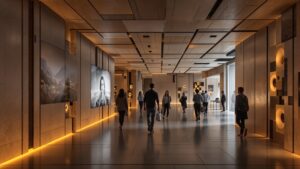
How Sensory Design Transforms Theme Parks, Museums, and Attractions
Step inside the world of sensory design where lighting, sound, scent, motion, and texture combine to transform ordinary spaces into unforgettable experiences. From immersive theme parks to cutting-edge museums, discover how designers craft environments that engage every sense and turn visitors into participants in the story.

The Psychology of Soundscapes in Experiential Design
Sound is more than background noise—it’s the invisible force shaping how we feel inside a space. From whispering forests to futuristic city hums, discover how soundscapes guide emotion, deepen immersion, and transform environments into unforgettable experiences.
