
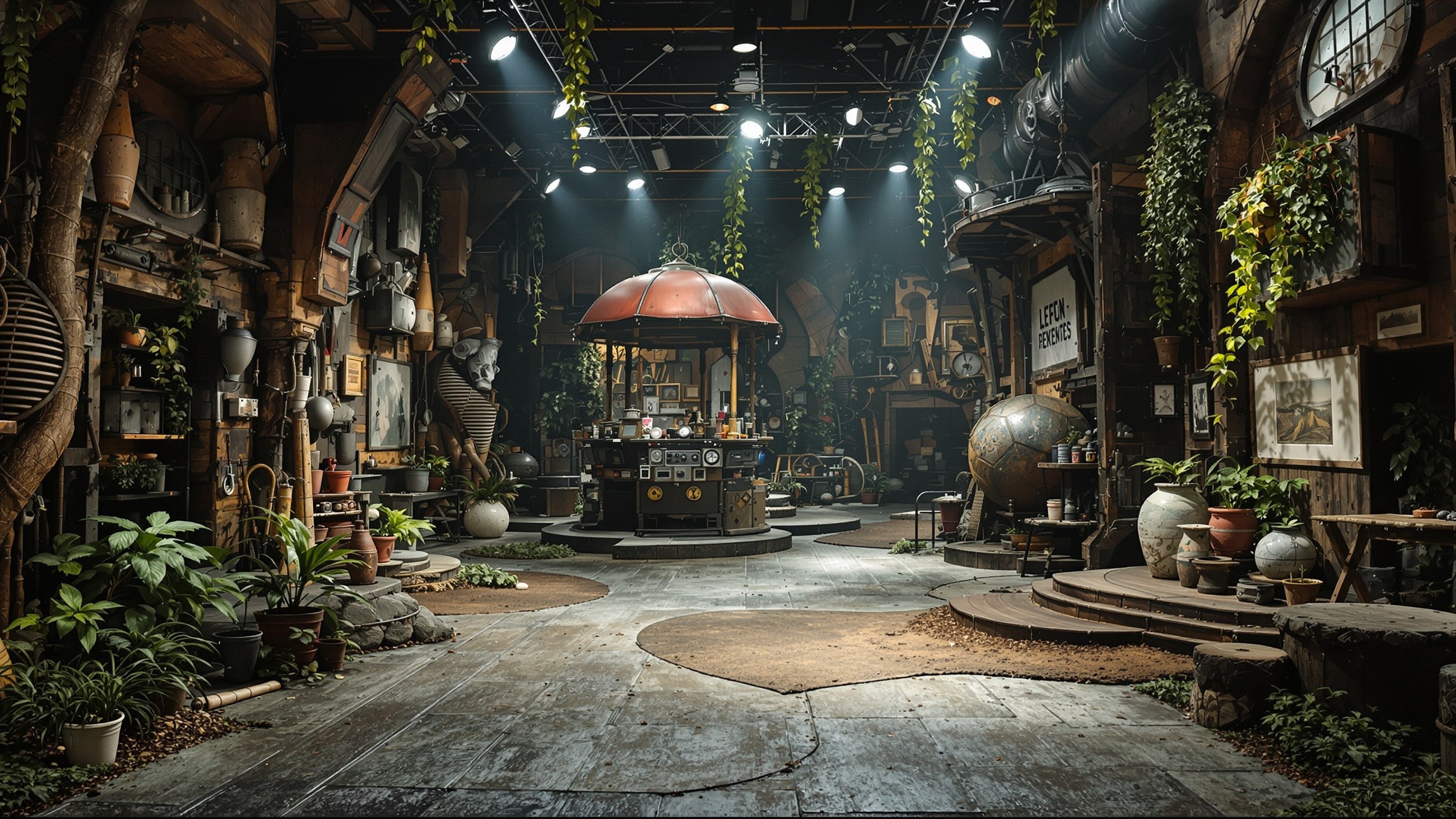
Recycled and Upcycled Props celebrate the art of transformation, where discarded materials are reborn as imaginative, story-driven elements that elevate themed environments while reducing environmental impact. Within Props and Set Design, this subcategory explores how creators repurpose everyday objects, industrial scraps, reclaimed wood, plastics, metals, and fabrics into visually striking props that feel intentional, authentic, and rich with character. From theme parks and immersive attractions to film sets, exhibitions, and experiential retail spaces, upcycled props offer a powerful blend of sustainability, creativity, and craftsmanship. These designs often carry visible history—scratches, textures, patina, and imperfections that add depth and realism impossible to replicate with new materials. Beyond aesthetics, recycled props support eco-conscious production practices, budget efficiency, and innovative problem-solving, making them increasingly valuable in modern set design. This section dives into techniques, materials, design strategies, and real-world applications, showcasing how sustainability and storytelling intersect. Whether used as subtle background elements or iconic focal pieces, recycled and upcycled props prove that responsible design can still deliver bold visuals, immersive atmosphere, and unforgettable experiences.
A: Yes, when properly reinforced, sealed, and fire-treated.
A: Materials may be cheaper, but labor and design time can increase.
A: Yes, with appropriate coatings and structural protection.
A: Often yes, especially when built modularly.
A: Frequently—and usually in a positive way.
A: Industrial, rustic, fantasy ruins, and eco-future worlds.
A: Not necessarily; many are skinned over lightweight frames.
A: Often yes for safety, sustainability, or educational goals.
A: Absolutely—many brands highlight sustainability.
A: Extremely well due to texture and depth.