Apartment Industrial Style Works Best When It Feels Edited
Urban industrial decor can make an apartment feel confident, textured, and grown-up, but the apartment version needs more restraint than a full warehouse loft. Small rooms cannot absorb endless concrete finishes, oversized metal furniture, dark walls, and heavy leather all at once. The refined version starts with one strong raw element, then balances it with warm wood, soft fabric, good lighting, storage that actually works, and enough open space for the room to breathe. The goal is not to make the apartment look unfinished; it is to make everyday pieces feel sturdy, honest, and intentional.
A: Yes. Furniture, lamps, mirrors, rugs, shelves, and plug-in lighting can create the style without renovation.
A: Choose one anchor piece that changes the room immediately, such as a leather sofa, black mirror, or metal bookcase.
A: Balance metal and concrete tones with wool, linen, warm bulbs, leather, wood, and a few lighter surfaces.
A: Only if it looks convincing up close. A better option is often art, lighting, or furniture with stronger material quality.
A: Warm white, charcoal, tobacco, rust, olive, black, cream, and natural wood tones are easiest to combine.
A: Yes, but keep the bedding soft and use metal details in lamps, hardware, or nightstands rather than everywhere.
A: Keep shelves partly empty so storage looks edited instead of crowded.
A: Layer a floor lamp, table lamp, and plug-in sconce with warm bulbs or dimmable settings.
A: Hide cords, limit fake distressing, choose fewer stronger pieces, and keep surfaces organized.
A: Too much black metal, cold overhead light, bulky furniture, and not enough comfortable texture.
Start With One Raw Element, Not a Whole Theme
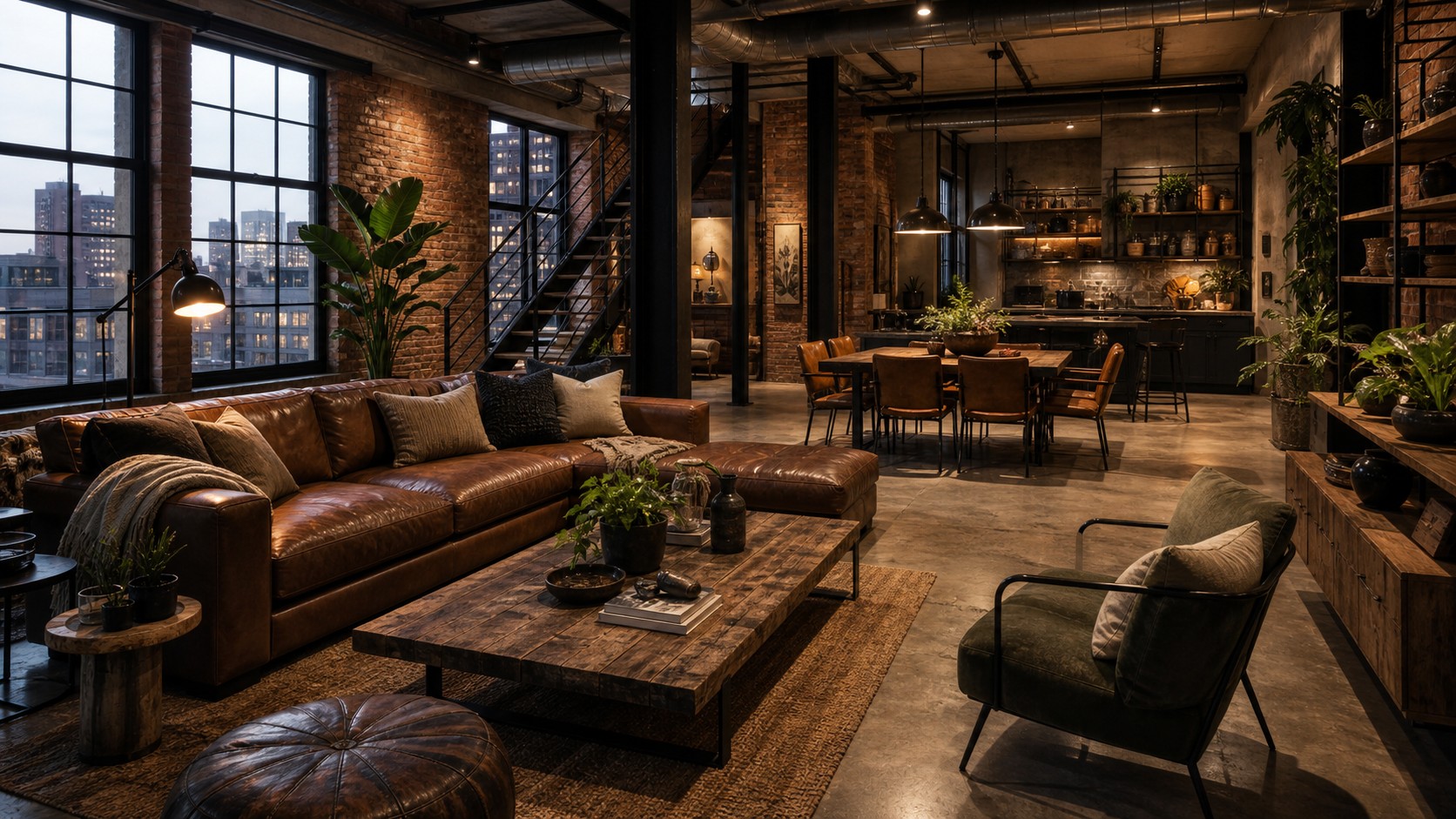
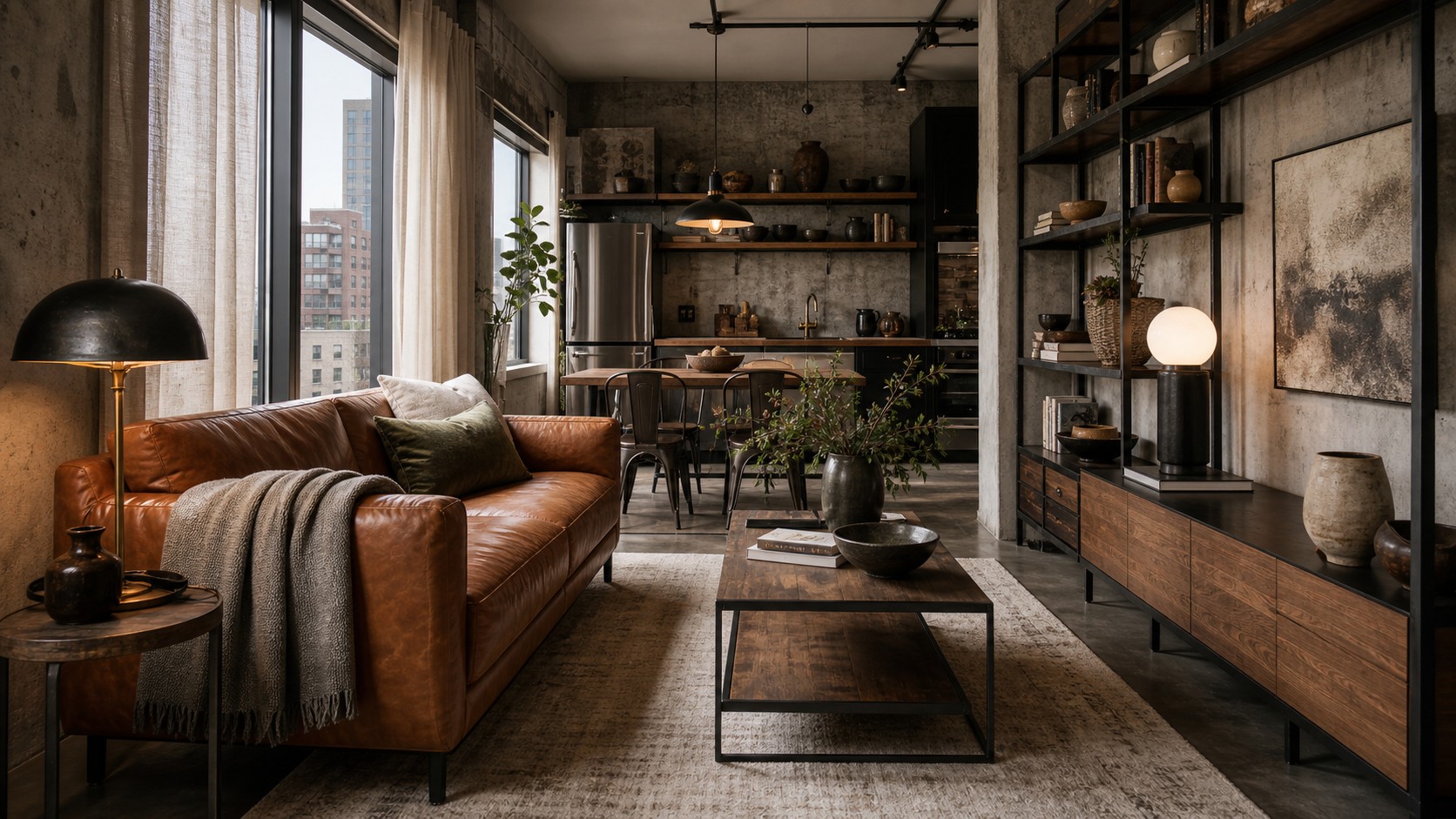
The easiest mistake with industrial apartment decor is trying to add every recognizable industrial material in the same room. Brick, concrete, black metal, pipe shelving, leather, exposed bulbs, reclaimed wood, and distressed finishes can quickly become too much in a compact living space. A better approach is to choose one raw element that will lead the room. That might be a concrete-look coffee table, a black metal shelving unit, a leather sofa, a large factory-style lamp, a wood dining table, or a framed mirror that adds a loft-like edge.
Once that anchor is in place, the other choices should support it rather than compete with it. If the sofa is dark leather, the room may need a pale rug, warm side table, and softer curtains. If the main piece is a metal bookcase, the shelves should include books, ceramics, baskets, and a few warm wood objects instead of more black metal. Industrial style feels refined when the raw piece is allowed to matter.
Keep the Apartment Scale in Mind
Industrial design often comes from large spaces with high ceilings, wide windows, and durable commercial materials. Apartments usually have tighter walkways, lower ceilings, shared walls, and fewer architectural features. That means scale matters from the first purchase. A huge pipe-frame coffee table or oversized factory pendant may look impressive by itself, but it can make a small room feel cramped if it blocks movement or visually lowers the ceiling.
Choose pieces that suggest industrial structure without swallowing the layout. Slim black legs, open shelving frames, narrow sconces, compact leather seating, and small concrete accents are easier to use than bulky furniture with heavy frames. A refined apartment should still feel easy to cross, clean, and live in. If the room starts to feel like a storage space, reduce the weight of the furniture before adding more decor.
Use Metal as a Line
Metal is one of the clearest industrial signals, but in an apartment it works best as a line rather than a mass. A black mirror frame, table base, lamp arm, curtain rod, cabinet pull, or shelving outline can sharpen the room without making it cold. These thinner details create rhythm, especially when they repeat two or three times across the space. They also make the room feel more architectural even when the apartment itself is plain.
Be careful with heavy pipe furniture or too many cage-style fixtures. Those pieces can become distracting when the room does not have real warehouse architecture around them. Matte black, blackened steel, aged bronze, and a little antique brass usually feel more refined than shiny finishes. The room should look structured, not armored.
Warm the Room With Wood and Leather
Raw industrial materials need warmth close by. Wood and leather are especially useful because they still feel durable, but they bring a more human temperature into the room. A warm oak table, walnut sideboard, tobacco leather chair, or worn leather ottoman can soften black metal and concrete tones without breaking the style. The best pieces look like they can age well instead of looking artificially distressed.
Wood tone should be chosen with the apartment’s light in mind. Dark reclaimed wood can look rich in a bright room, but it may make a small shaded apartment feel heavy. Oak, ash, and medium walnut are easier to use in tighter spaces. Leather has a similar range. Deep brown and cognac feel classic, while black leather needs more cream, linen, or warm wood nearby so the room does not become too severe.
Let Textiles Do More Than Decorate
Textiles are what keep an industrial apartment from feeling harsh. A large rug reduces echo, softens hard flooring, and visually gathers the seating area. Curtains make windows feel finished and help balance metal frames or exposed blinds. Pillows and throws can add texture, but they should not look like decorative filler. In a refined industrial room, fabric should solve a comfort problem as well as a visual one.
Choose textiles with substance rather than busy patterns. Wool, cotton canvas, linen blends, boucle, washed cotton, and heavy knit throws all work well. Cream, charcoal, rust, olive, tobacco, and warm gray can support the industrial palette without making the room feel flat. A few soft surfaces near the sofa and bed will do more for the apartment than another metal object on a shelf.
Make Lighting Feel Intentional
Lighting can transform an apartment faster than almost any other detail. Many rentals rely on one overhead fixture, which can flatten the room and make concrete, metal, and dark furniture feel harsh. Industrial decor needs light at different heights. A floor lamp near the sofa, a table lamp on a sideboard, a plug-in sconce by the bed, and a pendant over a dining table can make the apartment feel layered and deliberate.
Warm bulbs are important. Cool white light often makes industrial materials feel too commercial, especially at night. Look for shaded metal lamps, arm sconces, glass pendants, or simple factory-inspired fixtures with dimmable bulbs. Exposed bulbs can work, but they should be comfortable to sit near. If a fixture looks good but creates glare, it will make the room less refined in daily life.
Turn Storage Into Part of the Style
Apartment storage cannot be treated as an afterthought. Industrial decor works well with storage because the style already welcomes shelves, lockers, trunks, rails, and sturdy cabinets. The key is making those pieces look edited rather than temporary. A metal-and-wood bookcase, slim locker-style cabinet, wall rail, or storage coffee table can support the look while keeping everyday items contained.
Open shelves need discipline. They should not become a place for every small object in the apartment. Mix useful items with a few styled pieces: books, baskets, ceramics, plants, a lamp, and empty space. Closed bins and cabinet doors matter because they hide the things that do not add to the room. A raw yet refined apartment feels organized without looking sterile.
Use Concrete and Brick Carefully
Concrete and brick can give an apartment instant industrial atmosphere, but they are also easy to fake badly. If the apartment already has real brick, let it breathe. Avoid covering it with too many shelves, signs, or small framed pieces. If the brick is not real, be selective. A convincing concrete-look table, planter, lamp base, or fireplace surround often looks better than a large wall treatment that repeats visibly.
These materials also need balance. Brick can bring warmth, while concrete usually needs help from rugs, wood, fabric, and warm light. A room with concrete tones everywhere may photograph dramatically but feel cold in person. Use raw surfaces where they make sense, then let softer materials make the apartment livable.
Give the Entry a Practical Industrial Moment
The entry is a useful place to introduce industrial apartment decor because it can handle sturdier materials without taking over the living room. A narrow metal console, black wall hooks, a wood bench, a simple mirror, or a durable mat can create the first note of the style as soon as someone walks in. The entry also gives raw materials a job: holding keys, bags, coats, shoes, and mail.
Keep this area especially edited. Small apartments often reveal the entry from the main room, so clutter there affects the whole space. A closed basket, tray, or slim cabinet can make the industrial details feel intentional instead of busy. When the entry is useful and clean, the rest of the apartment feels more refined before any decorative layer is added.
Keep the Palette Tight but Not Flat
A refined industrial apartment usually works best with a controlled palette. Black, charcoal, warm white, tobacco, rust, olive, natural wood, and concrete gray are reliable starting points. The palette should feel cohesive, but it should not be one-note. If everything is black and gray, the room can feel heavy. If every object is warm brown, the industrial edge may disappear.
Use contrast in measured ways. A black metal lamp against a cream wall, a cognac leather chair on a charcoal rug, or a pale linen curtain beside a dark bookcase can create tension without visual noise. Repeating each major color two or three times helps the apartment feel intentional. Random accents tend to make small spaces look busy.
Edit Out the Obvious Props
Industrial decor can slip into costume when every accessory announces the theme. Fake gears, novelty signs, decorative pipes, and objects that look distressed only because they were manufactured that way often make the apartment feel less sophisticated. The more obvious the prop, the less convincing the room becomes. Strong materials are better than themed accessories.
Choose objects that would still make sense without the label industrial. A ceramic bowl, old book, heavy tray, framed photograph, useful lamp, woven basket, or sculptural plant can support the room without shouting. The apartment should feel collected over time, not assembled from a single display aisle.
Make the Bedroom Softer Than the Living Room
An industrial bedroom should carry the same mood in a quieter way. A black metal bed frame, wood nightstands, linen bedding, warm lamps, and a simple rug can give the room structure without making it feel hard. Bedrooms need softness first. If the room feels too severe, it will not be restful, no matter how consistent the style looks.
Use industrial details where they support function. Plug-in sconces can free up nightstand space. A bench with metal legs can hold blankets or shoes. A wood dresser with simple black hardware can connect to the rest of the apartment. Keep bedding layered and comfortable so the raw elements feel intentional rather than cold.
Refine the Final Layer
The final layer is where the apartment either becomes polished or starts to feel crowded. Step back and look for repeated materials, blocked pathways, tangled cords, and surfaces that collect too many small objects. Industrial style looks best when the room has a little spare space. Empty wall, visible floor, and clear tabletops can be just as important as the pieces you add.
A raw yet refined apartment should feel durable, warm, and easy to use. The materials can be rugged, but the arrangement should be thoughtful. When the lighting is warm, the storage is controlled, the seating is comfortable, and the raw elements have room to stand out, the apartment gains the industrial character you want without losing comfort or sophistication.