Urban Industrial Design Transforms a Room Through Contrast
Urban industrial interior design works because it lets raw materials and comfortable living meet in the same space. Brick, concrete, steel, glass, leather, reclaimed wood, visible lighting, and open structure can make a modern room feel grounded and memorable, but only when those elements are balanced with warmth. The best industrial rooms do not look unfinished. They look edited, durable, and intentional, with enough softness for daily life and enough architectural edge to make the space feel transformed.
A: No. Concrete, steel, black-framed glass, reclaimed wood, or strong lighting can carry the style.
A: Add one raw architectural feature, then support it with warmer materials and sharper lighting.
A: Yes. Rust, olive, tobacco, navy, cream, and deep red can all work when the base materials stay strong.
A: Clear editing, good scale, comfortable seating, warm light, and materials that look honest up close.
A: No. One authentic piece can help, but too many props make the room feel themed.
A: Use rugs, curtains, upholstered furniture, books, wall textiles, and layered seating.
A: Blackened steel is classic, while aged brass or bronze can add warmth in smaller doses.
A: Usually, but deep muted color can work if the room has enough light and texture.
A: Look for large-scale pieces, photography, textured work, or simple forms that do not compete with the architecture.
A: Remove weak faux-industrial accessories and let the strongest raw feature breathe.
Find the Room’s Real Industrial Strength
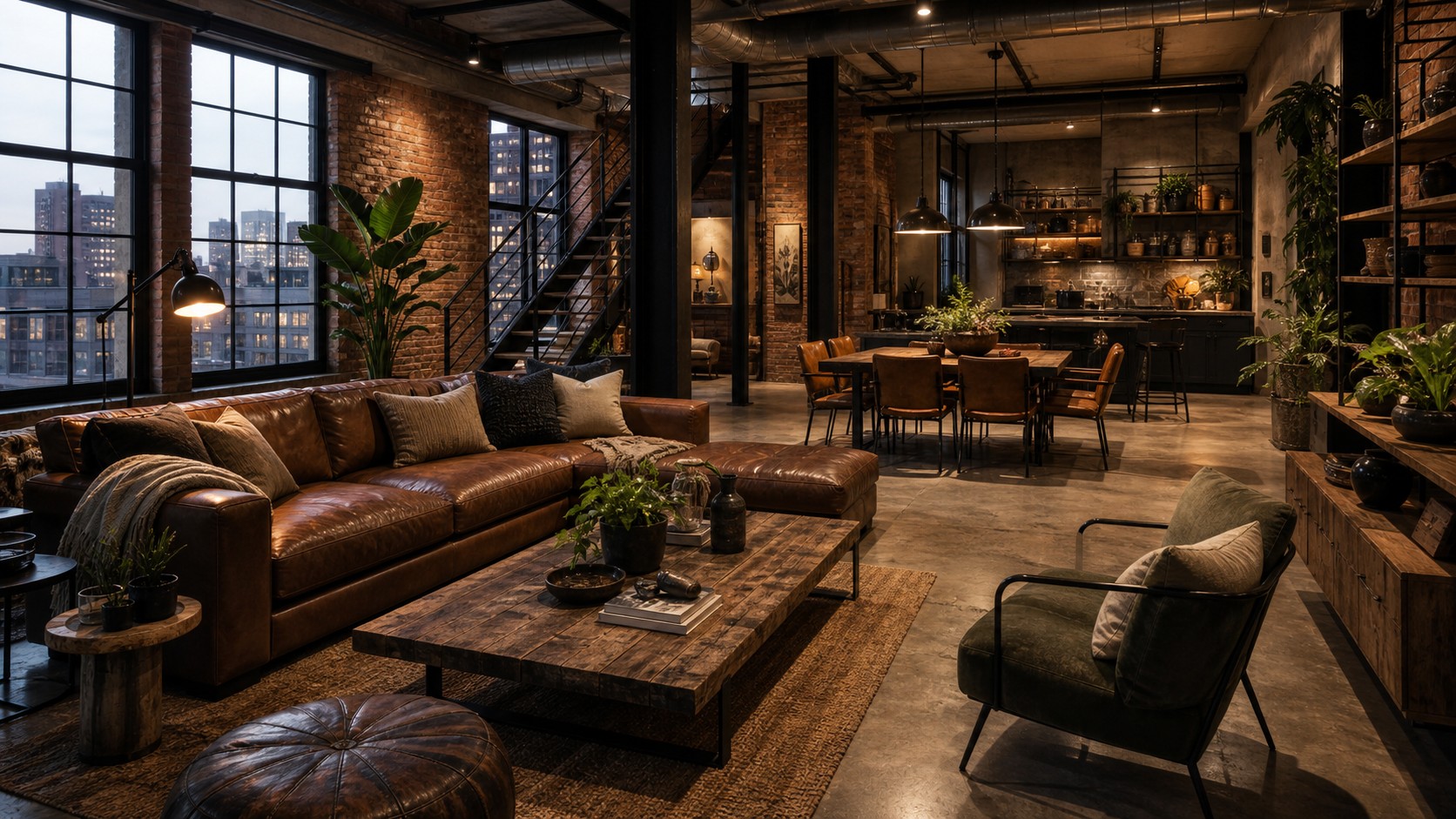
Every successful industrial room needs a clear starting point. In a loft, that might be exposed brick, high windows, concrete columns, visible beams, ductwork, or a steel stair. In a modern house or apartment, it may be something added with intention: a concrete fireplace, black-framed glass doors, a metal bookcase, a large worktable, or a lighting plan that gives the room a sharper structure. The starting point should feel believable in the room, not pasted on for effect.
Once that strength is identified, the rest of the design should respond to it. Brick asks for warmth and texture. Concrete asks for rugs, wood, and flattering light. Steel asks for softer materials nearby so the room does not become cold. A room with no hierarchy can feel like a showroom of industrial references, while a room with one strong anchor feels confident.
Use Raw Materials With a Purpose
Industrial interiors are often associated with rugged surfaces, but ruggedness alone is not enough. Brick should shape a wall or fireplace. Concrete should ground a floor, table, counter, or hearth. Steel should frame windows, shelving, doors, stairs, or lighting. Wood should bring warmth and mass. Each material needs a job in the room, because purposeful materials look refined even when they are rough.
Avoid adding raw finishes everywhere just because the style allows them. Faux concrete walls, distressed cabinets, exposed bulbs, pipe legs, metal signs, and reclaimed shelves can quickly compete. One or two convincing materials are better than many weak ones. Industrial style has more impact when the room still has clean surfaces and breathing room.
Warm Concrete and Metal With Wood
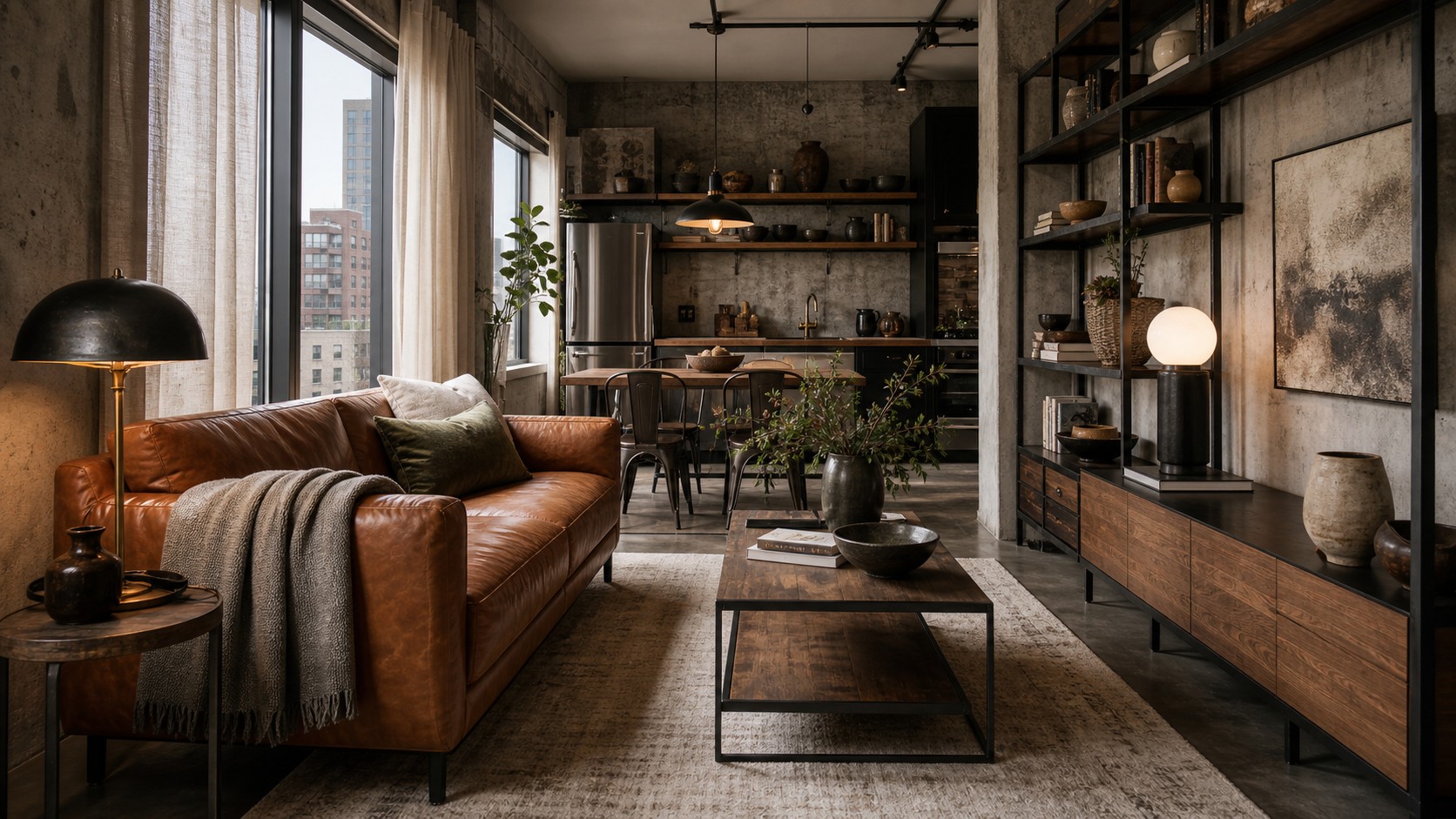
Wood is one of the most important balancing materials in urban industrial design. It gives hard surfaces a warmer visual temperature and makes the room feel more livable. A long dining table, open shelving, console, sideboard, coffee table, or ceiling beam can bring the kind of warmth that concrete and steel cannot provide on their own. The wood does not need to look overly distressed. In fact, a cleaner oak, walnut, or reclaimed piece with honest grain often feels more sophisticated.
The tone of the wood should respond to the room’s light. Dark reclaimed wood can be dramatic in bright spaces with tall windows. Medium oak and walnut are easier to use in smaller or darker rooms. If the room already has red brick, keep the wood from becoming too orange. If the room is mostly gray concrete and black metal, warmer wood can keep it from feeling commercial.
Choose Metal Lines Carefully
Metal gives industrial rooms their graphic clarity. Black steel window frames, shelving uprights, table bases, stair rails, mirror frames, cabinet hardware, and lighting arms can create a rhythm across the room. The strongest metal details usually act like lines: they outline, frame, support, or divide. When metal becomes too bulky or too repeated, the room can start to feel harsh.
Mixing metal finishes can work, but the mix should look deliberate. Blackened steel can sit well with aged brass, oil-rubbed bronze, or darkened nickel. Bright chrome usually makes the room feel more sleek and commercial unless that is the intended direction. A modern industrial space often looks best when the metal is matte, weighty, and used with restraint.
Make Glass and Open Space Work Harder
Industrial rooms often include glass because old warehouse spaces relied on large windows and open sightlines. In a modern interior, glass can keep heavy materials from closing in the room. A glass partition, black-framed door, open stair, or large mirror can bring lightness to a palette built from concrete, brick, and metal. This contrast is important because industrial rooms can become visually dense.
Open space is just as important as glass. Leave room around the main raw feature so it can be seen. Avoid covering brick with too much art, filling every shelf, or placing furniture so close together that the room loses its sense of structure. The style feels more elevated when the eye can move from raw texture to clean space and back again.
Layer Lighting Like Architecture
Lighting can transform a modern space into an industrial one even when the architecture is ordinary. Track lighting, metal pendants, wall sconces, arm lamps, shaded table lamps, and linear fixtures can organize a room into zones. The dining table, sofa area, shelves, entry, and work surface should each have light that makes sense for the task and the mood.
Warmth matters more than the fixture shape. Cool light can make concrete look flat, metal look harsh, and leather look dull. Warm bulbs, dimmers, shaded glass, and lower lamps keep the room comfortable at night. Exposed bulbs should be used carefully because glare can ruin the refinement of an otherwise strong room.
Bring in Leather, Wool, and Linen
Industrial rooms need soft materials with enough substance to stand up to raw architecture. Leather, wool, linen, canvas, and textured cotton work well because they feel durable without being delicate. A leather sofa can warm black metal and brick. A wool rug can reduce echo in a room with concrete floors. Linen curtains can soften large windows without making the room feel overly formal.
These materials should be chosen for comfort as much as appearance. A chair that looks rugged but feels stiff will not help the room. A rug that is too small will make the seating area feel unfinished. Industrial design becomes refined when the tactile pieces are as considered as the architectural ones.
Plan Zones in Open Modern Spaces
Urban industrial design is often used in open-plan rooms, and those spaces need clear zones. A sofa can define the living area, a pendant can mark the dining table, a rug can gather the seating, and a console can create a soft boundary near the entry. These divisions should feel natural rather than boxed in. The room still needs the openness that makes industrial spaces appealing.
Use material changes carefully. A wood dining table near a leather sofa, a concrete island beside warm stools, or a black metal shelf behind a reading chair can help each zone feel distinct. The key is repeating enough finishes that the room stays connected. If every zone uses different materials, the open space can feel fragmented.
Make Storage Look Built In
Industrial rooms often rely on visible storage, but visible does not mean messy. Open shelving, metal cabinets, rolling carts, and glass-front cupboards should look deliberate. Store practical things in a way that supports the design: books stacked with ceramics, baskets hiding small items, and heavier objects placed low for visual stability.
Closed storage is just as important. Media equipment, paperwork, extra cords, and everyday clutter can weaken a refined industrial room quickly. A low cabinet, sideboard, or built-in unit with simple hardware keeps the room functional while letting the raw materials remain the focus.
Use Art to Break Up Hard Surfaces
Art gives industrial rooms another layer beyond material contrast. Large photography, abstract work, charcoal drawings, architectural prints, textured canvas, and simple sculptural pieces can all work when they are scaled to the wall. A single large piece often feels stronger than a cluster of small art fighting with brick, shelves, or window frames.
Choose frames and placement carefully. Black metal frames can repeat the room’s structure, while wood frames can warm the wall. Art should not cover every raw surface, but it can keep concrete and brick from feeling empty. The right piece makes the space feel personal instead of merely styled.
Art is also a place to introduce mood without adding more heavy furniture. A moody photograph, oversized canvas, or quiet architectural study can make the room feel urban while leaving floor space open. In industrial interiors, wall choices often matter as much as furniture because the walls carry so much of the atmosphere.
Keep Furniture Simple and Substantial
Furniture in an urban industrial room should feel sturdy, but it does not need to look like it came from a workshop. Clean sofas, blocky tables, open-leg chairs, metal-framed shelving, and wood storage pieces can all fit the style. The key is choosing forms that feel direct and useful. Decorative curves, fragile legs, or overly ornate profiles usually fight the industrial mood.
Scale should be judged against the room’s architecture. Tall ceilings can handle larger pendants and heavier tables. Smaller modern rooms need slimmer profiles and more open bases. A substantial piece should ground the room, not trap it. When in doubt, choose fewer pieces with better material quality.
Edit the Factory References
Vintage signs, gears, crates, lockers, and factory objects can add character, but they can also make the room feel themed. Use them sparingly and only when they have visual quality or real function. A single old cabinet, workbench, or sign can be interesting. A room full of obvious references can feel less mature than a room built from strong materials.
The more literal the object is, the more restraint it needs. Industrial interiors do not have to explain themselves. Brick, metal, light, wood, and proportion can carry the message. Accessories should support the atmosphere quietly rather than turning the room into a display.
Balance the Palette
Urban industrial palettes often begin with black, gray, brown, and brick red, but those colors need variation. Charcoal, warm white, tobacco, rust, olive, navy, cream, and natural wood tones can make the room feel layered. A palette that is only gray and black may look sharp at first but become cold over time.
Repeat colors in small, deliberate ways. A black window frame can connect to a lamp and table base. Cognac leather can connect to wood grain and rust accents. Cream textiles can connect to lampshades, art mats, or plaster walls. Repetition makes the room feel designed without making it match too tightly.
Make the Finished Room Livable
The final test of urban industrial interior design is daily use. The room should have comfortable seating, reachable tables, useful lighting, storage that reduces clutter, and paths that are easy to walk. Raw materials create character, but comfort is what keeps the room from feeling like a set.
Walk through the room at different times of day before calling it finished. Industrial materials can look beautiful in morning light and severe at night, or the reverse. Adjust lamps, rugs, and soft pieces until the space feels good in both conditions.
A transformed modern space should feel strong and human at the same time. Let the most authentic feature lead, support it with warmth, and remove anything that feels like a shortcut. When the raw and refined sides are both present, industrial design can make a room feel more grounded, more interesting, and much more personal.