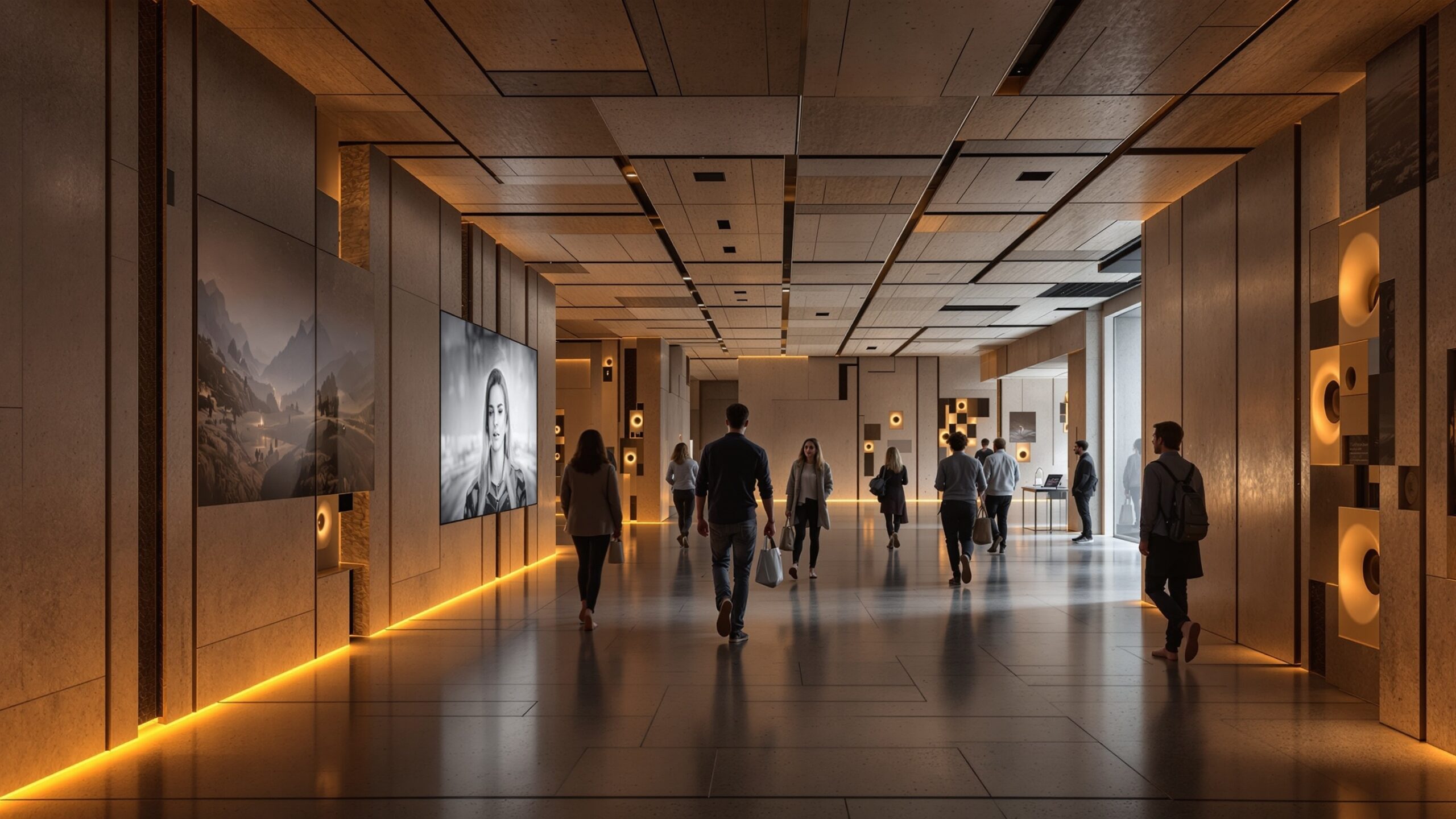
The Invisible Architecture of Emotion
When people step into a beautifully designed themed environment—a theme park land, a museum exhibit, an immersive theater production, or a carefully crafted retail experience—they often notice the visuals first. Towering facades, glowing lights, moving characters, and elaborate scenery dominate attention. Yet what truly transforms these spaces from mere environments into living worlds is something less obvious: sound. Immersive soundscapes act as the invisible architecture of emotion. They guide attention, influence mood, shape perception, and deepen storytelling in ways that visual design alone cannot achieve. A gentle forest breeze, distant thunder rolling across a canyon, echoing footsteps in a medieval castle corridor, or the cheerful melody of a bustling marketplace can instantly transport visitors into a different reality. In themed spaces, audio design is not simply background music or environmental noise. It is a powerful psychological tool used to evoke emotions, reinforce narrative context, and immerse visitors in believable worlds. The most memorable experiences—from theme parks to interactive exhibits—are often those where sound seamlessly blends with visual and spatial design to create a cohesive sensory journey. Understanding how immersive soundscapes influence emotional experience reveals why audio design has become one of the most important components of modern themed environments.
A: Audio shapes emotion and reinforces the illusion of a living world.
A: A technology that positions sound in three-dimensional space around listeners.
A: They are disguised within rocks, trees, buildings, or themed props.
A: Designers intentionally vary volume to create contrast and emotional pacing.
A: Ride control systems trigger audio cues at specific moments.
A: Background audio used to hide unwanted mechanical or environmental noise.
A: Audio is edited so the beginning and end blend smoothly.
A: Yes, tempo and directional cues subtly guide behavior.
A: Many soundscapes include authentic field recordings from nature or cities.
A: Balanced layers of music, effects, ambience, and spatial placement.
The Psychology of Sound and Emotion
Human beings are wired to respond deeply to sound. Long before language evolved, our ancestors relied on auditory cues to interpret their surroundings. A rustling branch could signal danger, while birdsong indicated safety and daylight. Because of this evolutionary heritage, sound has a direct pathway into the emotional centers of the brain.
When people enter an environment, their auditory system begins analyzing cues immediately. The brain evaluates pitch, rhythm, tempo, volume, and spatial direction to determine what is happening around them. These signals trigger emotional reactions even before conscious thought occurs.
Music plays a particularly powerful role in shaping emotional experience. Slow melodies with minor chords can evoke melancholy or mystery, while fast rhythms and bright harmonies inspire excitement and joy. This is why film scores are so influential in storytelling. The same psychological principles apply to themed environments.
In immersive spaces, carefully designed soundscapes guide emotional responses throughout an experience. A quiet, echoing hallway creates tension. Lively street music builds energy. Soft ambient sounds foster calm and curiosity.
The human brain naturally synchronizes emotional interpretation with auditory cues. When sound matches the visual environment, the brain accepts the experience as believable and immersive.
Worldbuilding Through Sound Design
Themed spaces rely on worldbuilding—the art of creating believable fictional environments. Sound plays a crucial role in making these worlds feel authentic.
Visual scenery can establish location, but sound gives that location life. A pirate harbor is not complete without creaking wooden ships, distant seagulls, waves hitting the docks, and sailors shouting across the water. A futuristic city feels more convincing when filled with humming engines, electronic announcements, and passing hover vehicles.
Audio design adds layers of environmental storytelling that visuals alone cannot convey. These layers create the impression that the world extends beyond what visitors can see.
Sound designers often categorize environmental audio into three primary layers: ambience, activity, and narrative cues.
Ambient sound provides the foundational atmosphere. This might include wind, wildlife, machinery hums, or distant city noise. Activity sounds add dynamic life, such as footsteps, tools clanking, or crowds talking. Narrative cues highlight important story moments through music or dramatic sound effects.
When combined, these layers create a believable sonic environment that strengthens immersion and emotional engagement.
Spatial Audio and the Illusion of Reality
One of the most significant advances in immersive soundscape design is spatial audio technology. Unlike traditional stereo sound, spatial audio allows sound to be positioned precisely within a physical environment.
Visitors can hear sound coming from specific directions—above, below, behind, or across a space—just as they would in the real world. This spatial realism dramatically enhances immersion.
For example, in a themed jungle environment, birds may chirp from the canopy overhead while insects buzz near the ground. A distant waterfall might echo from a specific direction, encouraging visitors to explore deeper into the environment.
Directional audio also guides movement. If visitors hear lively music or exciting sounds ahead, they instinctively move toward them. Designers often use this technique to subtly guide guest flow through complex environments.
Technologies such as multi-channel speaker arrays, binaural recording, and object-based audio systems allow designers to craft incredibly detailed soundscapes. These systems create the illusion that sound originates from within the environment rather than from hidden speakers.
When done effectively, visitors rarely notice the technology behind the experience. Instead, they simply feel immersed in a believable world.
Music as Narrative Emotion
Music is one of the most powerful tools in immersive sound design because it directly communicates emotion. In themed environments, music often functions as the emotional voice of the story.
Just as film composers use musical themes to represent characters or locations, themed spaces frequently rely on recurring motifs. These musical signatures help visitors emotionally connect with different parts of an environment.
For example, a heroic orchestral theme might accompany a castle courtyard, inspiring wonder and adventure. A mysterious melody played with soft strings or choir vocals could evoke magic or ancient secrets. Upbeat rhythms might energize a lively festival plaza.
Music also helps establish pacing. Slow ambient compositions encourage visitors to linger and explore. Faster tempos can increase excitement during action-oriented attractions.
In many themed experiences, music gradually evolves as visitors move from one area to another. This transition helps reinforce the sense that each location has its own unique personality.
When carefully integrated with visual storytelling, music transforms environments into emotionally resonant journeys.
Environmental Sound and Subconscious Storytelling
Not all immersive audio is meant to be consciously noticed. In fact, some of the most effective sound design operates below the level of awareness.
Environmental sound effects—sometimes called atmospheric audio—quietly reinforce the narrative context of a space. These sounds may include subtle mechanical hums, distant animal calls, echoing footsteps, or faint whispers carried by wind.
Such sounds provide clues about the environment’s history and activity. A workshop filled with clanging metal tools suggests active craftsmanship. A deserted hallway with creaking floorboards implies age and mystery.
Because these sounds mimic real-world auditory experiences, visitors accept them instinctively. The brain uses them to construct a mental model of the environment.
This subconscious storytelling deepens immersion without requiring explicit explanation.
For example, a haunted mansion attraction may include faint organ music echoing from unseen rooms, distant thunder rumbling outside, and subtle whispers hidden in the soundscape. These elements build tension long before visitors encounter any visual scares.
Sound becomes a storyteller, guiding emotion and anticipation through invisible cues.
Soundscapes and Memory Formation
Immersive soundscapes do more than shape immediate emotions—they also influence how experiences are remembered.
The human brain forms strong memory associations with sound. A specific melody or environmental noise can instantly recall vivid memories years later. This phenomenon is why certain songs can trigger nostalgia or transport people back to specific moments in time.
Themed environments take advantage of this psychological trait by creating signature soundscapes that become part of a location’s identity.
Theme park lands often feature unique musical scores that repeat subtly throughout the area. Over time, visitors associate these sounds with specific experiences and emotions.
When guests later hear similar music—whether in a commercial, soundtrack, or online video—it can instantly remind them of their visit.
This connection between sound and memory is incredibly powerful for creating lasting emotional impact.
Immersive audio does not just enhance the moment. It becomes part of the long-term emotional memory of the experience.
Dynamic Sound Design and Interactive Environments
Modern themed spaces increasingly incorporate dynamic sound design, where audio responds to visitor actions or environmental changes.
Unlike traditional fixed soundtracks, dynamic audio systems adapt in real time. Sensors, motion tracking, and interactive technologies allow soundscapes to evolve based on guest movement or interaction.
For example, approaching a magical artifact might trigger whispers, glowing chimes, or musical crescendos. Walking deeper into a jungle exhibit might gradually introduce new wildlife sounds.
Interactive sound design creates the illusion that the environment is alive and aware of visitors.
This responsiveness significantly increases immersion. Visitors feel as though they are influencing the world around them rather than simply observing it.
Interactive audio is especially powerful in immersive theater, interactive museums, and experiential attractions where storytelling unfolds dynamically.
The more responsive the soundscape becomes, the more convincing the illusion of a living world.
The Role of Silence in Immersive Audio
While sound is essential for immersion, silence can be equally powerful.
Strategic moments of quiet allow emotional tension to build and focus attention on specific experiences. In storytelling, silence often signals anticipation, mystery, or reflection.
In themed environments, designers sometimes intentionally reduce background noise before a major reveal or dramatic moment. This contrast heightens emotional impact.
For example, visitors might pass through a quiet corridor before entering a grand, music-filled hall. The sudden transition amplifies the sense of scale and wonder.
Similarly, in suspenseful environments, silence can create unease. Without auditory cues, visitors become more alert and sensitive to subtle changes.
The absence of sound becomes a storytelling tool.
Masterful sound designers understand that immersive audio is not just about adding layers of sound. It is about controlling the emotional rhythm of sound and silence.
Designing Cohesive Multisensory Experiences
Immersive themed spaces rarely rely on sound alone. Instead, audio works in harmony with other sensory elements including visuals, lighting, motion, scent, and tactile feedback.
When these elements align, the brain integrates them into a unified experience.
For example, the sound of ocean waves combined with salty sea air scent, cool mist, and moving water projections creates a convincing seaside environment. Each sense reinforces the others.
If one element feels inconsistent—such as cheerful music in a spooky setting—the illusion breaks.
This is why sound designers collaborate closely with architects, lighting designers, storytellers, and engineers during themed environment development.
Together they ensure that every sensory detail contributes to a cohesive narrative atmosphere.
The result is a fully immersive world that feels authentic and emotionally engaging.
Technology Shaping the Future of Immersive Sound
Advances in audio technology continue to push the boundaries of immersive soundscape design.
Object-based audio systems allow individual sound elements to move dynamically through space. Artificial intelligence can analyze visitor behavior and adjust audio in real time. Wearable devices and augmented reality headphones may soon provide personalized sound experiences tailored to each visitor.
3D audio rendering is also becoming more accessible, allowing smaller venues and exhibitions to implement sophisticated soundscapes previously reserved for major theme parks.
Meanwhile, machine learning tools are helping sound designers create more complex and adaptive environmental audio systems.
These innovations suggest that the future of themed spaces will become even more immersive, responsive, and emotionally engaging.
Visitors may one day experience environments where soundscapes evolve uniquely for each individual journey.
Conclusion: The Emotional Power of Immersive Sound
Immersive soundscapes are among the most powerful yet often overlooked elements of themed environments. While visual design captures attention, sound shapes emotional experience in profound ways.
Through music, environmental audio, spatial sound design, and interactive technologies, soundscapes transform static environments into living worlds. They guide visitor movement, deepen narrative storytelling, build atmosphere, and create lasting memories.
The most successful themed spaces understand that immersion is not achieved through visuals alone. It emerges from the seamless integration of all sensory elements, with sound acting as the emotional connective tissue.
As technology advances and designers continue to explore new creative possibilities, immersive audio will remain central to the art of environmental storytelling.
In the end, the magic of themed spaces lies not only in what visitors see, but also in what they hear—and how those sounds make them feel.