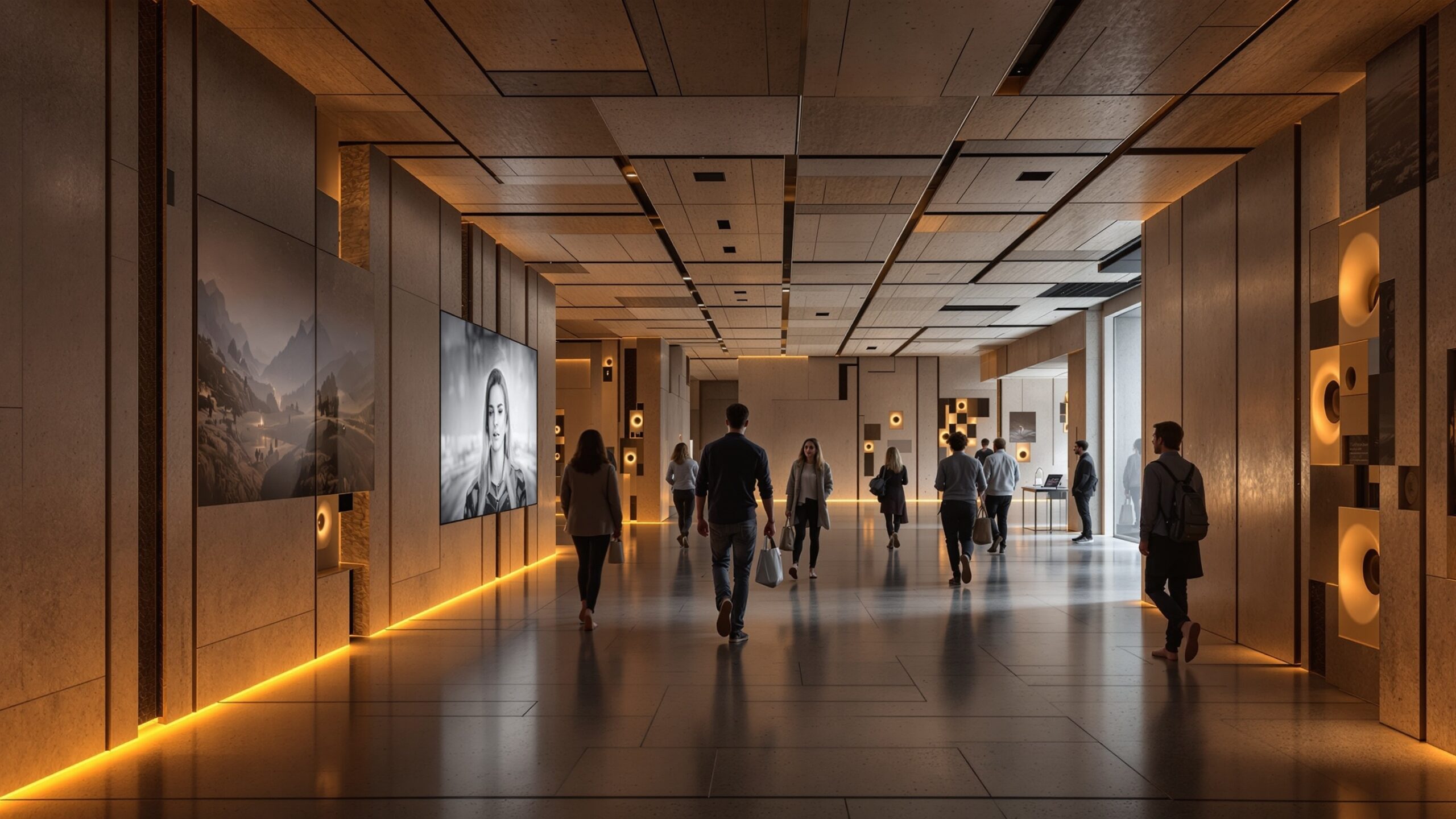
When Sound Becomes an Environment
In the world of experiential design, visuals often take center stage. Architecture, lighting, color palettes, and spatial layout dominate conversations about how environments influence human emotion and behavior. Yet beneath these visible layers lies an equally powerful and often underestimated element: sound. Soundscapes—the carefully designed layers of ambient sound, music, and acoustic effects within a space—play a profound role in shaping how people feel, behave, and remember experiences. A soundscape is not merely background noise. It is a psychological framework that guides perception, mood, attention, and immersion. Whether in theme parks, museums, retail stores, restaurants, hotels, or immersive installations, sound can subtly transform a location into a living narrative. The hum of distant machinery in a futuristic exhibit, the gentle rustling of leaves in a nature-themed hotel lobby, or the echoing chants in a historical museum gallery can evoke emotional responses that visuals alone cannot achieve. Experiential designers increasingly recognize that people do not simply see spaces—they inhabit them with all their senses. Sound acts as a connective tissue that binds visual storytelling to emotional engagement. Understanding the psychology of soundscapes is therefore essential for anyone creating immersive environments designed to captivate audiences and leave lasting impressions.
A: A designed audio environment that shapes how people emotionally experience a space.
A: They reinforce storytelling and create emotional immersion.
A: Often no—many effects work subconsciously.
A: By layering multiple variations and randomized playback.
A: Low frequencies create physical sensation and emotional intensity.
A: Yes—museums, hotels, retail environments, and exhibitions use them.
A: Directional audio cues can subtly lead people toward focal points.
A: By mapping zones and adjusting speaker direction and volume.
A: Multi-channel audio processors and digital show-control software.
A: Emotional storytelling, natural layering, and seamless integration with visuals.
Understanding Soundscapes: Beyond Background Audio
A soundscape refers to the acoustic environment perceived by humans within a specific setting. The concept originated in environmental psychology and acoustic ecology, describing how natural and artificial sounds interact to shape human perception of space. In experiential design, soundscapes are intentionally crafted to reinforce themes, narratives, and emotional atmospheres.
Unlike traditional audio systems that simply play music, a soundscape operates as a layered composition. Designers may combine environmental sounds, subtle musical motifs, directional audio cues, reverberation effects, and spatial acoustics to construct a cohesive sensory experience. These elements function together much like a film soundtrack, guiding the audience through emotional shifts without drawing overt attention to the sound itself.
What makes soundscapes particularly powerful is their ability to influence perception subconsciously. While visitors may consciously notice visuals and architecture, sound often works quietly beneath awareness, shaping mood and attention in ways that feel natural and intuitive. This psychological subtlety allows designers to guide emotional responses without disrupting the illusion of immersion.
For example, in a themed attraction simulating an ancient jungle temple, designers might incorporate distant animal calls, trickling water, rustling foliage, and low-frequency rumbles. These sounds build tension and mystery even before guests encounter any visual storytelling elements. The brain interprets these cues as environmental signals, creating a sense of authenticity and anticipation.
The Brain and the Emotional Power of Sound
Sound has a direct pathway to the emotional centers of the brain. Unlike visual information, which often requires conscious interpretation, auditory stimuli can trigger immediate physiological responses. The brain’s limbic system, responsible for emotion and memory, responds rapidly to acoustic signals such as rhythm, tone, and frequency.
This neurological connection explains why sound can evoke powerful emotional reactions. A sudden loud noise may trigger fear or alertness, while gentle ambient music can create calmness and relaxation. Even subtle changes in pitch or tempo can influence mood and perception.
Research in cognitive psychology suggests that humans evolved to interpret sound as a survival mechanism. Early humans relied on auditory cues to detect predators, locate resources, and communicate with others. As a result, the human brain remains highly sensitive to acoustic information, particularly changes in sound patterns.
Experiential designers leverage this sensitivity to shape emotional journeys within environments. For instance, low-frequency sounds can create tension or unease, often used in horror attractions or suspenseful exhibits. Higher-frequency ambient sounds may evoke openness and tranquility, ideal for wellness spaces or nature-themed environments.
Music also plays a critical role in emotional modulation. Slow tempos and soft instrumentation can encourage relaxation and contemplation, while energetic rhythms may stimulate excitement and engagement. When integrated carefully into a soundscape, music becomes a narrative guide, subtly signaling transitions between emotional states.
Sound as a Tool for Immersion
Immersion occurs when individuals feel fully absorbed within an environment, temporarily suspending awareness of the outside world. Soundscapes are one of the most effective tools for achieving this psychological state because they envelop visitors in a continuous sensory field.
Unlike visual elements, which may exist within a limited field of view, sound surrounds the listener. This omnidirectional quality allows audio to create the illusion of a living environment beyond the visible boundaries of a space. A distant train whistle, echoing footsteps, or flowing river can suggest an entire world beyond the immediate setting.
This technique is widely used in theme parks and immersive attractions. Designers often install distributed speaker systems throughout an environment, allowing sounds to originate from specific locations. Directional audio technology can even simulate movement, such as birds flying overhead or machinery operating behind walls.
These spatial sound cues help visitors orient themselves within a narrative environment. The brain interprets these auditory signals as indicators of space, distance, and movement, reinforcing the illusion that the environment is real and active.
When soundscapes align seamlessly with visual storytelling, the result is a multisensory experience that feels cohesive and believable. Visitors are no longer simply observing a themed environment—they are inhabiting it.
Memory, Nostalgia, and Emotional Recall
One of the most fascinating psychological effects of sound is its connection to memory. Auditory stimuli are strongly linked to episodic memory, the type of memory associated with personal experiences and emotional moments.
A familiar song can instantly transport someone back to a specific time in their life. The sound of ocean waves may evoke memories of childhood vacations, while the crackling of a fireplace might recall cozy winter evenings. These associations occur because the brain stores sound and emotional context together within the hippocampus and limbic system.
Experiential designers often use this phenomenon to create emotionally resonant environments. By incorporating sounds associated with nostalgia or cultural memory, designers can deepen emotional engagement within a space.
For example, a retro-themed diner might feature subtle background sounds of vintage jukebox music, clinking soda glasses, and distant street traffic from the 1950s. Even if visitors have never personally experienced that era, the soundscape can evoke a collective cultural memory shaped by films, music, and storytelling.
Museums also use soundscapes to enhance historical storytelling. The distant echoes of factory machinery in an industrial exhibit or wartime radio broadcasts in a military museum can make historical narratives feel immediate and personal.
These auditory cues transform static exhibits into dynamic experiences, allowing visitors to emotionally connect with the past.
Soundscapes in Retail and Commercial Spaces
The psychology of sound is not limited to entertainment venues. Retail environments frequently use soundscapes to influence customer behavior and purchasing decisions.
Studies in consumer psychology show that background music can affect shopping pace, dwell time, and spending patterns. Slower music tends to encourage shoppers to linger longer, increasing the likelihood of purchases. Faster tempos may promote quick decision-making in high-traffic environments.
Soundscapes also contribute to brand identity. Luxury retailers often use soft, elegant music to create an atmosphere of sophistication, while energetic pop music may be used in youth-oriented fashion stores to reinforce a lively brand image.
Beyond music, ambient sounds can influence how customers perceive the quality and comfort of a space. Natural soundscapes such as water, birdsong, or wind through trees can create a sense of calm that encourages relaxation and exploration.
In hospitality settings like hotels and spas, soundscapes play a crucial role in shaping guest experiences. Subtle ambient music in lobbies, nature-inspired sound environments in wellness spaces, and carefully designed acoustic treatments help create atmospheres that align with brand narratives.
These strategies demonstrate how soundscapes function as invisible architecture—shaping emotional environments without altering the physical structure of a space.
Designing Effective Soundscapes
Creating a compelling soundscape requires careful planning and interdisciplinary collaboration. Designers must consider acoustics, psychology, storytelling, and technology simultaneously.
The process often begins with defining the emotional goals of a space. Should visitors feel relaxed, curious, excited, or contemplative? Each emotional objective influences the types of sounds selected and how they are arranged within the environment.
Next comes the layering process. Effective soundscapes typically include multiple auditory layers that operate together. Ambient environmental sounds establish a baseline atmosphere, while musical elements provide emotional tone. Directional effects and occasional sound cues add narrative detail.
Acoustic design is equally important. The physical properties of a space—materials, ceiling height, room shape, and surface textures—affect how sound travels and reverberates. Designers must balance clarity with diffusion to ensure that sound feels natural rather than intrusive.
Technological advancements have expanded the possibilities of soundscape design. Spatial audio systems, adaptive sound algorithms, and sensor-triggered audio events allow environments to respond dynamically to visitor movement and activity.
These innovations enable designers to create soundscapes that evolve over time, enhancing the sense that an environment is alive and responsive.
The Future of Soundscapes in Experiential Design
As experiential design continues to evolve, soundscapes are becoming increasingly sophisticated. Advances in immersive technology, artificial intelligence, and spatial computing are opening new possibilities for audio-driven storytelling.
Three-dimensional audio systems can now simulate precise sound positioning within a space, creating lifelike acoustic environments. Virtual reality and augmented reality experiences rely heavily on spatial sound to maintain immersion and realism.
Artificial intelligence is also beginning to play a role in adaptive soundscapes. AI-driven systems can adjust music, ambiance, and sound effects based on real-time data such as crowd density, time of day, or visitor interactions. This allows environments to respond dynamically to changing conditions, creating personalized experiences for guests.
Urban planners and architects are also exploring soundscape design in public spaces. Parks, transit hubs, and city plazas are increasingly being designed with acoustic considerations that enhance comfort and well-being.
In these contexts, soundscapes are not just entertainment tools—they become part of environmental psychology, improving quality of life within shared spaces.
Conclusion: Designing With the Invisible Sense
Experiential design is fundamentally about shaping how people feel within a space. While architecture and visuals provide structure and identity, sound provides emotional depth and atmosphere.
Soundscapes function as an invisible layer of storytelling, guiding perception and mood in ways that often go unnoticed yet profoundly influence human experience. Through carefully crafted acoustic environments, designers can create spaces that feel alive, immersive, and emotionally resonant.
As designers continue to explore the psychology of sound, the role of soundscapes will only grow more significant. Whether in themed attractions, retail environments, museums, or urban landscapes, sound will remain one of the most powerful tools for shaping human perception and memory.
In the end, experiential design succeeds not only when people see something extraordinary, but when they feel transported to another world—and often, it is the sound of that world that makes the journey unforgettable.