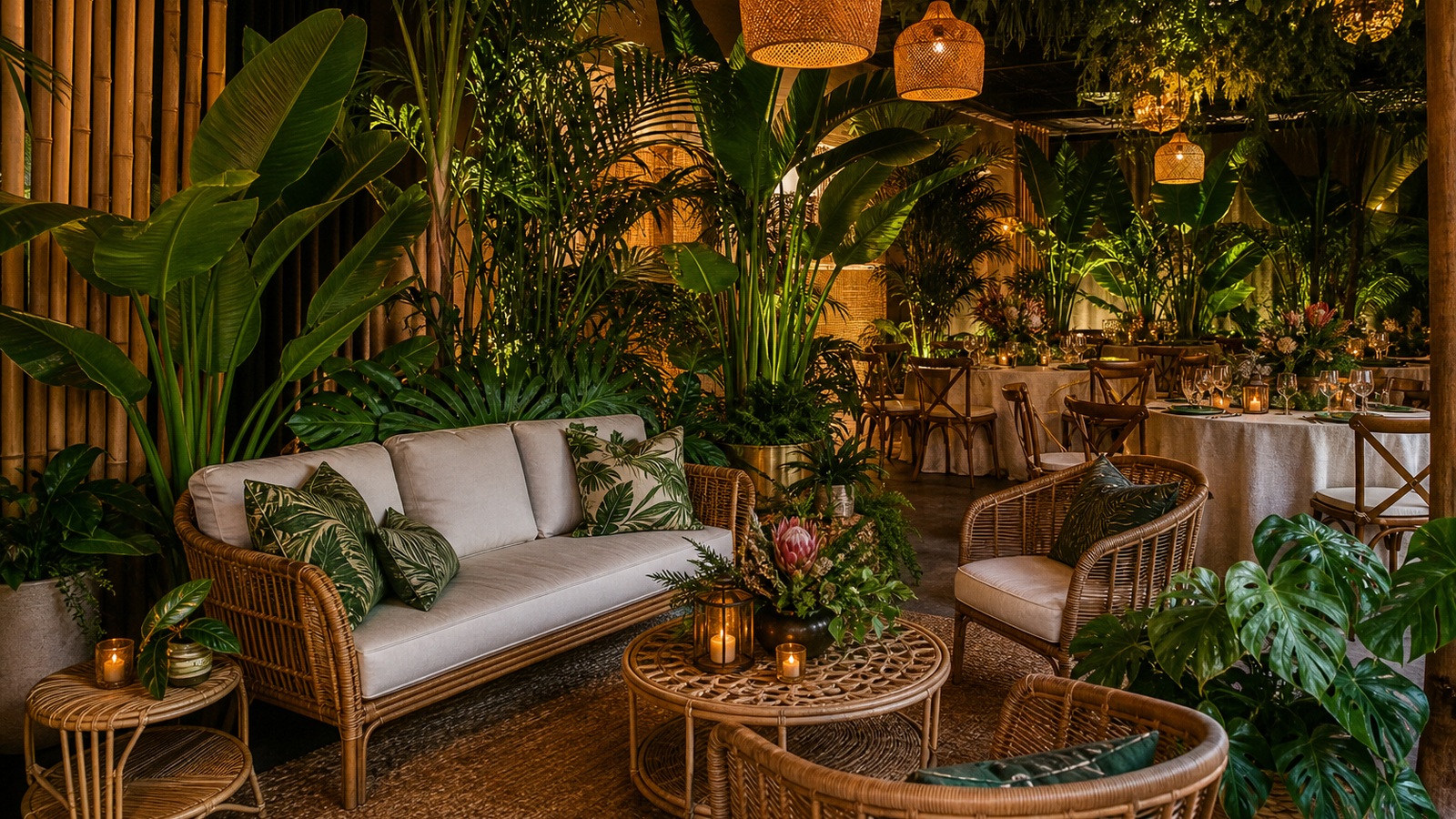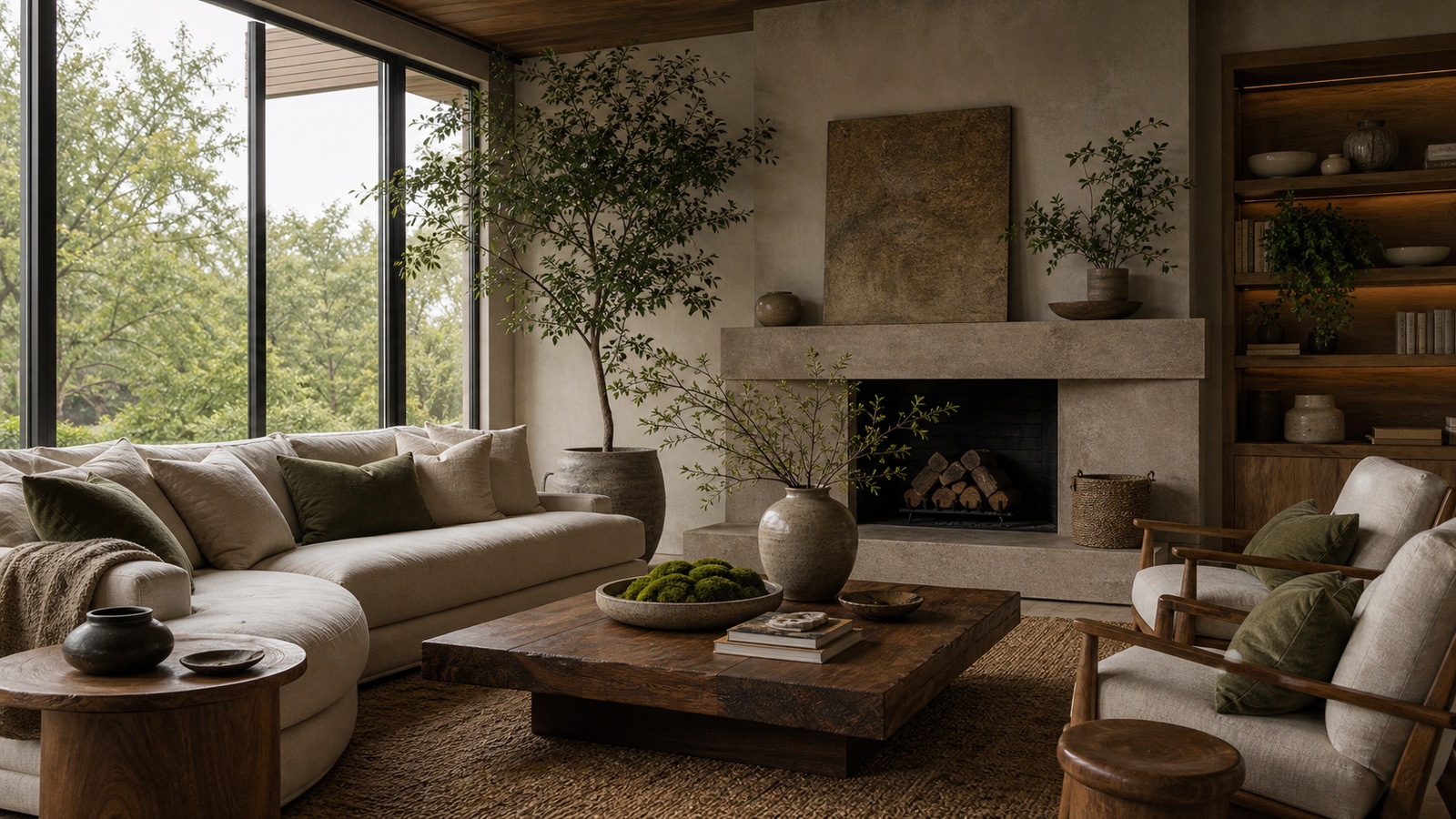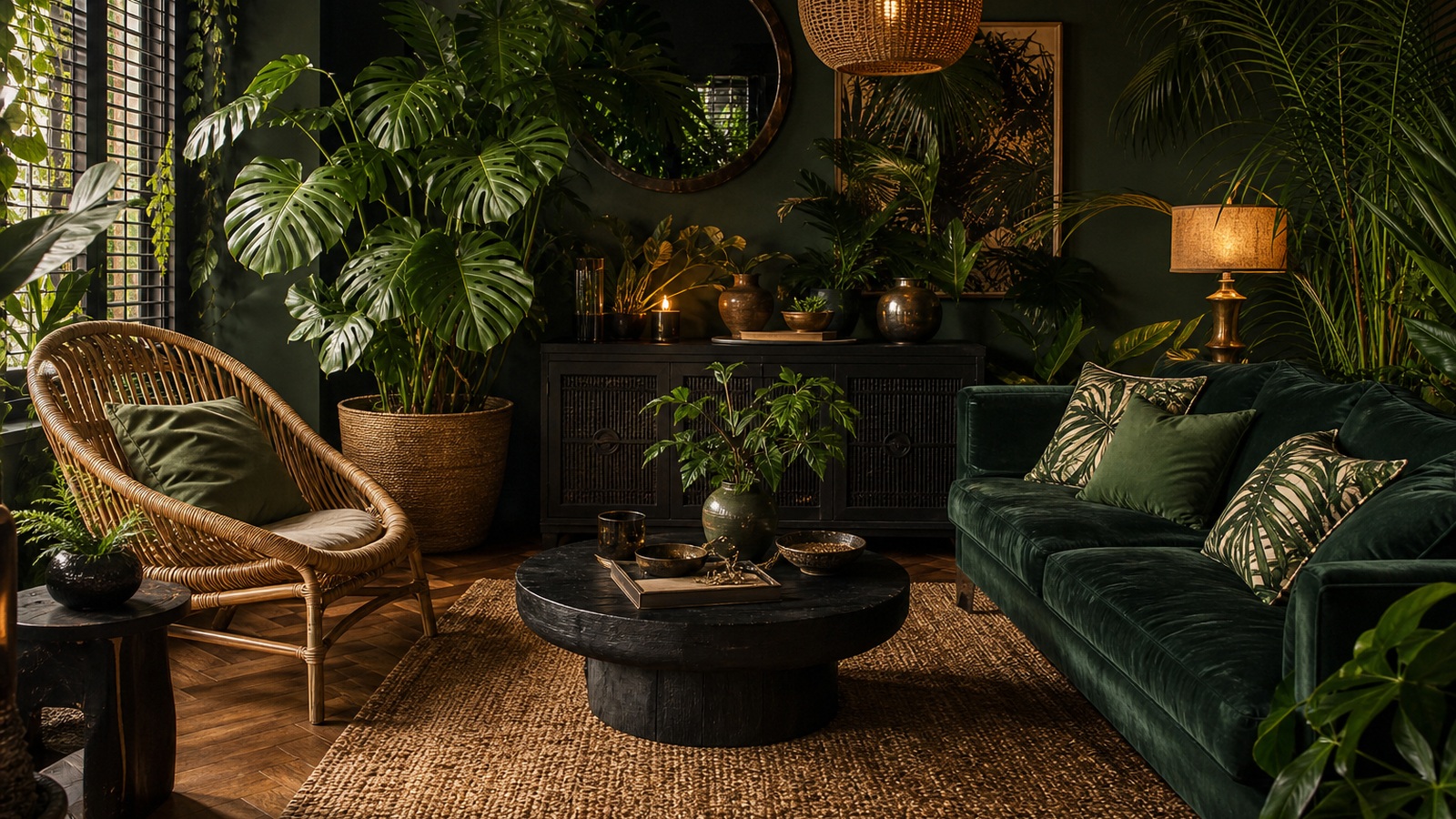
A Jungle Theme Should Feel Immersive, Not Chaotic
Jungle theme decor is at its best when it feels lush, layered, and slightly dramatic, yet still comfortable enough to live in. The style can handle bigger leaves, deeper greens, heavier shadows, woven textures, dark wood, and bolder pattern than a quiet nature-inspired room. What keeps it sophisticated is control. The jungle mood should build through scale, rhythm, light, and material rather than a jumble of novelty objects.
A: Yes, if plant scale is deliberate and paths stay clear.
A: No, but at least one deep color plane helps create immersion.
A: No, woven texture and foliage can carry the theme more elegantly.
A: Using too many novelty props instead of building atmosphere.
A: Lounges, bedrooms, dining rooms, bars, and creative spaces handle it well.
A: Only high-quality pieces placed where real plants would struggle.
A: Control palette, choose real materials, and edit literal accessories.
A: Layered warm light, filtered shadows, and plant backlighting.
A: Yes, if pattern is controlled and natural materials dominate.
A: Start with the wall color, largest plant, or main seating piece.
Begin With Depth and Shadow
A jungle room needs depth. Pale walls and tiny scattered plants rarely create the enveloping effect people imagine. Deep green, olive black, tobacco brown, warm charcoal, and saturated teal can make the background feel dense. These colors do not have to cover every wall, but they should create at least one strong plane that lets foliage and texture stand forward.
Shadow is part of the style. Use it deliberately through darker corners, layered lamps, and plants that cast shapes on walls. A room that is evenly bright can feel botanical but not wild. A room with controlled shadow feels more immersive, especially in lounges, bedrooms, bars, and dining areas.
That said, darkness needs relief. Brass, pale stone, linen, rattan, or a lighter rug can keep the room from becoming heavy. The best jungle interiors move between dense and open moments, like a path through foliage.
Choose Foliage by Shape and Scale
Plants are the most obvious tool, but variety matters. Large banana leaves, palms, monstera, philodendron, ficus, and trailing vines each create a different silhouette. Mix upright, broad, feathery, and cascading forms so the greenery feels layered. Repeating only one leaf shape can make the room look flat.
Scale should match the furniture. A tiny plant on a massive cabinet will disappear. A large tree beside a low sofa can change the whole room. Use tall plants for corners, trailing plants for shelves, and broad leaves where you want drama. Keep walking paths clear so the room feels lush without being inconvenient.
Plant health is non-negotiable. A jungle room with yellowing leaves and dry soil quickly loses its magic. Choose species that match the light and humidity you can actually provide. Good containers, saucers, and maintenance routines are part of the design.
Layer Pattern Without Losing Control
Jungle decor welcomes pattern: botanical prints, woven geometrics, animal-inspired texture, carved wood, cane, and mottled ceramics. The key is choosing a hierarchy. One large pattern can lead, one or two medium patterns can support, and smaller textures can fill in quietly. Without hierarchy, every surface competes.
Animal print can work when it is treated as texture rather than theme-party decoration. A small leopard-inspired pillow, striped ottoman, or tortoise shell object can add movement. Avoid covering the room in literal animal imagery. Suggestion is usually more elegant than illustration.
If wallpaper is involved, let it be the main event. Pair it with simpler upholstery and fewer accessories. If the furniture is already bold, use solid walls and let plants create the pattern. Jungle rooms need richness, but they also need places for the eye to rest.
Use Natural and Dark Materials
Rattan, cane, bamboo, dark walnut, blackened wood, leather, jute, clay, stone, and aged brass all support the jungle mood. These materials feel tactile and slightly adventurous without relying on props. A rattan chair, carved wood table, woven pendant, or stone-topped console can make the theme feel designed rather than decorated.
Dark wood is especially useful. It gives weight to all the greenery and prevents the room from feeling like a greenhouse alone. Brass and bronze add warmth in small doses, especially through lamps, trays, frames, and hardware. Too much shine can fight the organic mood, so keep metallic accents controlled.
Texture should be felt at several distances. From across the room, the palette and plant scale create drama. Up close, woven fibers, veined leaves, rough pottery, and grained wood reward attention. This layered experience is what makes a jungle interior feel immersive.
Make Lighting Feel Filtered
Jungle lighting should feel like it passes through leaves, shade, and atmosphere. Use multiple lamps instead of relying on a single overhead fixture. Woven pendants, shaded table lamps, uplights behind plants, and warm sconces can create depth. The light should skim surfaces and reveal texture.
At night, a jungle room can become especially beautiful. Backlighting a large plant turns leaves into silhouettes. A low lamp near a dark wall creates a warm pool. Dimmer controls are valuable because the room should shift from daytime freshness to evening drama.
Avoid cold bulbs. They flatten greens and make natural materials look harsh. Warm light with good color rendering helps plants, wood, and textiles feel richer. If the room includes very dark paint, lighting needs to be planned early so the final effect is moody rather than gloomy.
Edit the Adventure
The jungle theme can easily slip into costume if every object tries to announce the idea. Skip fake expedition signs, plastic novelty animals, and overly literal props unless the space is for a themed event or children's room. In adult interiors, the mood should come from environment, not gimmick.
Choose functional pieces first: comfortable seating, useful tables, storage, lamps, and durable rugs. Then add the wildness through plants, color, texture, and selected pattern. A room that works well will feel more luxurious than one that only photographs dramatically.
Bold jungle decor succeeds when it feels like a controlled escape. It should invite people to sit, linger, and look around. The room can be wild in spirit, but the design decisions behind it should be precise.
Make the Wildness Feel Intentional
A bold jungle interior should have a clear route through the room. Even when the walls are dark and the plants are abundant, people should understand where to sit, where to place a drink, how to reach the window, and what the main focal point is. This practical clarity is what separates immersive from messy. The room can feel lush while still being easy to use.
Choose one major dramatic gesture. It might be a botanical wallcovering, a huge plant grouping, a dark painted ceiling, a rattan daybed, or a bar-like cabinet with warm lighting. Let that gesture lead. The other choices should deepen it rather than compete with it. When every element tries to be the main attraction, the jungle feeling becomes visual noise.
Sound and touch can make the theme more convincing. A thick rug softens the room. Upholstery with a slight nap catches light. Leaves rustle gently when air moves. A shaded lamp makes the corner feel protected. These sensory details matter because jungle style is about atmosphere, not just a pattern category.
Storage is especially important in this style. Plant care supplies, extra pots, books, blankets, and entertaining pieces can accumulate quickly. Closed storage in dark wood, woven trunks, or cabinets with cane panels keeps the practical side hidden. Without storage, the room may start to look overgrown in the wrong way.
If the room is used for entertaining, plan sightlines and conversation. Arrange seating so guests see both each other and the most dramatic foliage or wall treatment. Keep side tables close enough for drinks. Use lighting that flatters faces as well as leaves. A jungle lounge should feel social, not like a display that people are afraid to disturb.
The final edit should remove anything too literal. If the room already has deep color, healthy plants, layered texture, and filtered light, it does not need many themed accessories. Trust the environment you have built. The most memorable jungle interiors feel bold because the fundamentals are strong, not because every object announces the theme.
A Step-by-Step Jungle Room Build
Start with the backdrop. Decide whether the room will get deep paint, botanical wallpaper, dark curtains, or a dramatic ceiling. This backdrop creates the enclosure that makes the jungle theme feel immersive. If the backdrop stays pale, the plants and furniture will need to work much harder to create the same effect.
Second, choose the largest plant moment. It may be a tree in a corner, a grouped plant wall, a shelf of trailing vines, or a pair of oversized planters flanking a window. Treat this as part of the architecture. Once the plant moment is placed, arrange furniture around it rather than squeezing plants into leftover gaps.
Third, add furniture with texture and weight. Rattan, dark wood, cane, leather, and woven fiber all help the room feel grounded. Seating should remain comfortable and tables should be practical. The wilder the visual theme becomes, the more important it is that the furniture works without fuss.
Fourth, tune the lighting. Place lamps at different heights, backlight leaves, and test the room at night. A jungle space that looks exciting in daylight may become flat after sunset if the lighting is not layered. Warm bulbs, dimmers, and shaded fixtures make the evening version of the room feel intentional.
Last, remove the obvious extras. If an accessory feels like it belongs to a party supply aisle, it probably weakens the room. Keep pieces that add material richness, comfort, or a sense of discovery. The jungle theme should feel bold because the environment is convincing, not because the room is full of props.
Keeping a Jungle Room Livable
Livability is the test of a bold jungle interior. The room should still be easy to clean, water, sit in, and move through. Choose washable textiles where drinks or food are involved. Place saucers under plants. Keep soil, moisture, and leaf drop away from delicate floors and rugs.
Humidity and light need attention. Some tropical plants thrive in bright indirect light and consistent moisture, while others struggle in dry air or dark corners. If the room cannot support demanding plants, choose hardier species and use the dramatic lighting, wall color, and texture to carry the theme.
Bold rooms also need visual resets. A plain ceiling, simple rug border, solid sofa, or quiet curtain can give the eye a break. These calmer elements do not weaken the jungle mood. They make the dramatic moments easier to enjoy.
Revisit the room after a month of use. Notice which plants are thriving, which surfaces collect clutter, which lamps are actually turned on, and where guests naturally sit. Adjust from real behavior. A jungle room should feel alive in both style and function.
Scent can support the mood if it is handled lightly. Green, woody, resinous, or rain-like notes can feel immersive, but heavy fragrance competes with food, conversation, and plant freshness. The room should smell clean and alive, not staged.
Durability should be chosen before drama in high-use areas. A dark velvet chair may be perfect in a reading corner, while a performance fabric or leather may be better near a bar cart or family seating area. The theme lasts longer when the materials are matched to the way the room is actually used.
When those practical choices are made early, the boldness becomes easier to enjoy. Guests notice the enveloping leaves and color first, while the room's hidden planning keeps the experience smooth.