Calm Nature Themes Begin With Restraint
Nature-inspired decor becomes luxurious when it is edited, tactile, and deeply considered. It does not need a room full of leaf prints or rustic objects. The most calming spaces borrow from nature through material, proportion, light, scent, sound, and rhythm. Stone, linen, wood, clay, wool, woven fiber, softened green, and generous negative space can create a room that feels grounded without becoming themed in a literal way.
A: Plants help, but materials, light, palette, and texture matter just as much.
A: Yes, when finishes are refined and the room is edited carefully.
A: Warm white, stone, flax, or muted sage are flexible starting points.
A: High-quality faux stems can work in low light, but visible plastic should be avoided.
A: Use cleaner lines, honed materials, tailored textiles, and restrained accessories.
A: Yes, especially through plants, textiles, lighting, and compact natural materials.
A: Aged brass, blackened steel, and soft bronze often pair well with natural palettes.
A: They should relate, but exact matching is not necessary.
A: No, greenery can come from plants, art, or small accents.
A: Reduced clutter, softer lighting, and a controlled palette usually have the quickest effect.
Use Nature as a Mood, Not a Motif
A refined nature theme begins with the feeling of being outdoors rather than a collection of decorative symbols. Think about shade under trees, the softness of moss, the grain of bark, the coolness of stone, and the quiet color changes in a landscape. Those impressions can guide the room without requiring obvious forest wallpaper or novelty accessories.
This approach is especially useful for luxury interiors because it privileges quality over quantity. A single stone table, linen sofa, hand-thrown vessel, or sculptural branch can do more than many small nature-themed objects. The room feels calm because every piece has space to breathe.
When motifs are used, they should be selective. A botanical textile, leafy ceramic glaze, or woven wall piece can be beautiful if it supports the larger material story. The moment every item repeats the same natural symbol, the room becomes less restful.
Choose Materials With Real Texture
Natural materials carry atmosphere through touch. Linen wrinkles softly. Walnut deepens with age. Travertine, limestone, slate, and marble bring mineral variation. Wool absorbs sound and adds warmth underfoot. Clay and ceramic introduce handmade irregularity. These textures make a room feel luxurious because they invite close attention.
Luxury does not require perfect polish. In a nature-inspired room, the most elegant surfaces often have subtle variation. Honed stone can feel calmer than glossy stone. Oiled wood can feel warmer than lacquer. Woven shades can filter light more gently than hard blinds. The goal is to make the room feel sensorial, not flashy.
Use contrast to keep the palette alive. Pair rough with smooth, matte with soft sheen, dense wood with airy linen, and cool stone with warm metal. A room that uses only one texture can feel flat even when every material is expensive.
Build a Quiet Natural Palette
Calm luxury palettes often begin with warm whites, mushroom, clay, stone, flax, bark, olive, sage, moss, and charcoal. These colors do not compete loudly. They create a stable background for plants, art, and natural light. The key is undertone. A green-gray wall feels very different from a yellow-green one, and a warm white can make wood feel richer than a stark white.
Avoid making every choice green. Nature contains shadow, bark, sand, water, mineral gray, dried grass, and dusk. A sophisticated palette borrows from that range. Green may be the accent, but the supporting colors should create depth.
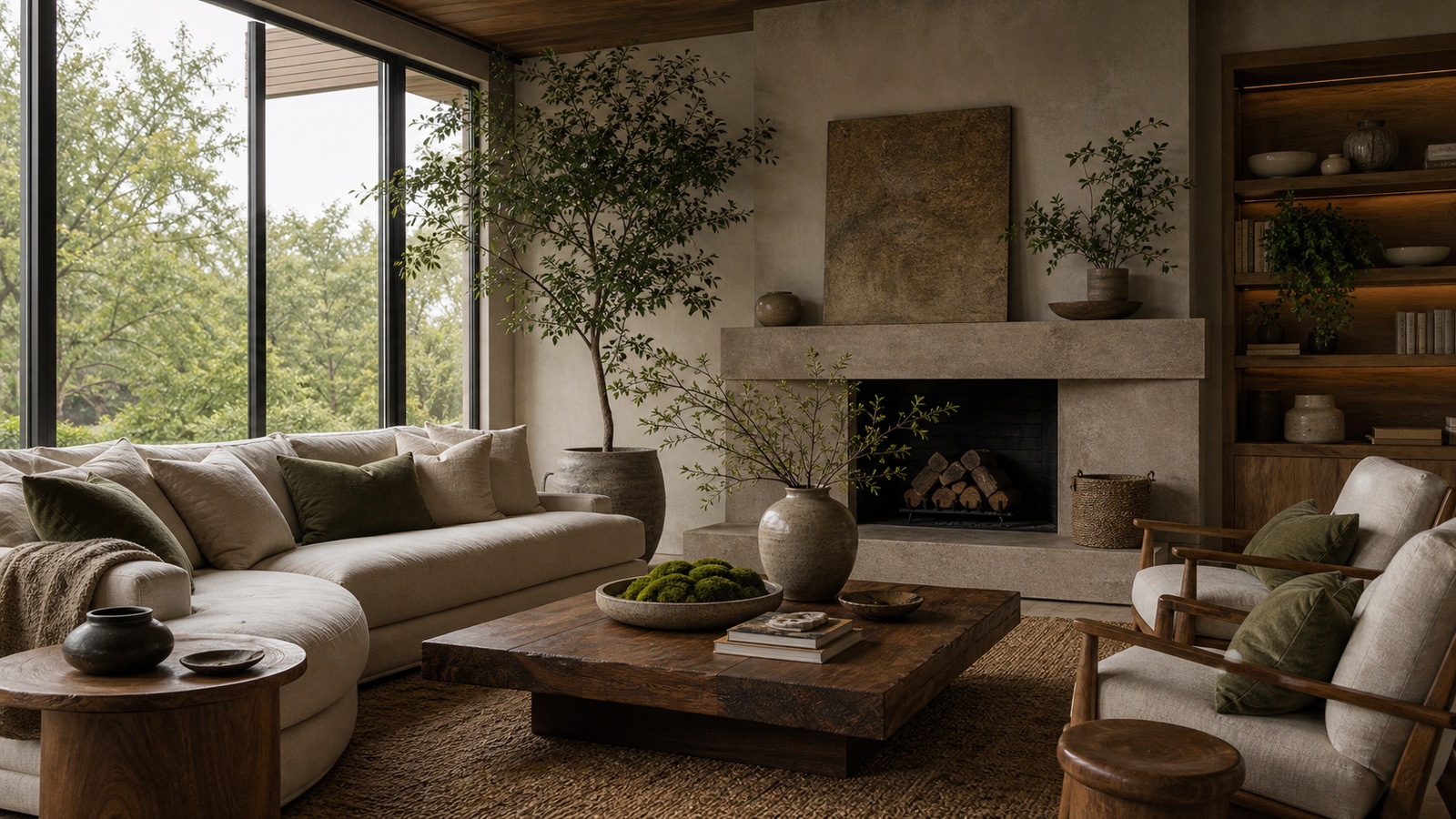
For a more luxurious effect, let contrast come from material rather than bright color. A dark walnut table against a pale rug, a charcoal stone fireplace beside linen seating, or blackened metal near clay ceramics can create quiet drama.
Bring Plants in as Architecture
Plants are powerful, but they should be placed like architectural elements rather than scattered decorations. A tall tree can soften a corner and frame a window. A row of simple planters can define a transition. A low bowl of moss or a restrained branch arrangement can bring life to a table without cluttering it.
Choose plants that fit the light and maintenance reality of the room. A struggling plant does not feel luxurious. It creates visual stress. Healthy, well-scaled greenery in good containers is better than an ambitious collection that cannot thrive.
Containers matter as much as leaves. Stone, ceramic, terracotta, fiber, and dark metal planters can connect greenery to the furniture and finishes. Plastic nursery pots left visible will weaken the mood, even when the plants themselves are beautiful.
Layer Light, Sound, and Scent
Nature-inspired decor is not only visual. Calm rooms often use diffused daylight, warm evening lamps, soft acoustics, and subtle scent. Window treatments should filter glare without killing natural light. Lamps should create pools of warmth rather than one harsh overhead wash. Rugs, curtains, upholstery, and books help absorb echo.
Scent should be gentle. Cedar, hinoki, vetiver, fig, green tea, or clean herbal notes can support the mood, but heavy fragrance can make the room feel commercial. The same restraint applies to sound. A quiet fountain, open window, or carefully placed speaker can add atmosphere if it does not dominate.
Luxury is often felt as ease. When light does not glare, seating supports the body, surfaces feel good to touch, and the room sounds soft, the nature theme becomes experiential rather than decorative.
Keep the Room Useful and Human
The calmest nature-inspired rooms still solve daily needs. Storage hides visual noise. Tables sit within reach. Seating faces conversation, views, or a fireplace. Durable textiles make the room usable instead of precious. A room can be serene and still welcome coffee cups, books, shoes, and family life.
Avoid turning nature into a showroom concept. Personal objects, art, travel finds, and handmade pieces can belong if they share the material or color language. A nature-inspired room should feel restorative, not empty.
When the design is successful, guests may not immediately name the theme. They may simply feel their shoulders drop. That is the real luxury: a room that borrows from the natural world to make everyday life feel slower, warmer, and more grounded.
Design the Transitions, Not Just the Center
Nature-inspired rooms often fail at the edges. The main seating area may be beautiful, but the entry, window wall, media cabinet, or hallway connection feels unresolved. Luxury depends on those transitions. A stone bowl near the door, a linen shade at the window, a quiet plant beside a threshold, or a woven bench in a passage can extend the natural mood beyond the obvious focal point.
The view from one room to another matters as well. If a calm living room opens to a busy kitchen, repeat one material or color across the boundary. A wood tone, clay vessel, muted green, or blackened metal detail can create continuity. The goal is not to make every room identical. It is to let the eye move without feeling abruptly dropped from one world into another.
Functional objects should be absorbed into the design language. Remote controls, coasters, throws, chargers, pet items, and daily reading can quickly disturb a serene room if they have no place to go. Trays, lidded baskets, drawers, and side tables make calm easier to maintain. A luxurious nature theme is not fragile; it simply has systems that reduce visual noise.
Seasonal changes can refresh the room without redesigning it. In spring, lighter branches and pale ceramics may feel right. In autumn, deeper wool, darker wood, and dried grasses can add warmth. Because the foundation is natural, these shifts feel intuitive. They keep the room responsive to time, which is one of the quiet pleasures of nature-inspired design.
A truly restful room also respects the body. Seat depth, table height, rug softness, lamp position, and air flow matter as much as color. If a room looks calm but sits poorly, the effect will not last. Luxury is the point where beauty and ease meet. Nature provides the vocabulary, but comfort completes the sentence.
Finally, avoid rushing the last ten percent. Live with the room before filling every blank. Natural spaces often improve with pauses, because empty space can feel like air, sky, or clearing. When the remaining additions are chosen slowly, the room keeps its quiet power.
A Room Plan for Quiet Luxury
A practical plan can begin with three layers: foundation, texture, and life. The foundation includes wall color, flooring, major seating, and storage. The texture layer includes rugs, curtains, stone, wood, ceramics, and woven details. The life layer includes plants, branches, art, books, scent, and the small signs that people actually use the room.
Choose the foundation first because it controls the mood. A pale linen sofa, dark wood media cabinet, stone fireplace, or warm plaster wall can decide the direction before any accessories appear. When the foundation is calm, the room does not need many decorative gestures. The materials themselves create the atmosphere.
The texture layer should be touchable. If everything is smooth, the room may look clean but not restorative. If everything is rough, it may feel rustic instead of luxurious. Combining linen, wool, honed stone, wood grain, and handmade ceramic gives the room a rich but quiet surface language.
The life layer should change. Plants grow, branches dry, books move, and blankets shift. That gentle movement keeps a calm room from feeling sterile. Nature-inspired luxury is not about freezing a perfect composition. It is about creating a room that can stay beautiful while being lived in.
Maintenance as Part of the Design
A calm nature-inspired room depends on maintenance more than many people expect. Plants need watering, pruning, dusting, and the right light. Stone may need sealing. Linen may wrinkle beautifully, but it still needs cleaning. Wood may need protection from water rings and harsh sun.
Design choices should match the care you are willing to give. If you travel often, choose hardier plants and fewer delicate surfaces. If children or pets use the room heavily, performance fabrics in natural colors may be wiser than fragile textiles. Calm disappears when every object feels like a liability.
Storage supports maintenance. Keep plant tools, cloths, coasters, chargers, and everyday items close but hidden. A room feels more luxurious when care is easy to perform. If maintaining the mood requires a major reset every day, the design is working against the household.
Natural interiors are allowed to age. Linen softens, wood deepens, ceramics collect use, and plants change shape. That evolution is part of the appeal. The aim is not spotless perfection; it is a room that stays healthy, useful, and beautiful as life moves through it.
Care routines can even become part of the pleasure of the room. Watering a tree, opening woven shades, shaking out a wool throw, or replacing branches can make the space feel connected to real time. That sense of ritual is one reason natural rooms often feel emotionally durable.
If the design will be used by many people, make the care visible enough to be shared. Coasters should be easy to find, baskets should have obvious purposes, and plant placement should not require special instructions. A calm room stays calm when the household can maintain it without constant correction.
This is especially important in luxury spaces because effort should feel invisible. The room may be carefully planned, but the experience should feel effortless: a place where materials, light, storage, and daily habits quietly support one another.
Even small choices can reinforce that ease. A washable runner near a garden door, a stone coaster beside a reading chair, or a basket for throws can preserve the polished mood while acknowledging real life in quiet, practical, durable everyday ways.