Tropical Jungle Style Works Best When It Feels Alive
A tropical jungle theme can move from playful party styling to a restful bedroom or an immersive event space, but it only works when the room feels lush rather than random. The strongest versions use greenery as structure, warm light as atmosphere, and natural materials as the bridge between wildness and comfort. Instead of scattering leaf prints everywhere, think about the experience you want people to have: entering through foliage, sitting in a pocket of shade, noticing woven texture, and feeling color build around them in layers.
A: Yes, warm lighting, woven texture, and dense greenery can make the contrast feel intentional.
A: Use fewer novelty props and let real materials, scale, and lighting carry the mood.
A: Yes, especially high-quality stems placed above eye level or mixed with real foliage.
A: Bright lime green can look artificial when it is the only green in the room.
A: Yes, if one vertical plant, one woven texture, and a controlled palette do most of the work.
A: A foliage-backed seating or photo area usually gives the strongest impact for the effort.
A: No, leaf shape and warm material can create the theme without floral color.
A: One large botanical pattern and one smaller supporting pattern are usually plenty.
A: Yes, when the palette is restrained and the materials look natural rather than disposable.
A: Plan guest movement first, then place the greenery and lighting around that path.
Start With the Setting and the Occasion
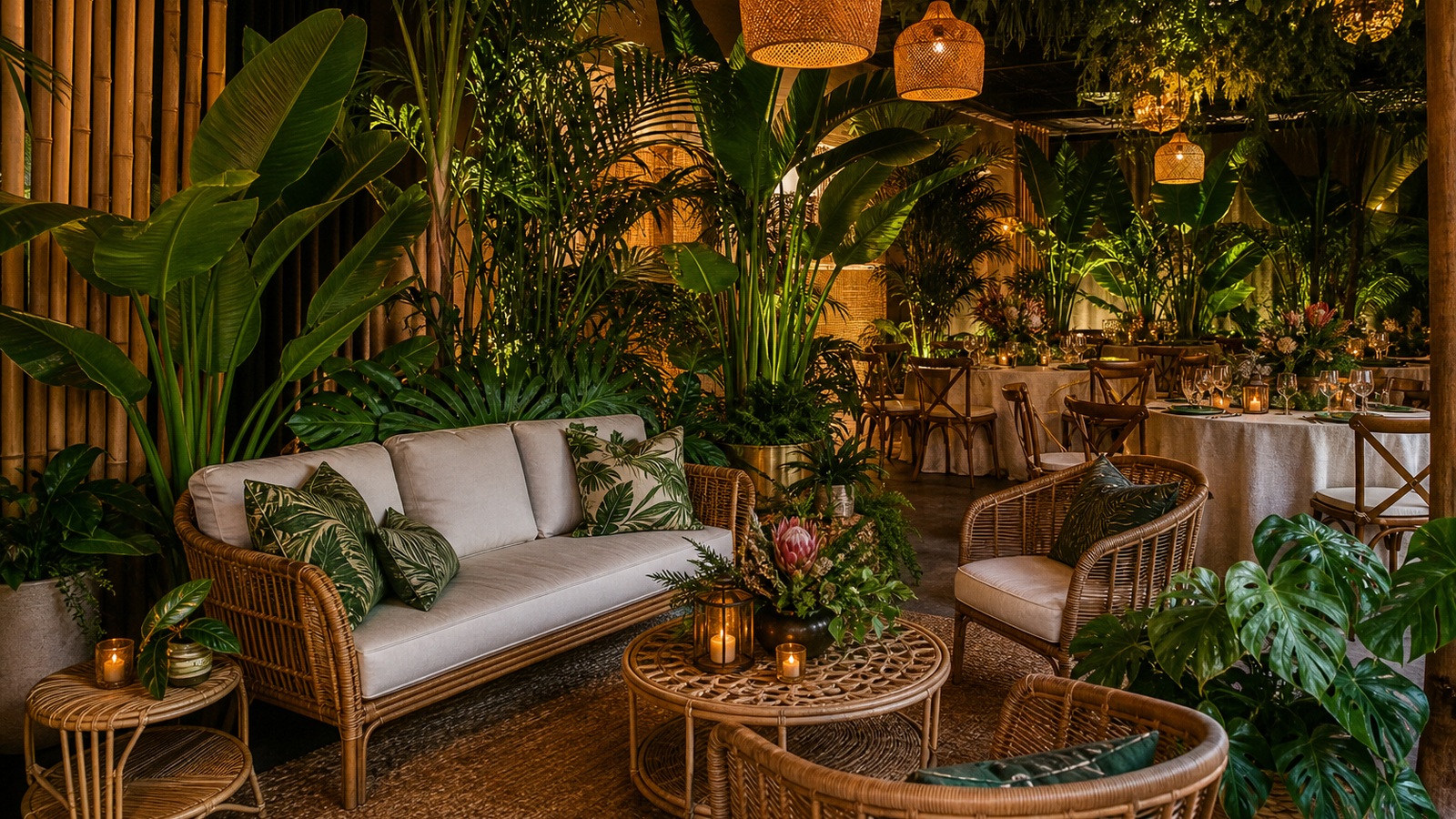
A tropical jungle party needs faster visual impact than a bedroom. Guests should understand the mood as soon as they enter, so entry points, buffet tables, photo areas, and seating clusters carry more importance than small shelf details. Large palms, banana leaves, and trailing vines create instant scale, while a few strong material choices keep the look from becoming a pile of decorations.
Bedrooms need the same idea translated into calm. A bed can become the canopy moment, a plant can frame the window, and a woven shade can make ordinary daylight feel warmer. In an event, the theme can be bolder because it lasts for a few hours; in a bedroom, it has to support sleep, cleaning, and daily use.
Before buying anything, decide whether the space should feel festive, romantic, adventurous, or serene. That decision changes the palette, lighting, and density. A birthday party may use citrus, hibiscus, and glossy leaves. A resort-style bedroom may use olive, cream, cane, and linen. A dinner event may lean into shadow, candlelight, and dark wood.
Use Foliage as Architecture
The fastest way to make a tropical theme feel convincing is to use plants and leaf shapes as architectural elements. Tall palms can mark corners, broad leaves can frame a table, and hanging vines can soften a ceiling line. Even when some greenery is faux, the placement should imitate how plants behave in real spaces: climbing, leaning toward light, clustering near edges, and creating filtered views.
Avoid spreading equal amounts of greenery everywhere. Real jungle settings have density and clearing, shade and opening. A stronger room might have one lush wall, one dramatic corner, and one restrained surface where people can place drinks or belongings. That contrast lets the greenery feel abundant without making the space hard to use.
Build a Palette With Heat and Shadow
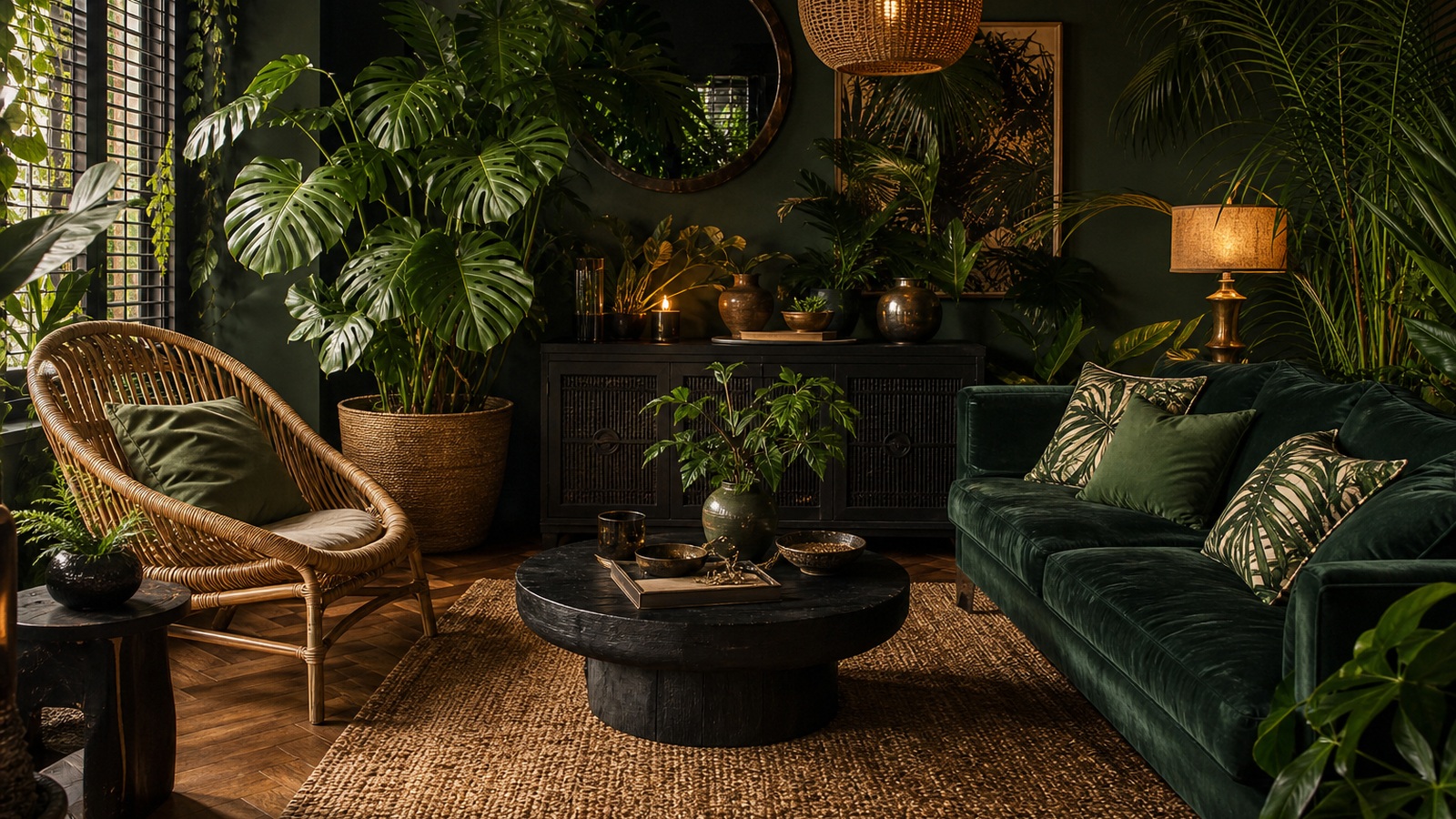
Tropical palettes often fail when every color is bright at once. Green should do the main work, but the supporting colors need a temperature. Warm bamboo, honey rattan, terracotta, mango, coral, and aged brass create heat. Deep teal, espresso, charcoal, and blackened bronze create shadow. Together they make the space feel more dimensional than green and white alone.
For bedrooms, keep the largest surfaces quieter. Cream walls, a muted green headboard, natural linen, and one saturated botanical print can feel tropical without overwhelming sleep. For parties and events, color can be concentrated in flowers, fruit, glassware, napkins, or a dramatic backdrop. The room remains easier to edit when the brightest elements are replaceable.
A useful rule is to let the greens vary in value. Pair dark monstera leaves with softer fern tones and yellow-green accents. When every leaf is the same artificial green, the theme looks flat; when the greens shift naturally, the eye accepts the scene more easily.
For a party, this color layering can happen in temporary pieces such as florals, napkins, table runners, and glassware. For a bedroom, it should sit in longer-lasting elements like paint, curtains, bedding, and lamps. Keeping those uses separate makes it easier to enjoy the same tropical language without making a permanent room feel as loud as a one-night celebration.
Choose Materials That Feel Humid and Handmade
Texture gives a tropical jungle theme its believability. Rattan, cane, bamboo, grasscloth, jute, carved wood, stoneware, linen, and woven baskets all suggest a warmer, slower environment. They also keep the theme from relying only on prints. A plain rattan chair often says more than a dozen small leaf-patterned objects.
For events, materials can organize the guest experience. Use woven trays on serving tables, bamboo screens behind seating, linen or cotton tablecloths, and ceramic dishes with imperfect surfaces. For bedrooms, introduce texture through a headboard, bedside lamp, rug, hamper, or curtain rather than filling every surface with decorative props.
The best tropical rooms mix rough and smooth. Glossy leaves look better beside matte plaster, raw jute, or weathered wood. Polished brass or glass can then add a little resort glamour without turning the theme into a showroom display.
Make Lighting Feel Filtered
Jungle atmosphere depends heavily on light. Bright overhead lighting can flatten the entire theme, while layered lamps, lanterns, sconces, and candlelight create pockets of glow. In a party space, lanterns tucked among leaves can make a wall feel deeper. In a bedroom, a shaded lamp near a plant casts soft shadows that feel more magical than a literal mural.
Use warm bulbs and keep the light source partly hidden when possible. The goal is not darkness; it is filtered light, like sun passing through leaves or evening light on a terrace. For events, add practical light near food, steps, and pathways so the atmosphere stays comfortable and safe.
Adapt the Theme for Bedrooms
A tropical jungle bedroom should feel restful first. Start with breathable bedding, a grounded palette, and one or two large natural textures. A cane bed, a linen duvet, and a tall plant can do more than a busy wall of novelty decor. If you want pattern, place it where it can be enjoyed without exhausting the room, such as a curtain panel, pillow, framed print, or single wallpaper wall.
Storage also matters. A bedroom with visible clutter quickly loses the resort feeling that tropical design can offer. Use baskets, closed nightstands, or a wardrobe with warm wood tones to keep daily items out of sight. The cleaner the surfaces, the more intentional the lush pieces appear.
Sound and scent can support the theme quietly. A fan, soft textiles, and a subtle botanical fragrance make the room feel sensory without adding visual clutter. The result is tropical in mood, not theatrical in a way that becomes tiring.
The bedroom version also benefits from a cooler morning plan and a warmer evening plan. During the day, the greenery and woven textures can feel fresh and airy. At night, low lamps and deeper colors should take over so the room becomes quieter, more private, and less visually active.
Shape an Event Around Movement
For parties and larger events, guests should move through the theme rather than simply look at it. Create a strong arrival moment, then let the design repeat in smaller ways at the bar, dining area, lounge, and photo location. Repetition helps the event feel planned, while varied density keeps guests curious.
Think about sightlines. A tall plant behind a chair, a leaf garland above a doorway, or a warm lantern on a table can guide people naturally. Leave enough open space for circulation, especially around food and music. A jungle theme should feel generous, not crowded.
If the event is outdoors or semi-outdoors, lean into the real setting. Existing trees, patios, pergolas, and garden beds can become part of the design. Add only what improves the atmosphere: woven seating, tropical flowers, warm string lighting, and a few dramatic leaf groupings.
Edit the Final Layer
The final layer is where many tropical themes go too far. Animal figurines, novelty signs, plastic vines, printed plates, and oversized props can all be fun in the right setting, but they should not compete with the bigger mood. Choose the details that support the occasion and remove the ones that only repeat the idea.
A bedroom may need almost no novelty at all. A party can use more playful cues, but the most memorable elements should still feel intentional. If the room already has lush plants, warm lanterns, and woven furniture, one vivid floral arrangement or fruit display may be enough to finish it.
Tropical jungle style is strongest when it respects both fantasy and function. Let plants create structure, materials create warmth, and light create atmosphere. Then leave people enough space to relax, talk, sleep, dance, or gather comfortably inside the world you have built.
One useful finishing test is to remove three small items and see whether the room actually loses anything. If the theme still reads clearly, those pieces were probably noise. If the space suddenly feels thin, replace only the strongest detail and leave the rest alone.
Use Food and Flowers as Living Decor
Tropical styling becomes more convincing when edible and floral elements carry some of the decoration. Pineapple, citrus, mango, banana leaves, orchids, ginger flowers, and oversized greenery can turn a buffet or bar into part of the room rather than a separate service area. This is especially useful for events because the decorative layer has a purpose and naturally disappears after the gathering.
In a bedroom, the same idea becomes quieter. A single vase of leafy stems, a citrus-colored pillow, or a ceramic bowl in a warm fruit tone can bring tropical life without making the room feel like a party. The reference should be sensory and fresh, not overly literal.
Keep the Theme Comfortable After the First Impression
The first impression may come from greenery and color, but the lasting impression comes from comfort. Chairs need space around them, beds need calm bedding, and event tables need enough clear surface for plates and glasses. Tropical jungle style loses its appeal if people have to move props before they can sit down, eat, or sleep.
Walk through the finished space like a guest or the person who will use the bedroom every day. Notice where bags land, where drinks go, how lamps turn on, and whether any plant or hanging element gets in the way. A theme that works physically will always feel more polished than one that only looks full in a photograph.
This practical pass also protects the atmosphere. When the room functions well, people relax into the setting instead of noticing the styling as an obstacle. That is when tropical design feels immersive in the best sense: vivid, warm, and easy to inhabit.
Make the Theme Feel Personal
A tropical jungle theme becomes more memorable when it reflects the people using the space. A party might include a favorite cocktail color, a travel-inspired playlist, family-style food, or flowers that connect to a personal memory. A bedroom might include a framed photograph, a handmade basket, or a piece of art that gives the lush setting a story.
Personal details should still respect the larger mood. If the room is already full of leaf shapes and warm light, choose personal objects that add texture or meaning rather than more visual noise. A single carved tray from a trip can feel stronger than a group of unrelated souvenirs.
This approach also keeps the theme from looking rented or generic. Guests and daily users can sense when a room has been assembled around real taste instead of a shopping list. The jungle feeling becomes a setting for life, not a costume placed over the room.
When in doubt, place the personal detail where people naturally pause: a bedside table, bar tray, entry console, or lounge table. Those small moments create connection without interrupting the broader tropical atmosphere.