A Royal Castle Wedding Starts With Atmosphere and Flow
A medieval castle wedding theme feels most beautiful when it is built around ceremony, movement, and material atmosphere instead of obvious props. Stone walls, arches, long tables, candle-style lighting, textured flowers, music, velvet, linen, aged metal, and deep color can all create a royal mood, but the day still needs to feel graceful for guests. The strongest version of this theme honors the setting, guides people through the celebration clearly, and uses old-world details in ways that feel elegant rather than theatrical.
A: Yes. Arches, stone texture, candlelight, long tables, and formal music can create the atmosphere.
A: Use real fabrics, flowers, lighting, and paper goods instead of novelty crowns or plastic props.
A: No. Those details are usually easier to overdo than flowers, textiles, and architecture.
A: Cream, plum, deep red, moss, charcoal, antique gold, and warm wood tones work especially well.
A: Use them when the room supports service and guest movement; otherwise round tables can still feel regal.
A: Roses, ranunculus, hellebores, branches, ivy, ferns, and textured seasonal blooms.
A: Use enough for atmosphere, but follow venue rules and keep flames protected from fabric and greenery.
A: Yes. Clean tableware, simple stationery, and restrained styling can modernize the old-world setting.
A: Comfort, lighting, clear movement, and sound matter as much as the decorative theme.
A: Avoid fake parchment everywhere, plastic goblets, crowded props, and decor that blocks the venue's architecture.
Let the Venue Lead the Story
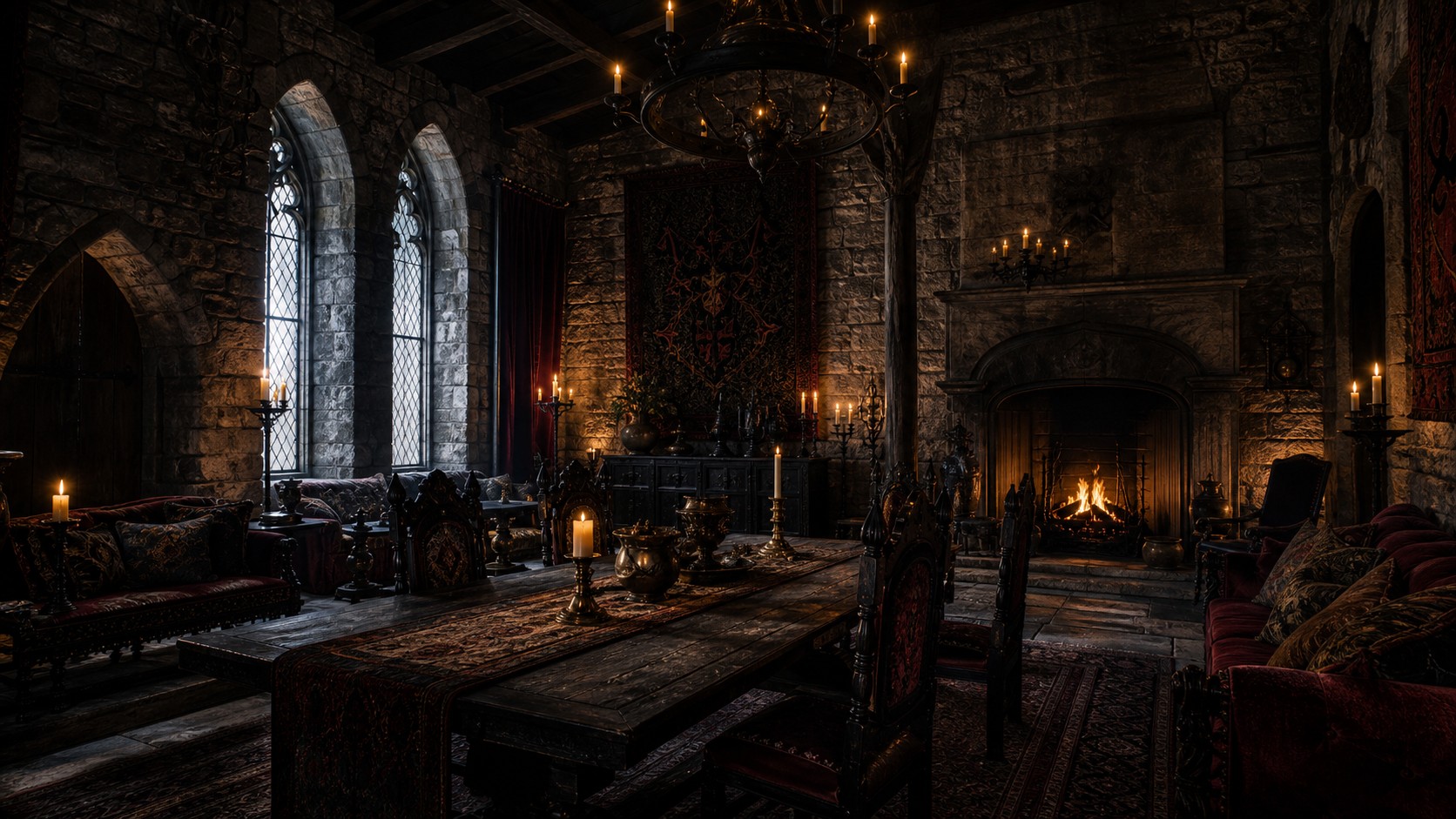
The venue should be the first design decision in a medieval castle wedding theme. A real castle, stone hall, historic estate, chapel, courtyard, old library, or vaulted dining room already contains the mood the wedding needs. Look for arches, fireplaces, staircases, timber ceilings, ironwork, heavy doors, textured walls, and dramatic windows. Those features can do more for the theme than any accessory brought in later.
If the venue is not a castle, the same principle still applies. Choose the strongest architectural feature and make it the center of the wedding story. A tall doorway can frame the ceremony, a fireplace can anchor the vows, a long dining room can become a banquet hall, and a courtyard can become a processional space. The theme feels more royal when it grows from the venue instead of sitting on top of it.
Make the Arrival Feel Ceremonial
Guests should feel the change in mood as soon as they arrive. Lanterns, greenery, musicians, stone paths, draped doorways, and candlelit thresholds can create anticipation before the ceremony begins. The arrival does not need to be crowded with decor. A few strong gestures placed along the route will feel more elegant than many small themed objects.
Think about the guest path from entrance to ceremony, ceremony to cocktail hour, cocktail hour to dinner, and dinner to dancing. Medieval castle weddings often use venues with multiple rooms, stairs, courtyards, or halls. Clear movement matters. When guests know where to go and the route feels beautiful, the whole event feels more polished.
Frame the Ceremony With Height
A royal ceremony needs a clear focal point. Arches, tall windows, staircases, fireplaces, chapel doors, and stone walls all create natural frames for vows. Use height to make the ceremony feel important, but keep the couple visible. Tall flowers, banners, branches, or candelabras should lift the space without blocking faces or sightlines.
The aisle should feel like a procession, not just a walkway. Low lanterns, greenery, petals, fabric, or simple floral markers can guide the eye toward the vows. Music can also shape the ceremony. Strings, harp, choir, brass, or a solo vocalist can add royal emotion without requiring extra visual decoration.
Use Candlelight With Care
Candlelight is central to the castle wedding mood, but it needs planning. Real flames may be limited by venue rules, especially near fabric, historic wood, greenery, or crowded dining tables. Hurricane glass, enclosed lanterns, stable holders, and battery-operated candles can create the glow while keeping the event safe and practical.
Layer candle-style light with other warm sources. Uplighting on stone walls, chandeliers, sconces, table lamps in lounge areas, and hidden service lighting can keep the space usable after dark. The goal is romance, not dimness. Guests should be able to read menus, walk stairs, see food, and move safely through the venue.
Create a Banquet Feeling at Dinner
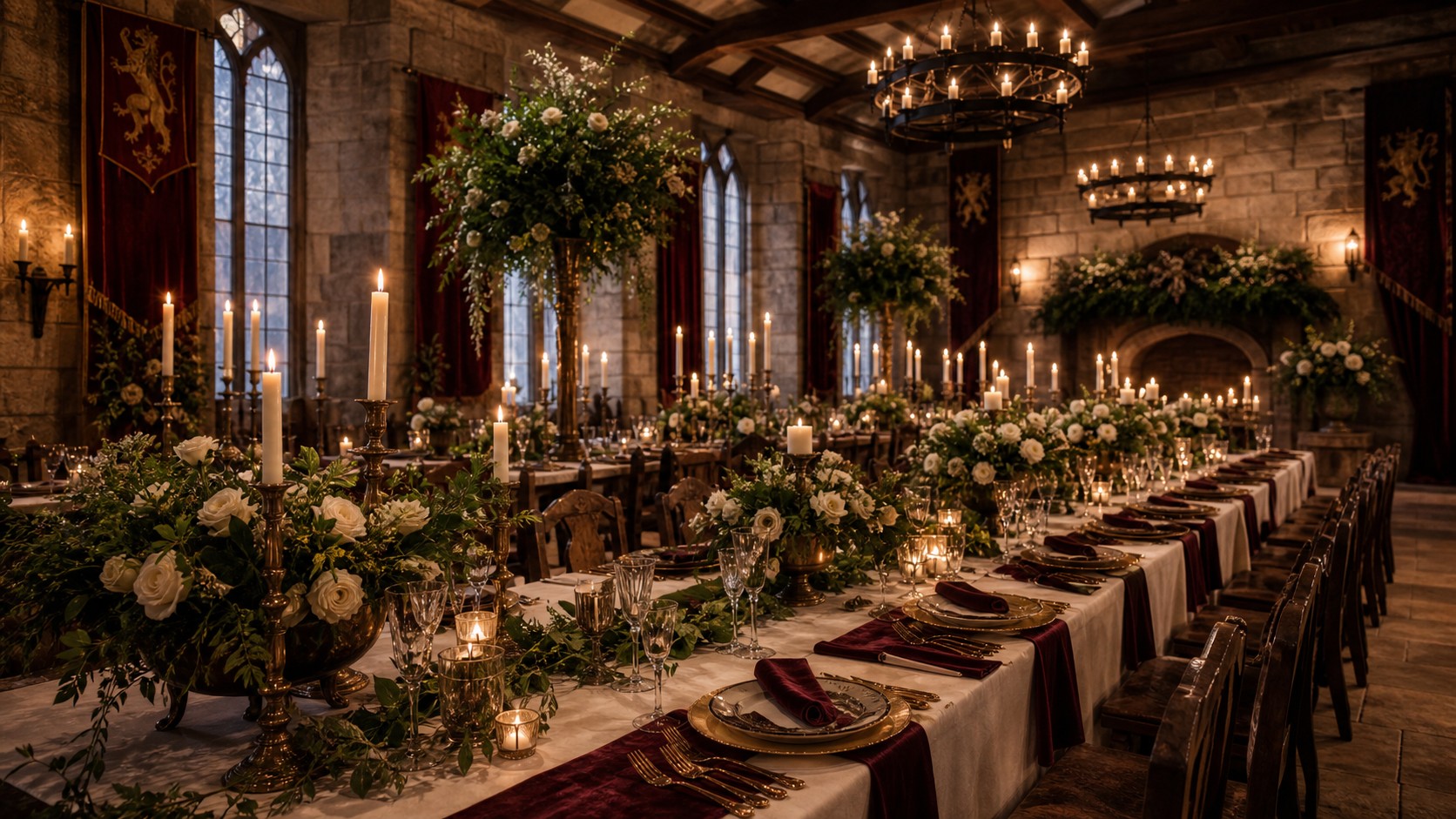
The dinner is where a medieval castle wedding can feel especially royal. Long tables immediately suggest a feast, but they only work if the room has enough space for guests and servers. Use generous spacing, comfortable chairs, layered linens, low florals, fruit, herbs, ceramics, brass, and candlelight to create abundance without crowding the meal.
Round tables can still fit the theme when long tables are not practical. Heavier fabrics, darker goblets, ornate chargers, textured flowers, and warm light can give them a banquet feeling. The head table may carry a richer version of the design with deeper color, more candles, or a stronger floral moment. The table should feel generous and gathered, not overloaded.
Choose Flowers That Soften Stone
Castle wedding flowers should look romantic and slightly wild rather than too polished. Roses, ranunculus, hellebores, ivy, ferns, branches, trailing greenery, and seasonal blooms can soften stone walls and heavy wood beautifully. The arrangements should feel as if they belong to the setting, especially when placed along mantels, stair rails, arches, banquet tables, and doorways.
Color should respond to the venue. Cream and blush lighten gray stone. Deep red, plum, and moss feel regal in darker halls. Warm gold, rust, and ivory can keep the palette from feeling cold. Avoid making every arrangement massive. A few large moments supported by smaller textured pieces will feel more natural and more expensive.
Use Royal Details Sparingly
Themed details can support the mood when they are tied to real wedding moments. Wax seals, textured paper, ribbon, calligraphy-style menus, goblets at the head table, velvet wraps, carved wood signs, and old-world ring boxes can all feel appropriate. These details work because they are connected to invitations, vows, dining, portraits, or guest guidance.
Novelty objects are the danger. Plastic crowns, toy swords, fake parchment everywhere, and repeated crests can make the wedding feel less elegant. A royal medieval theme does not need to be explained on every surface. Let the materials, music, lighting, flowers, and venue tell the story.
Think About What Guests Will Feel
Historic and castle-like venues can be beautiful, but they can also be drafty, uneven, dim, or spread out. Guest comfort should be part of the design plan from the beginning. Check heating, cooling, restrooms, seating, accessibility, sound, lighting, and weather protection before adding extra decorative details. A wedding can look royal and still feel frustrating if guests are cold, confused, or unable to hear speeches.
Comfort details can fit the theme. Wraps, warm drinks, lantern-lit paths, cushioned seating, rugs in lounge areas, and clear attendants can all feel natural in an old-world setting. The more comfortable guests are, the more they can enjoy the atmosphere you worked to create.
Style the Wedding Party With Restraint
The wedding party can support the medieval castle theme without looking costumed. Rich fabric, deeper color, textured bouquets, velvet accents, capes for portraits, antique jewelry, or dark suits can all echo the setting. The clothing should still feel like wedding attire first. When garments become too theatrical, they can distract from the couple and the ceremony.
For the couple, one or two old-world details are usually enough. A dramatic veil, embroidered fabric, heirloom-style ring, velvet shoe, brooch, cloak for outdoor portraits, or textured bouquet can carry the mood. These choices photograph beautifully against stone and candlelight while still feeling personal.
Use Paper Goods as Quiet World-Building
Invitations, menus, escort cards, programs, and table numbers can make the theme feel consistent before guests ever reach the venue. Choose heavy paper, deckled edges, wax seals, ribbon, muted ink, or calligraphy-inspired type when it suits the event. The paper should feel tactile and refined, not like a novelty scroll.
Keep wording clear. Guests need to understand timing, dress code, transportation, and movement between spaces. Beautiful paper goods lose their purpose if they are difficult to read. The best stationery adds old-world texture while still doing the practical work of guiding the day.
Create Royal Moments Without Over-Scheduling
A castle wedding can include memorable moments without turning the day into a performance. A candlelit dinner reveal, live music during cocktail hour, a staircase entrance, a courtyard toast, or a dramatic sendoff can create the royal feeling naturally. These moments should be timed so guests can enjoy them without being moved constantly from one scene to another.
Give the schedule room to breathe. Historic venues often take longer to navigate, especially with stairs, courtyards, heavy doors, and photo locations in different areas. A relaxed timeline makes the grandeur feel effortless. When guests are not rushed, the setting has time to make an impression.
Design Lounge Areas for the Setting
Lounge furniture can make a castle wedding feel warmer and more personal. Velvet chairs, wood tables, antique-style lamps, rugs, and low florals can create places for guests to rest between dinner and dancing. These areas are especially helpful in large venues where a single ballroom can feel formal for the entire night.
Keep lounge pieces proportional to the architecture. Tiny furniture can disappear in a great hall, while oversized pieces can block movement. The lounge should feel like an extension of the wedding, not a rental package placed in a corner. Good lighting and comfortable seating make the old-world setting easier to enjoy.
These quieter spaces also help different generations enjoy the celebration. Some guests will dance, some will talk, and some will need a place to sit away from the music. When the lounge still uses the wedding palette, it supports the theme while making the event feel more considerate.
Balance Medieval Mood With Modern Service
The wedding may look medieval, but the service should feel modern, smooth, and clear. Catering stations, bars, restrooms, coat check, transportation, and timelines need to work without confusion. If the venue has several rooms, use lighting, staff, and simple signs to guide people. A royal event feels effortless when the logistics are carefully managed.
Modern touches can also keep the theme from becoming heavy. Clean glassware, simple plates, refined stationery, comfortable chairs, and uncluttered table settings can balance stone, velvet, candlelight, and dark color. The result feels elevated rather than literal.
Plan the Evening Transformation
A castle wedding often becomes more magical after sunset. This is when candles, chandeliers, music, shadows, and stone texture begin to work together. Plan the transition from daylight to evening so the reception does not suddenly feel too dark. Add light to bars, paths, restrooms, cake tables, lounge areas, and dance floors before guests need it.
The evening should also have a focal moment. A candlelit dinner reveal, staircase entrance, first dance under chandeliers, courtyard sendoff, or late-night dessert table can create memory without forcing a performance. The theme feels royal when the night has rhythm.
Keep the Romance, Remove the Costume
The best medieval castle wedding theme is romantic, textured, and ceremonial. It does not need to look like a historical reenactment. When the venue leads, flowers soften the architecture, light guides the evening, and details stay connected to real wedding moments, the theme feels believable.
Before the final walkthrough, look for anything that feels more like a prop than part of the celebration. The most elegant castle weddings usually become stronger when one or two obvious details are removed. This gives the stone, flowers, music, and candlelight more room to work.
Before finalizing the design, remove anything that feels like a prop instead of a choice. Keep the pieces that support vows, dining, movement, comfort, atmosphere, and memory. That restraint is what lets the wedding feel royal in a way that is still personal, graceful, memorable, and deeply celebratory. The setting should feel honored, not overwhelmed.