A Western Bedroom Should Feel Restful First
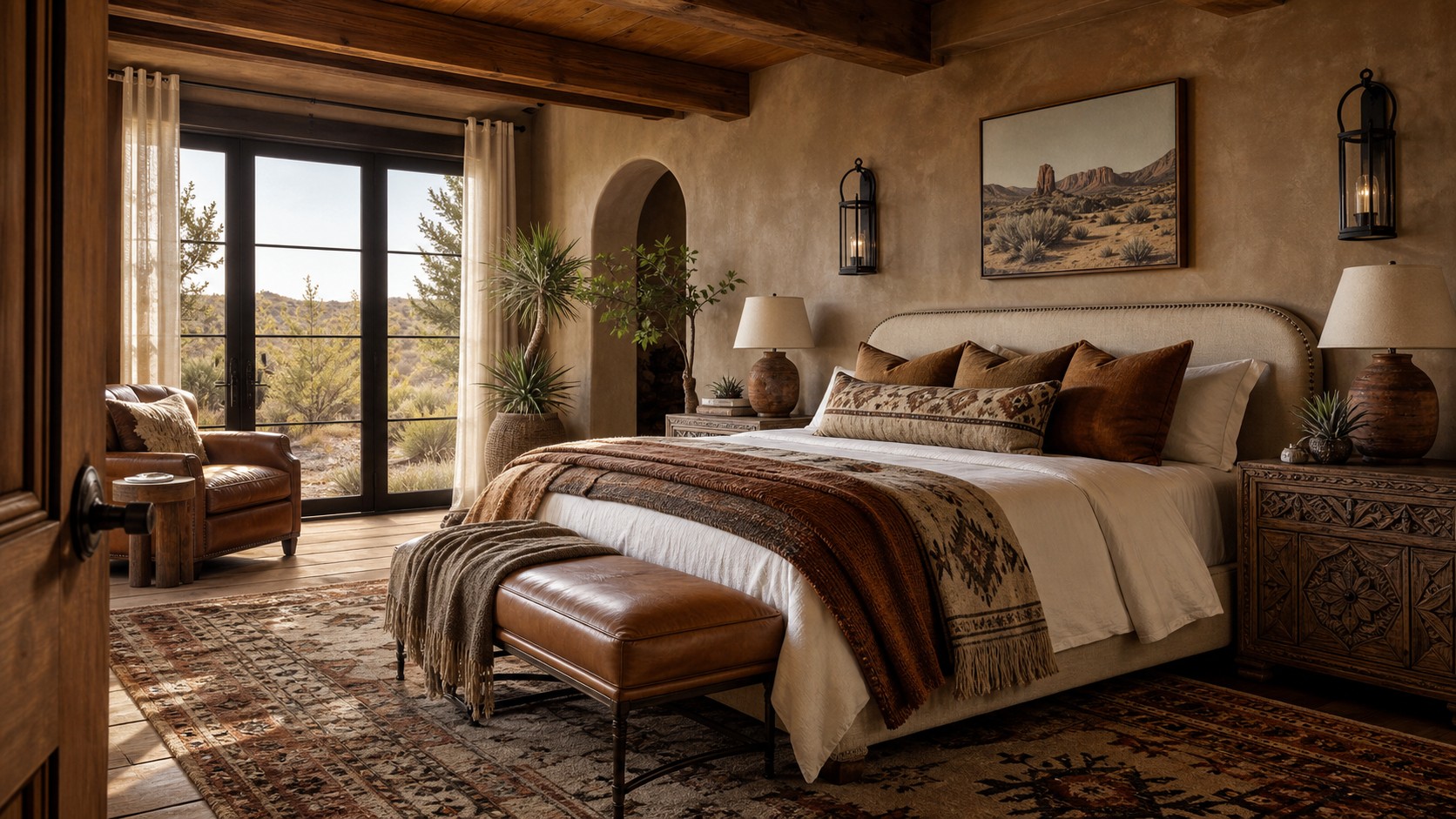
Western bedroom design works best when comfort leads and frontier style supports it. The room can include leather, wool, carved wood, iron lamps, patterned rugs, and desert color, but it should never feel like a prop room. A bedroom needs softness, quiet, storage, good lighting, and surfaces that help daily routines. When western details are chosen for texture and warmth, the room can feel rugged, personal, and deeply relaxing.
A: Yes, if bedding, curtains, rugs, and warm lamps balance the rugged materials.
A: No, an upholstered bed can work with western nightstands, rugs, and textiles.
A: Cream, oatmeal, sand, and warm white are flexible starting points.
A: Not when used as a bench, chair, pillow, or small accent.
A: Muted geometric, kilim-inspired, worn traditional, or warm textured rugs all work.
A: Yes, with fewer larger gestures and lighter bedding.
A: Only if they are meaningful and do not crowd the sleep space.
A: Warm bedside lamps, sconces, or shaded iron fixtures create the right mood.
A: Use cleaner furniture lines and edit literal frontier props.
A: Usually the bed, rug, or one strong piece of art.
Make the Bed the Calm Center
The bed should be the softest part of a western bedroom. Start with breathable sheets, a comfortable duvet or quilt, and pillows that feel generous without becoming overstyled. Cream, oatmeal, white, sand, or warm gray bedding gives the room a calm base.
Western character can then appear in layers. A wool blanket, striped throw, leather accent pillow, or patterned coverlet can bring frontier texture without making the bed feel busy. The bed should invite sleep first and communicate style second.
If the room has a strong rug or dark wood furniture, keep the bedding simpler. If the architecture is plain, the bed can carry more pattern and color. Balance is what makes the space feel restful.
Use Leather Where It Adds Warmth
Leather belongs naturally in western rooms, but in a bedroom it should feel warm rather than heavy. A bench at the foot of the bed, a reading chair, a small ottoman, or leather drawer pulls can be enough. These touches add material richness without making the room feel like a lodge.
Choose leather tones that relate to the room's palette. Cognac and saddle brown warm up cream bedding, while dark brown can ground a larger bedroom. Too many leather pieces can make the room feel stiff, so balance them with cotton, linen, wool, and soft rugs.
Leather also works well in small functional details. A strap on a mirror, a tray on a dresser, or wrapped pulls on a nightstand can introduce the material without adding another large piece of furniture. These quieter touches are especially helpful in smaller bedrooms.
Because bedrooms are quieter than living rooms, the leather finish should be considered closely. Matte or gently worn leather usually feels calmer than glossy leather. The softer finish helps the material blend with bedding instead of dominating it.
Bring in Wood With Character
Wood gives a western bedroom its sense of grounding. Nightstands, bed frames, benches, dressers, ceiling beams, or picture frames can all carry the material. The wood does not have to be rough; it simply needs enough grain and warmth to feel connected to the landscape.
Carved details can be beautiful when used in moderation. A carved nightstand beside a plain upholstered bed may feel special. A carved bed, carved dresser, carved mirror, and carved lamps can become too much. Let one or two pieces carry the detail.
If the room is small, choose wood pieces with visible legs or simpler profiles. Heavy solid blocks can shrink the space. Modern western bedrooms often work best when rustic material meets cleaner shape.
Ground the Room With a Rug
A rug can bring western color, pattern, and softness in one decision. Look for muted geometric designs, kilim-inspired stripes, worn traditional patterns, or warm neutral texture. The rug should be large enough to extend beyond the bed so the room feels anchored.
Pattern scale matters. A tiny busy pattern can make the bedroom restless, while a larger, softened pattern feels calmer. If the rug is strong, repeat one of its colors in a blanket, lamp, or artwork. This makes the room feel connected rather than decorated in separate pieces.
For comfort, use a rug pad and choose a texture that feels good under bare feet. Western style should still support the body, especially in a bedroom.
Layer a smaller textile over a larger neutral rug only when the room needs more character. This can work beautifully at the foot of a bed or near a reading chair, but the layers should lie flat and feel safe underfoot.
Choose Iron and Ceramic Lighting
Lighting shapes the entire mood of a western bedroom. Black iron lamps, bronze sconces, ceramic bases, linen shades, and shaded lantern forms can all work. The light should be warm and soft enough for evening routines.
Avoid relying only on overhead light. Bedside lamps, reading sconces, and a soft accent lamp can create a layered glow. This is especially helpful when the room has dark wood or leather, because warm light reveals texture.
If bedside space is limited, wall-mounted sconces can free the nightstand while still bringing iron or bronze into the room. Choose shades that direct light downward or outward softly. The goal is a pool of warmth, not a spotlight beside the bed.
Use Desert Color Gently
Western bedrooms often look best in colors that feel faded by sun and landscape. Cream, clay, rust, sage, tobacco, sand, bone, charcoal, and warm white can create a grounded palette. The strongest colors should usually appear in textiles, art, or ceramics rather than every wall.
A clay wall or sage headboard can be beautiful, but the bedding and lighting need to soften it. If the room already has dark furniture, choose lighter walls. If the room feels too pale, add rust, brown, or charcoal in small layers.
The goal is sleep-friendly warmth. A bedroom can feel western without becoming visually hot or heavy. Let the palette settle before adding more color.
Color can also be adjusted seasonally. Rust and heavier wool may feel right in winter, while lighter cotton, sage, and cream can make the same bedroom feel fresher in summer. The foundation remains western even as the layers change.
Add Frontier Details With Restraint
Frontier references are most successful when they are useful or personal. A vintage trunk can hold blankets. A woven basket can hold laundry. A framed landscape can create a horizon. A handmade textile can bring history and pattern.
Avoid filling the bedroom with props. Hats, ropes, saddles, antlers, and signs may fit some homes, but they should not crowd the sleep space. One meaningful object on a wall or dresser is stronger than many generic references.
A western bedroom should feel as though it belongs to someone, not as though it was assembled from a theme aisle. Personal restraint makes the style more believable.
Make Storage Part of the Style
Bedrooms gather clutter quickly, so storage is part of the design. Closed nightstands, a dresser with warm wood, under-bed storage, a bench with space inside, or baskets in natural fibers can keep the room calm. Western texture works well for storage because baskets, trunks, and wood cabinets already belong to the material language.
Keep the top of the nightstand edited. A lamp, book, small dish, and one personal object may be enough. When surfaces stay clear, the richer materials have more presence.
Storage should also account for seasonal bedding. Western bedrooms often use blankets and quilts that are beautiful but bulky. A trunk, bench, or high closet shelf keeps those layers accessible without letting them crowd the room in warmer months.
Closed storage is especially useful when the room uses pattern. A patterned rug, blanket, and artwork already give the eye plenty to enjoy. Clear dressers and nightstands let those choices feel intentional.
Create a Reading or Dressing Corner
If space allows, a small corner can make the room feel more complete. A leather chair, woven throw, floor lamp, and small table create a quiet place to read or put on boots. This is an easy way to bring western character without crowding the bed.
In smaller rooms, the corner may be only a bench, wall hook, and lamp. The idea is to give daily routines a beautiful place. Frontier style feels more authentic when objects have a use.
A mirror with a wood or iron frame can finish the area. Place it where it reflects light rather than clutter, and the room will feel larger and warmer.
Keep the Room Soft Around the Edges
Western style can become too hard if every material is wood, leather, metal, and stone. Bedrooms need softness. Curtains, bedding, rugs, pillows, upholstered headboards, and fabric shades help the room feel restful.
Softness also makes the rugged details more noticeable. A leather bench looks better against linen bedding. An iron lamp feels warmer with a fabric shade. A wood nightstand feels calmer beside a soft rug. Contrast is what makes the room inviting.
The best western bedrooms feel grounded and gentle at the same time. They carry frontier character through material, color, and personal detail, but they protect the quiet that a bedroom needs.
A guest room can still include a memorable western moment. One beautiful rug, a leather bench, or a large landscape can make the room feel special without making visitors feel surrounded by someone else's theme.
Choose Wall Decor That Quietly Expands the Room
Western bedrooms often benefit from art that suggests horizon and distance. A desert landscape, tonal mountain print, prairie photograph, or abstract earth-toned painting can make the room feel larger and calmer. The art should support rest rather than shout for attention.
Frames can reinforce the style through warm wood, black iron, aged brass, or simple natural finishes. Avoid crowding the wall above the bed with many small objects. One larger piece, or a pair with generous spacing, usually feels more restful.
Wall decor can also replace clutter. If the room already has strong art, the dresser and nightstands can stay simpler. This keeps the bedroom from feeling crowded while still carrying frontier personality.
Make Guest Bedrooms Feel Welcoming
A western guest bedroom should be easy to use. Leave room for luggage, provide a clear bedside surface, and include enough lighting for reading. Style should not make visitors wonder where to put their things.
Use western details where they add comfort: a warm blanket, a sturdy bench, a good rug, a ceramic lamp, and one piece of landscape art. These choices make the room feel considered without overwhelming someone who is only staying for a few nights.
Guest rooms are a good place for softer palettes. Cream bedding, sage accents, and one leather or wood piece can feel welcoming to many people. The frontier character remains, but the room stays calm.
Morning ease also depends on light. If the room is dark and warm at night, make sure curtains, mirrors, and lamps help it wake up gracefully. A good western bedroom should feel comfortable at both ends of the day.
Keep the Morning Routine Easy
Bedrooms are used at the beginning and end of the day, so the design should support both. Good mirror placement, accessible drawers, a hamper, and a place to sit can make the room function smoothly. Western style should add warmth to those routines, not interrupt them.
A small dressing zone can be as simple as a bench, hook, lamp, and mirror. Choose materials that belong to the room: leather, wood, iron, woven fiber, or warm ceramic. The practical pieces then become part of the design.
When the morning routine works, the bedroom stays calmer at night. That calm is what allows the frontier textures to feel comforting rather than cluttered.