Western Living Rooms Should Invite People to Stay
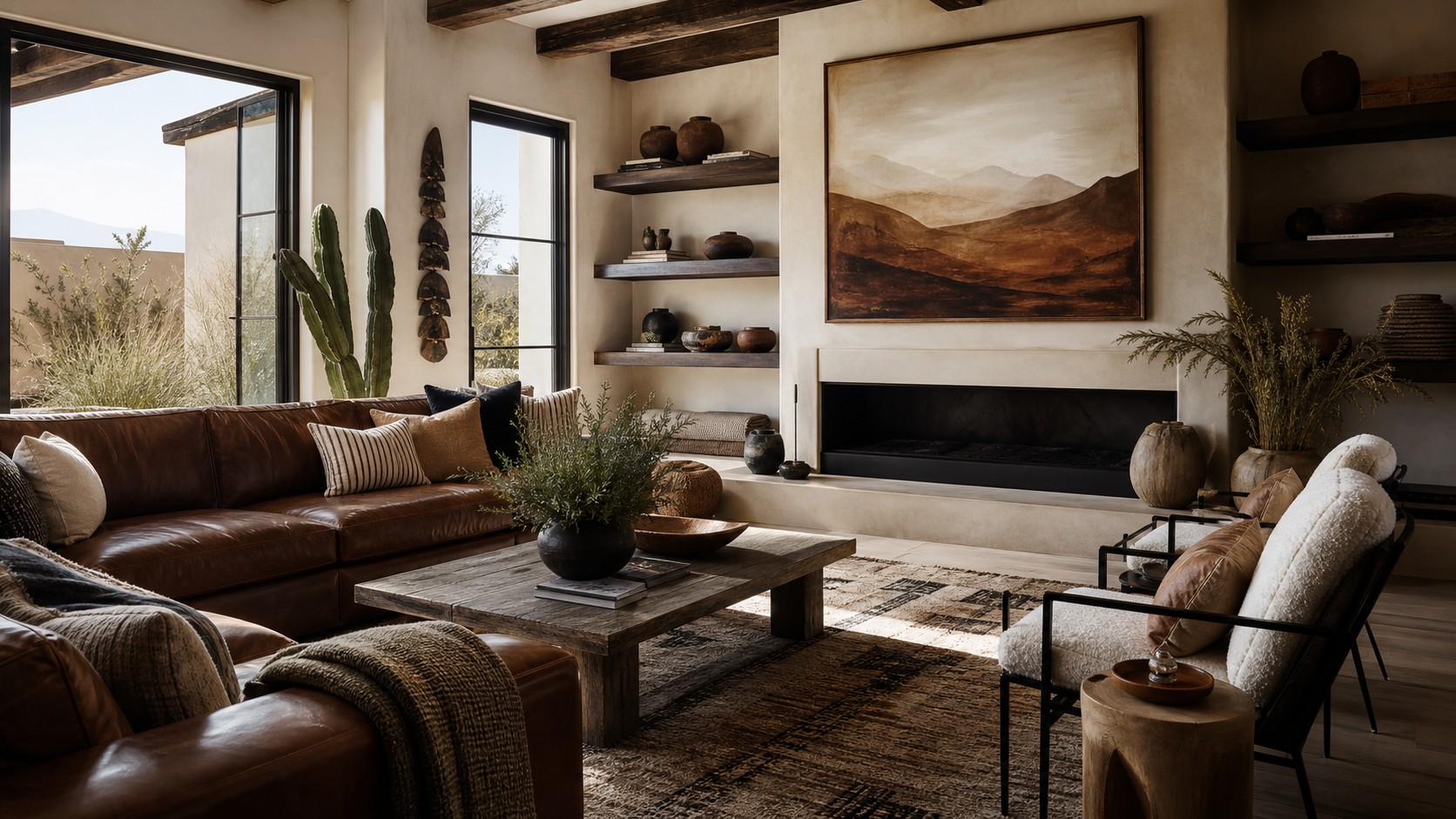
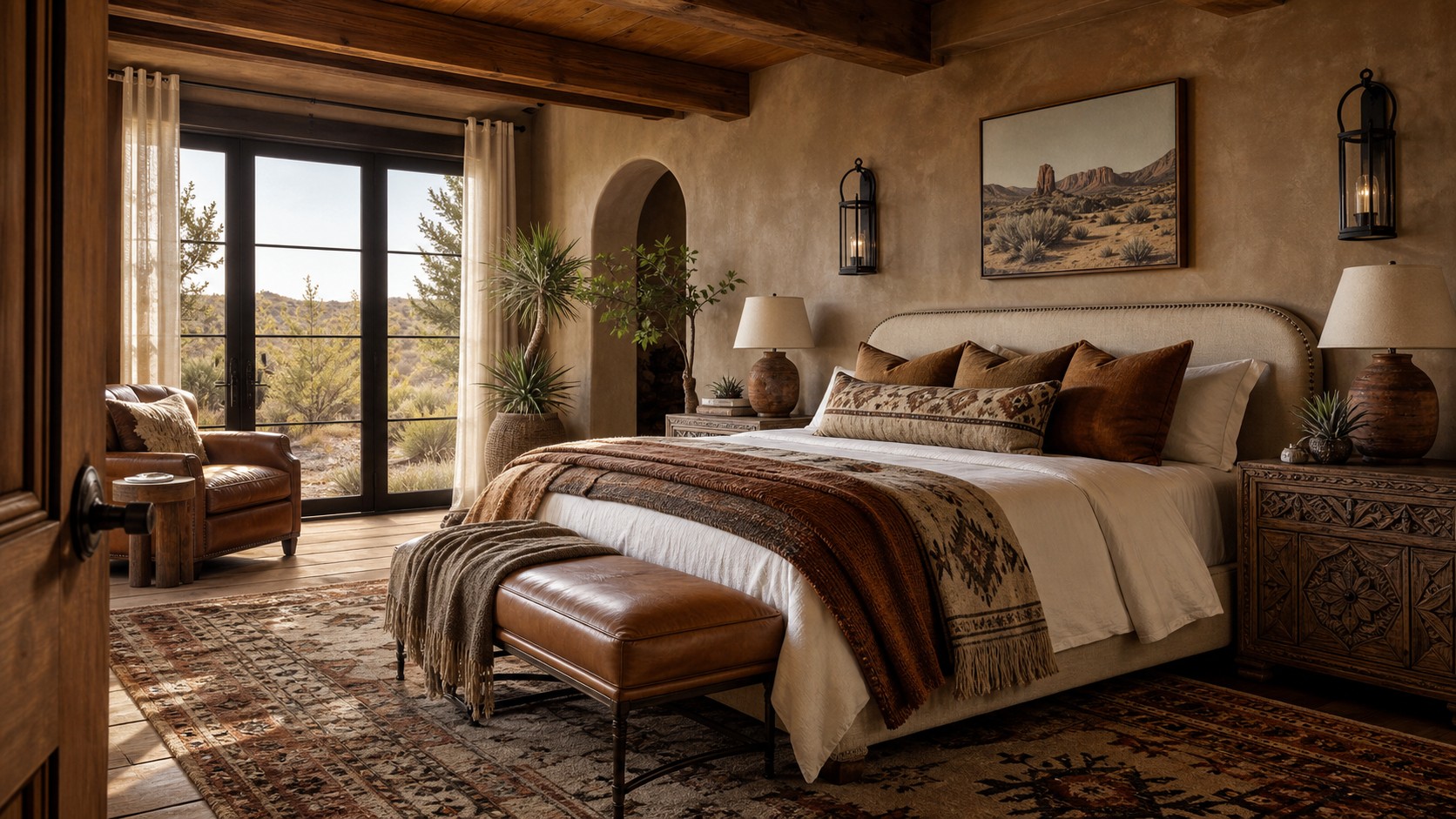
A western living room should feel warm, grounded, and comfortable before it feels themed. The strongest rooms use leather, wool, stone, wood, iron, pottery, and desert color to create a sense of welcome. They feel connected to open landscapes and long evenings, but they also support real conversation, movie nights, guests, pets, and everyday mess. Western style becomes inviting when rugged materials are softened by layout, lighting, and touchable textiles.
A: Comfortable seating, warm lighting, durable materials, and an easy conversation layout.
A: No, a rug, coffee table, and layered lamps can also create a strong center.
A: Saddle, cognac, tobacco, cream, or warm gray can all work depending on the palette.
A: Yes, use cleaner furniture lines and fewer literal props.
A: Add cream, sage, charcoal, warm white, and varied textures.
A: No, wool, flatweave, or traditional rugs can feel just as western.
A: Landscapes, photography, abstract desert forms, and handmade pieces work well.
A: Usually one strong pattern and a few quieter supports are enough.
A: Yes, choose one leather anchor, a good rug, warm lamps, and edited accessories.
A: Remove generic props that do not add comfort, material value, or personal meaning.
Begin With a Conversational Layout
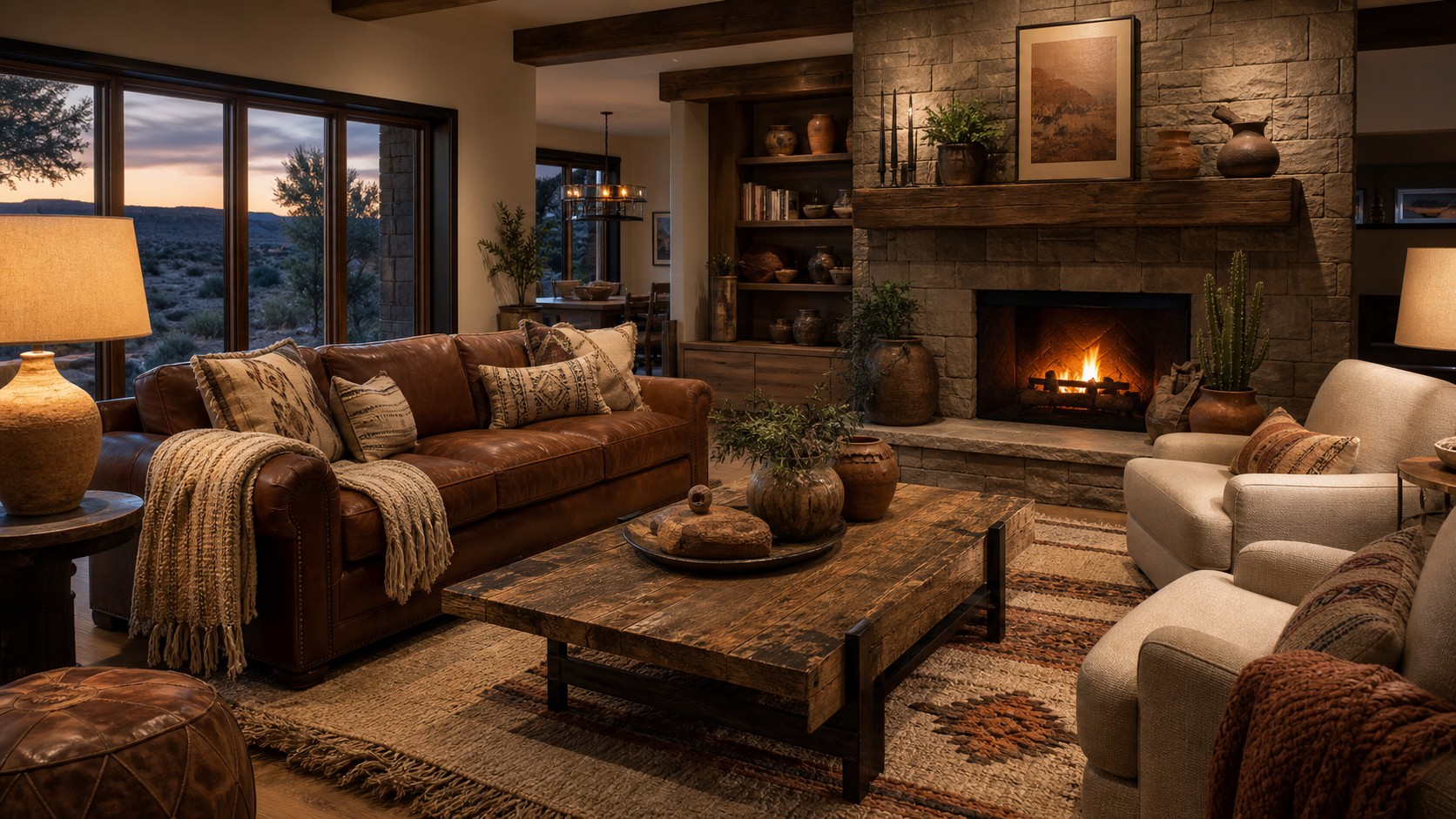
Warmth starts with how people sit. Arrange seating so chairs and sofas face one another rather than only a television. A western living room often feels best around a fireplace, coffee table, or large rug that acts as the gathering center.
Leave enough space for people to move through the room comfortably. Heavy furniture can make a room feel blocked if pathways are too tight. A generous layout makes rustic materials feel relaxed rather than oppressive.
If the room has a view, let the view participate. Seating can turn slightly toward windows, desert plants, mountains, fields, or evening light. Western decor feels more authentic when it acknowledges the outdoors.
A welcoming layout also considers the first seat people choose. If the best chair has no table or lamp nearby, it will not feel as inviting as it looks. Comfort comes from small practical relationships between furniture pieces.
Those relationships make the room feel generous before anyone notices the style.
They also make guests settle in faster.
Choose Leather Seating With Comfort in Mind
Leather is a natural anchor for western living rooms, but the piece should be comfortable enough for long use. A worn saddle-brown sofa, leather club chair, or cognac ottoman can bring warmth and durability. The silhouette should fit the room: cleaner lines for modern homes, softer arms for traditional ones.
Balance leather with fabric. Wool pillows, linen curtains, cotton throws, and textured rugs keep the room from feeling too hard. A living room full of leather can feel heavy, while one leather anchor surrounded by softer surfaces feels welcoming.
Ground the Space With a Rug
A rug can define the seating area and carry much of the western character. Muted geometric patterns, warm traditional rugs, flatweaves, or textured wool rugs all work well. The rug should be large enough that the main furniture pieces connect to it visually.
Color should support the mood. Rust, charcoal, cream, sage, tobacco, and clay can all appear in a rug without overwhelming the room. If the rug is the most patterned element, keep nearby pillows and art quieter.
Rugs also improve comfort. They soften sound, warm the floor, and make a stone or wood-heavy room feel more human. In western style, usefulness and atmosphere should happen together.
Use Stone and Wood as Anchors
Stone fireplaces, wood beams, reclaimed tables, built-in shelves, and rough-hewn mantels can give a western living room depth. These materials feel rooted. They make the room feel as though it belongs to the landscape rather than floating above it.
The trick is to balance mass. A large stone fireplace may need lighter seating and simple shelves. A heavy wood coffee table may need open-legged chairs. When every anchor is massive, the room loses ease.
Modern western rooms often mix rustic anchors with cleaner supporting pieces. A reclaimed coffee table can sit on a refined rug. A stone fireplace can be paired with simple plaster walls. That contrast keeps the room inviting and current.
If the room already has architectural wood, choose simpler furniture wood so the tones do not compete. If the architecture is plain, the coffee table, shelves, or mantel can carry more grain and character.
Layer Textiles for Warmth
Textiles are what make a western living room feel welcoming instead of merely rugged. Wool blankets, woven pillows, linen curtains, hide or hide-inspired textures, cotton throws, and upholstered chairs all soften the hard materials. They also create the lived-in feeling people respond to.
Do not use every pattern at once. Choose one dominant textile pattern, then support it with solids, stripes, or smaller textures. A room with a strong rug may need plain pillows. A plain sofa may welcome a bolder blanket.
Layering should feel casual but considered. A throw over a chair, a blanket in a basket, or pillows that repeat rug colors can make the room feel ready for use.
Texture should also respond to the season. Heavy wool blankets and darker pillows may feel right in winter, while lighter cotton throws and fewer layers can keep the room comfortable in summer. A western living room can change subtly while keeping the same foundation.
Textiles can also create zones inside a larger room. A rug and blanket near the fireplace can mark the warmest gathering area, while lighter pillows near a window can make that side feel more open.
Make Lighting Warm and Low
Western living rooms thrive in warm evening light. Table lamps, floor lamps, sconces, firelight, and shaded fixtures create a glow that flatters leather, wool, stone, and wood. Avoid relying only on bright ceiling light, which can make rustic textures feel harsh.
Lamp materials can reinforce the style. Ceramic bases, iron stands, bronze finishes, leather-wrapped details, and linen shades all fit the language. Place lamps near seating so the room works for reading and conversation.
Good lighting is also what makes the room feel inviting after sunset. A western living room should feel like a place where people naturally settle in.
Layered light also helps guests feel oriented. A lamp near a chair signals a reading spot, a glow near shelves adds depth, and firelight draws people toward the center. The room becomes easier to use because light describes where people can settle.
Decorate With Pottery, Art, and Useful Objects
Accessories should feel grounded. Pottery, baskets, books, trays, landscape art, black-and-white photography, sculptural wood, and handmade objects can all add character. Choose pieces with material presence rather than lots of small theme symbols.
A coffee table might hold a pottery bowl, a stack of books, and a tray for remotes. Shelves might mix ceramics, framed art, and baskets with open space between them. This kind of styling feels useful and personal.
Avoid filling every surface with western props. The room becomes warmer when people can still set down a mug, open a book, or gather around the table without moving decor.
Use Desert Color Without Overheating the Room
Warm palettes can become too intense if every object is rust, brown, or orange. Balance desert tones with cream, bone, sage, charcoal, and warm white. This keeps the room inviting rather than visually hot.
Color can come from textiles, art, pottery, and leather instead of wall paint alone. A neutral room with rust pillows, a sage throw, and tobacco leather may feel more flexible than a room painted in a strong clay tone.
Natural light affects these colors strongly. Test fabrics and paint at the time of day when the room is used most. Western colors should feel warm in evening light and pleasant in daytime light.
If the palette starts to feel too warm, bring in contrast through black iron, cream linen, pale ceramics, or muted green. These cooler or lighter notes keep the room from feeling heavy while preserving the western mood.
Make the Room Family-Friendly
Western living rooms are well suited to real life because many of their materials are durable. Leather can age beautifully, wool can handle use, wood can gain patina, and baskets can hide clutter. Choose finishes that improve with wear rather than fighting it.
Plan storage for blankets, games, pet items, and daily objects. A trunk, cabinet, woven basket, or coffee table shelf can keep the room relaxed. Warmth disappears quickly when clutter has nowhere to go.
Family-friendly design also means accepting patina. A table that can take a mark, leather that can soften, and pottery that feels sturdy make the room less precious. The western mood becomes more believable when wear is allowed to become part of the story.
Finish With Personal History
The most inviting western rooms include personal history. A landscape from a meaningful place, a handmade blanket, a family photograph, a vintage chair, or pottery from a local maker can make the style feel genuine.
Personal history should not crowd the room. Give meaningful pieces space and let generic objects go. A few strong details can carry more warmth than many decorative props.
A western living room succeeds when it feels ready for people. Use durable materials, arrange seating for conversation, layer warm light, and choose objects with purpose. The result is rustic, comfortable, and inviting without feeling staged.
A covered basket by the sofa, a cabinet under shelves, or a trunk near the fireplace can make cleanup part of the design. The room stays more welcoming when daily objects have a natural place to land.
Balance the Fireplace Wall
If the living room has a fireplace, it often becomes the natural western focal point. Stone, brick, plaster, or a wood mantel can all work, but the surrounding wall needs balance. Too many objects around the fireplace can make the room feel cluttered, while an empty wall may feel unfinished.
Use scale first. A large artwork, a pair of sconces, or a few substantial objects on the mantel usually looks better than many small pieces. Keep fire tools, baskets, and wood storage practical and attractive.
The fireplace wall should support conversation, not dominate every choice. Let seating, rugs, and lamps share the warmth so the whole room feels inviting.
Create Comfort for Different Gatherings
A western living room may host quiet mornings, family movie nights, casual drinks, or holiday gatherings. The layout should allow more than one kind of use. Movable stools, a sturdy coffee table, extra blankets, and side tables can make the room adaptable.
Think about where people place cups, books, plates, or phones. If every surface is decorative, guests will hesitate. A warm living room needs useful surfaces as much as beautiful ones.
Comfort also comes from choice. A deep sofa, an upright chair, a soft throw, and a firm ottoman let different people settle in different ways. That variety makes the room feel hospitable.
Sound can be improved without changing the look dramatically. A larger rug, lined curtains, upholstered chairs, and fuller bookshelves all help soften echo while still fitting the western material story.
Use Scent and Sound Lightly
Western atmosphere can be supported by subtle sensory details. Wood smoke, cedar, leather, coffee, wool, or dry herbs can suggest warmth, but strong fragrance can overwhelm a living room quickly. Choose scent lightly and keep fresh air in mind.
Sound matters too. Soft textiles, rugs, curtains, and upholstered seating reduce echo, making conversation easier. A room with stone, wood, and leather may need these soft layers to feel comfortable acoustically.
These sensory choices are quiet, but they shape how long people want to stay. A room that sounds good, smells clean, and feels warm will always be more inviting than one that only looks western.