Beach House Decor Should Feel Easy, Not Themed
The best beach house decor does not need to announce itself with signs, anchors, or shells on every shelf. It should make a home feel lighter, more breathable, and more connected to the rhythm of the coast. Ocean-inspired rooms use daylight, washable fabrics, weathered wood, woven texture, soft blues and greens, and a few natural objects with real character. Whether the house is on the shore or far inland, the goal is to bring in the feeling of open air, relaxed gathering, and materials that can handle real life.
A: Yes, when it focuses on light, texture, comfort, and ocean-inspired color rather than literal location.
A: White, sand, driftwood, soft blue, and sea-glass green are a reliable starting point.
A: No, beach house decor can stay softer and more natural without anchors or ship details.
A: Use personal art, collected objects, and materials that fit the architecture of the home.
A: They work well in casual coastal rooms because they look relaxed and clean easily.
A: Yes, but balance it with pale textiles, open light, and woven texture.
A: A small edited group often feels more elegant than shells spread across many surfaces.
A: Seagrass, jute, cotton, or washable flatweave rugs usually support the mood well.
A: No, some rooms can lean on sand, white, wood, and texture instead.
A: Quality natural materials, restrained color, good lighting, and fewer stronger accessories.
Begin With Light and Air
Beach house rooms usually work best when they feel open before they feel decorated. Window treatments should filter light rather than block it completely, unless privacy or heat requires more coverage. Sheer linen, woven shades, or simple cotton panels can make daylight feel soft and coastal without adding a strong motif.
Furniture placement matters as much as fabric. Keep sightlines open to windows, doors, and outdoor spaces. A room that can breathe will feel beach-inspired even with very few accessories. If furniture blocks light or movement, no amount of coastal styling will make the space feel easy.
Mirrors can help when the room is not naturally bright. Place them where they reflect light, greenery, or a calm view rather than clutter. In a beach house mood, reflection should feel expansive, not busy.
Use Ocean Color in Measured Layers
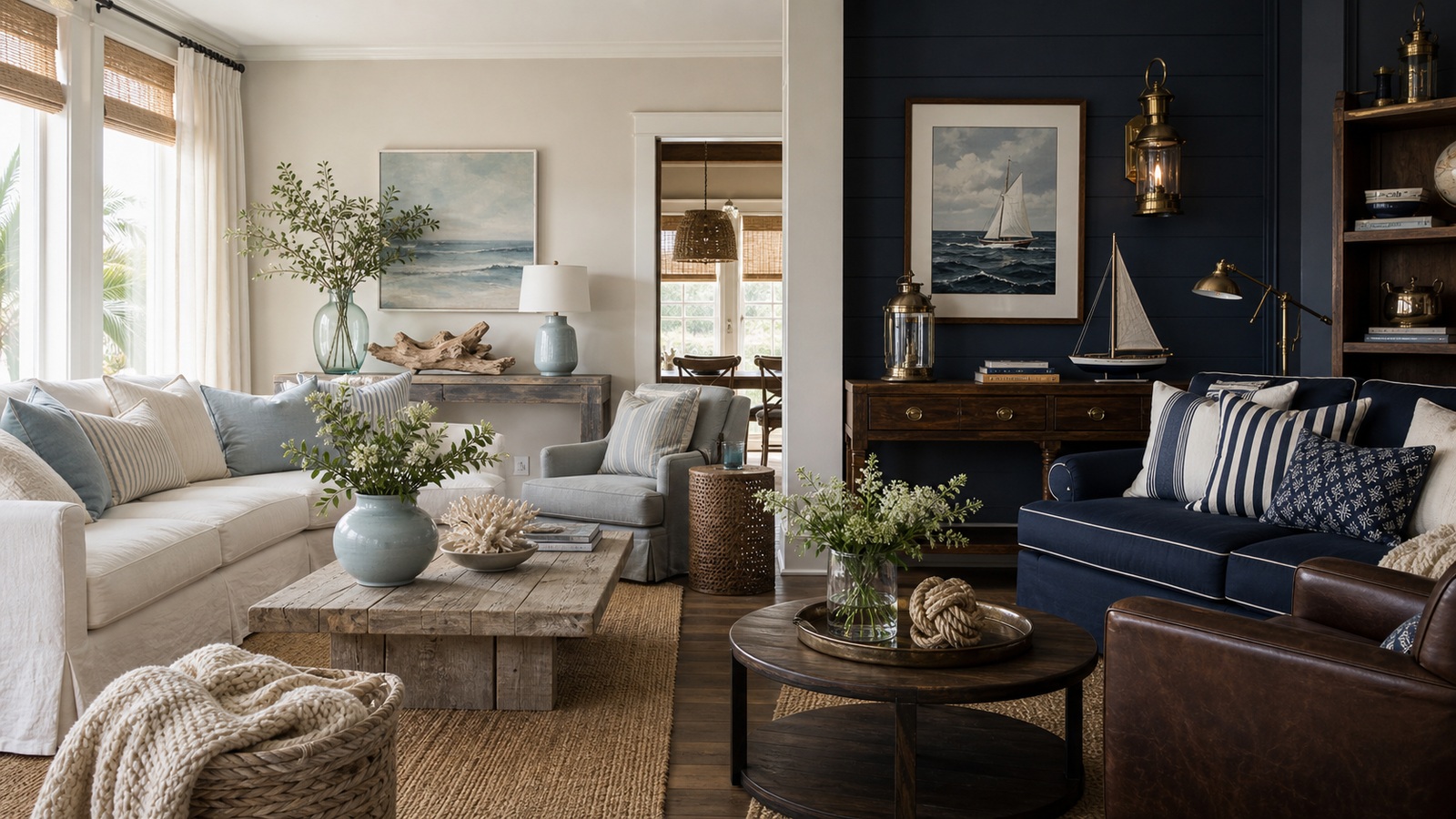
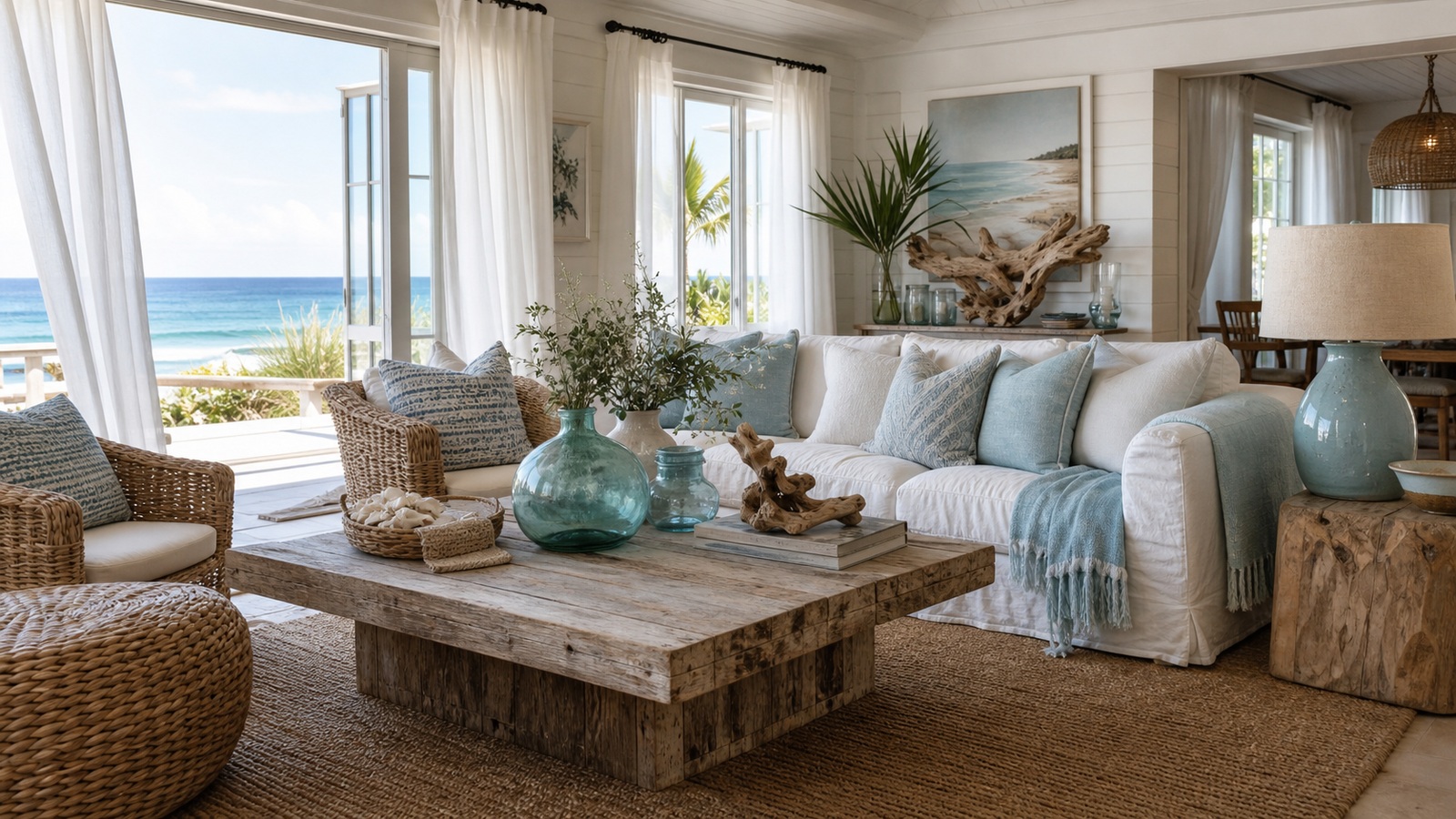
A beach palette can include white, cream, sand, driftwood gray, soft blue, sea-glass green, faded navy, and pale aqua. The room feels more natural when these colors arrive in layers rather than as a matched set. A white sofa, sandy rug, weathered table, blue throw, and green glass vase can suggest the ocean without becoming predictable.
Avoid making every accessory blue. Too much blue can feel flat, especially in rooms without strong natural light. Use blue where it matters: a pillow, artwork, lamp, ceramic bowl, or painted cabinet. Then let wood, woven fibers, and warm neutrals carry the rest of the room.
Choose Furniture That Invites Real Use
Beach house furniture should look comfortable enough for sandy feet, long conversations, and casual meals. Slipcovered sofas, sturdy dining tables, washable rugs, woven chairs, and relaxed benches all suit the style because they support the way people live near the water. Fragile pieces and fussy upholstery can work in small doses, but they should not dominate the rooms people use most.
Scale should be generous without feeling bulky. A deep sofa with soft arms can feel welcoming, while a heavy dark sectional may make the room feel less breezy. If a room needs large seating, lighten the effect with pale fabric, visible legs, natural texture, and open space around the piece.
Old and new can mix beautifully. A weathered coffee table, new white sofa, vintage landscape, and modern woven lamp can feel collected. The key is letting the finishes relate through tone and touch. Beach rooms rarely need perfect matching; they need believable ease.
In rooms used by guests, test the furniture from the perspective of a long weekend rather than a photo shoot. People need somewhere to put a book, charge a phone, place a drink, and sit without worrying about delicate fabrics. Beach house comfort is generous, practical, and forgiving.
Bring in Texture Before Accessories
Texture is what makes beach house decor feel grown-up. Seagrass rugs, rattan chairs, jute runners, linen curtains, cotton throws, rope baskets, raw wood, shell-like ceramics, and matte stone all bring the coast indoors without relying on obvious imagery. These materials also make neutral rooms feel rich instead of empty.
Layer texture at different scales. A large woven rug grounds the room, a rattan chair adds shape, a linen curtain softens the window, and a ceramic lamp finishes a surface. When texture is doing enough work, accessories can be fewer and more meaningful.
Be careful with distressed finishes. A little weathering feels natural; too much faux distressing can look manufactured. Real age, honest grain, and simple matte surfaces often feel more coastal than heavily painted pieces designed to look old.
Decorate With Objects That Have Presence
Natural objects can be beautiful in beach house decor, but they should be selected rather than scattered. One large piece of driftwood, a bowl of sea glass, a framed coastal photograph, or a handmade shell-like vessel can do more than dozens of tiny pieces. Objects with scale and texture give the eye somewhere to rest.
Collections need boundaries. If you love shells, place the best ones in a single bowl or shadow box. If you collect coastal art, hang it as a thoughtful group. When objects are contained, they feel intentional rather than like leftovers from a vacation bag.
Make Dining and Kitchens Feel Casual
Beach house kitchens and dining areas should support easy gathering. Open shelves can display everyday dishes, but they need editing so the room does not become cluttered. Pale ceramics, glass pitchers, woven trays, and wood boards bring texture and function at the same time.
For dining, choose chairs that can handle movement and spills. Woven seats, painted wood, slipcovered host chairs, and benches all feel relaxed. A large table with visible grain can anchor the room, especially when paired with simple lighting and washable textiles.
Tabletop styling should feel fresh rather than elaborate. A ceramic bowl of citrus, a vase of branches, folded linen napkins, or clear glass candleholders can create a coastal mood without making every meal feel staged.
Lighting over a dining table can also set the coastal tone. A woven pendant, ceramic fixture, simple lantern, or pale fabric shade can make everyday meals feel softer. Choose a fixture that leaves enough visual space around the table rather than one that crowds the room with a heavy theme.
Use Art to Create a Sense of Place
Art can make beach house decor feel personal. Ocean photography, abstract water studies, vintage seascapes, botanical prints, and local landscape paintings all bring the coast inside in different ways. Choose art for mood and quality, not only subject matter. A quiet horizon can be more powerful than a bright literal beach scene.
Frames influence the style. Pale wood, white, natural oak, weathered finishes, and thin black frames can all work depending on the room. Match the frame to the overall mood: relaxed, crisp, rustic, or refined.
Avoid filling every wall. Beach house rooms benefit from pauses because open space supports the feeling of air. A single generous artwork can make a wall feel calmer than a crowd of small pieces.
Keep the Home Ready for Real Beach Life
Even inland, beach house decor carries an expectation of durability. Entry storage, washable textiles, baskets, hooks, and easy-clean surfaces make the style feel practical. A beautiful room that cannot handle wet towels, pets, guests, or open windows will not keep its relaxed mood for long.
Plan drop zones near doors. A bench, hooks, covered basket, and durable mat can prevent daily life from spreading across the room. This practical layer often makes the decorative choices look better because clutter has somewhere to go.
Beach house style is really about a state of mind: generous light, touchable texture, relaxed comfort, and a connection to the natural world outside. Bring the ocean indoors through atmosphere first, then choose the objects that deepen that atmosphere. The result will feel coastal without feeling forced.
Outdoor transitions deserve the same attention. Porches, balconies, mudrooms, and patio doors are where the beach-house idea often feels most natural. A durable mat, hooks, baskets, and a simple bench can make the ocean-inspired mood begin before anyone reaches the living room.
Give Bedrooms a Quieter Coastal Mood
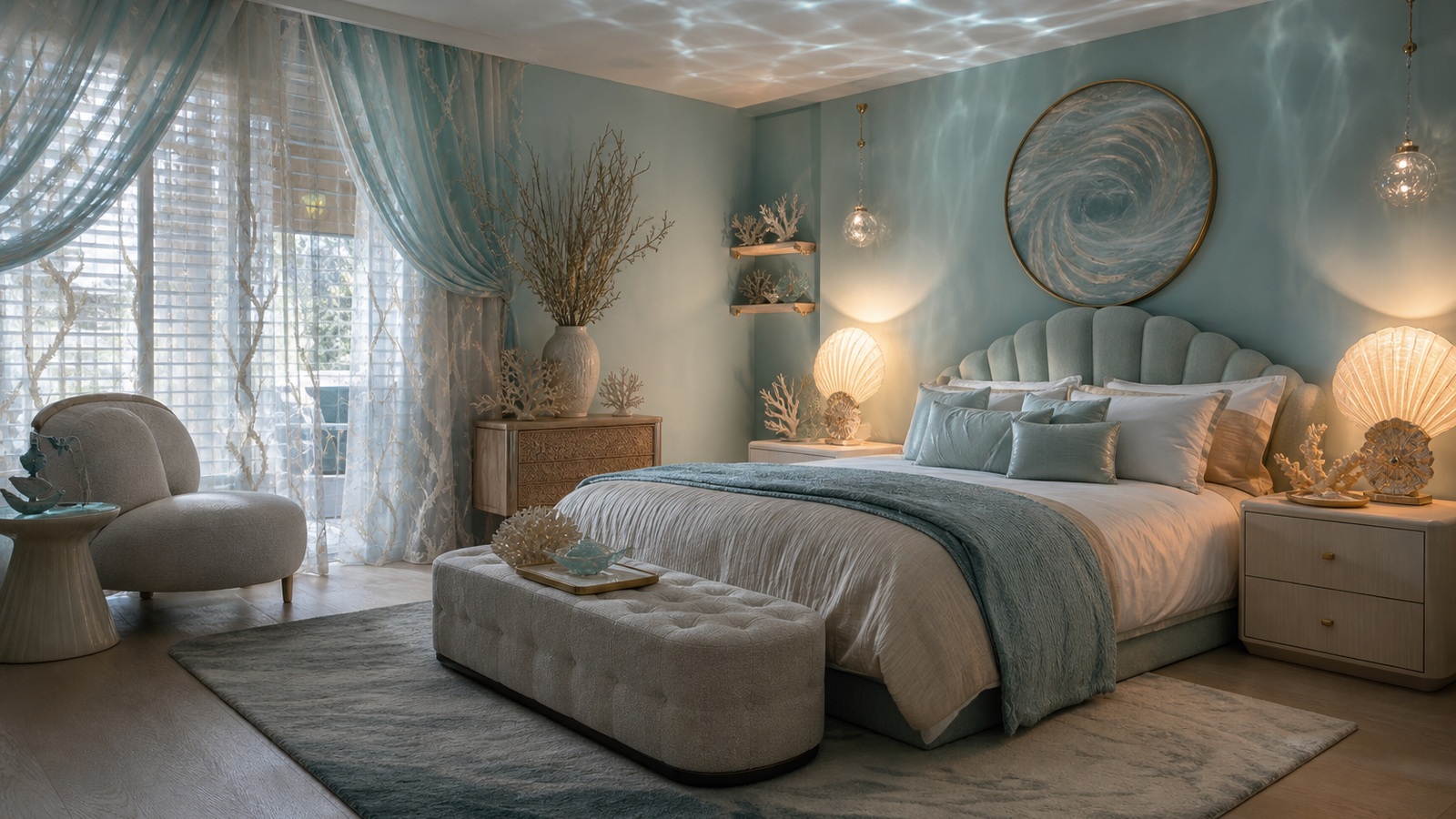
Beach house bedrooms should feel even calmer than living spaces. Use soft bedding, breathable fabrics, gentle lamps, and a palette that does not shout. A pale blue quilt, linen curtains, natural wood nightstands, and one coastal artwork can be enough to make the room feel connected to the ocean.
Guest rooms benefit from simplicity. Leave surfaces open, provide hooks or luggage space, and use bedding that can be washed easily. The decorative mood should welcome people without making them feel surrounded by fragile objects.
Let Seasonal Changes Refresh the Room
One advantage of beach house decor is that it can shift with the season. In warmer months, use lighter throws, glass vases, breezy curtains, and fresh branches. In cooler months, add heavier cotton blankets, warmer lamps, deeper blue accents, and textured pillows while keeping the relaxed coastal base.
This seasonal rhythm keeps the room from feeling static. The ocean itself changes constantly, and a home inspired by it can change gently too. Small updates in textile weight, greenery, scent, and tabletop objects are often enough.
A beach house room succeeds when it feels ready for people, not just ready for display. Keep the foundation durable, the palette open, and the details personal. That combination brings the ocean indoors in a way that can be lived with every day.
Create Small Ocean Moments in Ordinary Rooms
Not every room needs a full coastal treatment. A hallway can use a pale runner, a framed horizon, and a woven basket. A bathroom can use soft towels, shell-white tile, and a sea-glass vase. A laundry room can feel fresher with blue cabinet paint and natural storage.
These smaller moments help the whole home feel connected without making every space look the same. The living room may carry the strongest beach house mood, while secondary rooms borrow one or two cues. This creates rhythm, which is more natural than repeating the same blue pillow and shell bowl everywhere.
Use function as the guide. Entry spaces need storage, bathrooms need cleanable surfaces, bedrooms need calm, and kitchens need durable work zones. When the ocean reference supports that function, it feels integrated rather than decorative.
The most convincing beach-inspired homes have restraint between the highlights. A quiet hallway, a plain linen curtain, or an undecorated table can make the coastal moments feel more generous. Space and ease are part of the style.
Scent and sound can support these small ocean moments when used lightly. Fresh cotton, clean citrus, open windows, quiet fans, or the sound of water outside can make a room feel coastal before anyone notices the decor. The sensory layer should remain gentle, because beach house style is most persuasive when it feels effortless.
When the home is not near the water, restraint becomes even more important. Instead of trying to simulate a beach, borrow the parts that improve daily life: lighter fabrics, clearer surfaces, relaxed seating, and natural texture. The result feels inspired rather than imitative.
A final walk through the home should feel calm rather than repetitive. If three rooms use the same object or color in the same way, change one of them. Variety makes the coastal thread feel collected over time.
That collected feeling is what keeps beach house decor relaxed, personal, and believable.
It should feel discovered slowly, not purchased all at once.
That patience is part of the charm.