Underwater Magic Should Still Feel Restful
An underwater theme bedroom is tempting to design with murals, bright fish, and novelty objects, but the most magical rooms usually begin with softness. They borrow the feeling of being below the surface: filtered light, rounded shapes, shifting blue-green color, pearly highlights, and textures that suggest shells, sand, and sea grass. When the theme is handled with restraint, the bedroom can feel imaginative without becoming busy, and it can still do its most important job: helping the person inside settle, sleep, and wake gently.
A: No, color, light, curved forms, and texture can create the feeling more quietly.
A: Muted aqua, mineral blue, and dusty teal usually feel calmer than bright blue.
A: Yes, when it leans into atmosphere, natural materials, and subtle shimmer.
A: Add one playful focal point while keeping storage, lighting, and bedding practical.
A: They can be lovely when used sparingly and placed with intention.
A: Diffused, warm, layered light with a few reflective surfaces creates the best effect.
A: Yes, but balance them with pale bedding, soft lamps, and lighter texture.
A: A soft color or gentle glow can work, but busy decals may feel restless.
A: Add warmth through sand, wood, woven texture, and pearl instead of only blue and white.
A: Switch bedding and lamps first because they change the mood quickly without construction.
Choose a Depth, Not Just a Blue
Underwater rooms often start with blue, but the specific blue determines whether the space feels childish, moody, airy, or luxurious. Pale aqua and seafoam create a shallow lagoon feeling. Dusty teal and mineral blue feel calmer and more mature. Navy, ink, and deep green suggest depth, but they need soft contrast so the room does not feel too heavy for sleep.
Think in layers rather than one wall color. A bedroom can use pale blue walls, a deeper teal throw, a sand-colored rug, and pearly lamps. The small value shifts create the impression of water changing with light. A single flat blue across every surface rarely feels magical because the eye has nowhere to travel.
If the room belongs to a child, you can still use a sophisticated base and add playfulness through removable art, bedding, or small objects. That approach grows better over time. A calm watery room can become more grown-up with a few changes, while a literal cartoon-style room usually has to be redesigned completely.
Let Light Ripple Instead of Glare
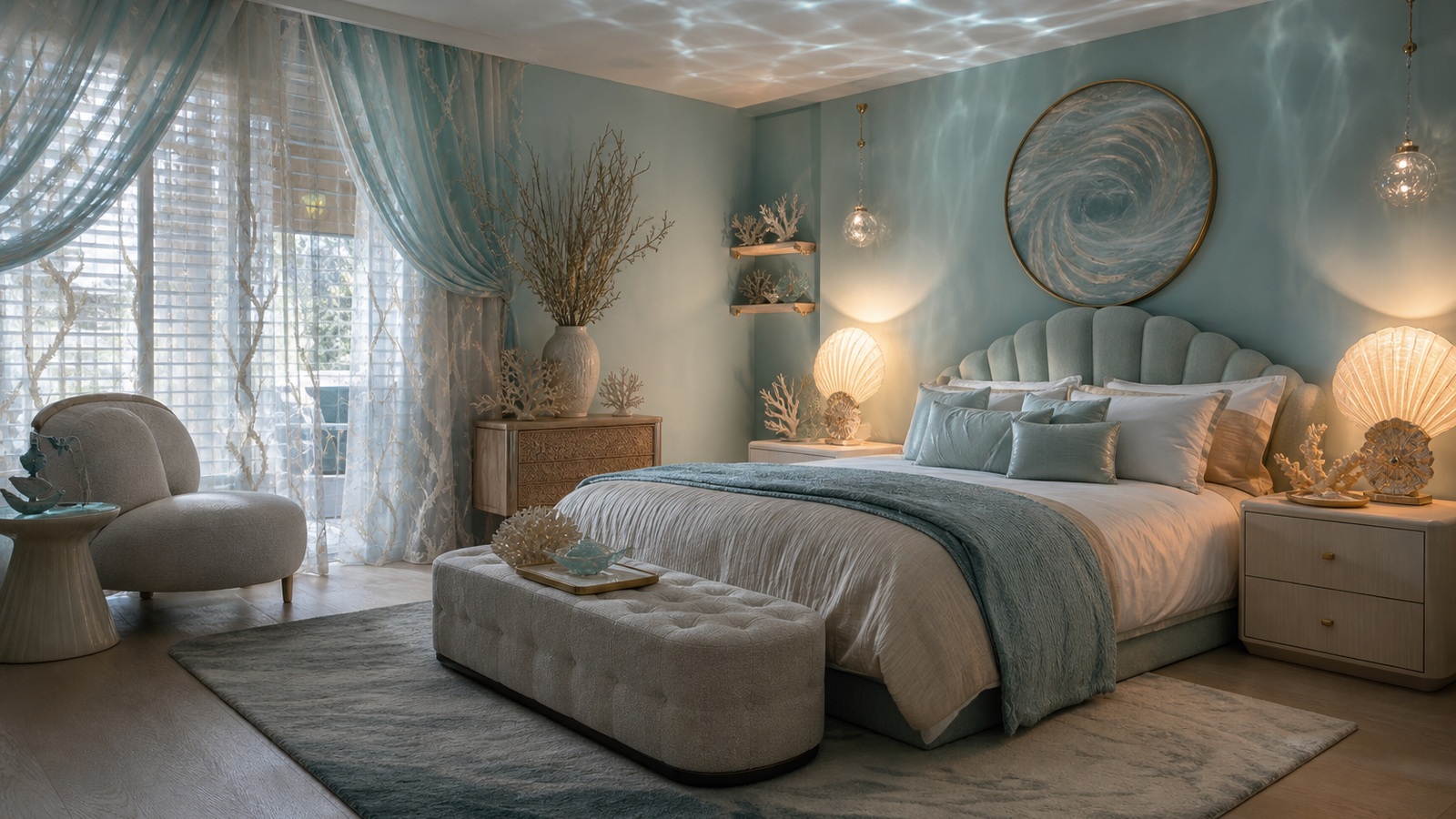
Lighting is the heart of an underwater bedroom. The goal is a filtered glow, not harsh brightness. Sheer curtains, frosted glass lamps, ribbed shades, and reflective accents can create the feeling of light moving across water. A lamp placed near a curved mirror or pearly object can make the room feel soft and luminous without needing obvious theme decor.
Avoid relying on a single ceiling fixture. Underwater atmosphere comes from layers: bedside lamps, a dimmable overhead, a small accent light, and perhaps a gentle projector if the room is playful. For adults, keep effects subtle. For children, a star or water-style light can be charming if it has a warm, quiet setting and can be turned off easily.
Use Rounded Forms and Soft Edges
Underwater design feels more convincing when the shapes echo shells, waves, bubbles, coral, and smooth stones. A scalloped headboard, curved chair, round mirror, wavy lamp base, or soft upholstered bench can suggest the theme without spelling it out. These forms are especially helpful when you want the room to feel magical but not theatrical.
Furniture with very sharp, heavy lines can still work if the palette is gentle, but too much angular contrast may break the illusion. Balance a rectangular bed with circular nightstand lamps, rounded pillows, or a curved rug. The trick is not to remove every straight line; it is to soften the parts the eye notices first.
Texture can also create softness. Gauzy curtains, quilted bedding, velvet pillows, bouclé seating, and washed cotton all contribute to a room that feels underwater in mood. Avoid slick synthetic shine everywhere. A little shimmer is lovely, but too much gloss can look like party decor rather than a bedroom.
The most successful palettes also include a dry-land anchor. Pale oak, warm white, sand, or soft taupe gives the eye a place to rest and keeps the room from feeling like a blue box. That neutral layer makes the watery colors look more deliberate and helps furniture feel connected to the rest of the home.
Bring in Shell, Sand, and Sea Grass Quietly
Natural references keep an underwater bedroom grounded. Shell-like ceramics, pale wood, woven sea grass baskets, sandy linen, capiz-style pendants, and stone trays can all support the theme. They work especially well when the room needs to feel calm and tactile rather than filled with fish motifs.
Use real shells sparingly and respectfully. A single bowl of collected shells, a framed natural study, or a lamp with a shell-like form is usually stronger than scattering shells on every surface. The room should feel like it was inspired by the sea, not emptied from a souvenir shop.
For children, sea-life objects can be more direct, but they still benefit from editing. Choose a few favorite creatures, give them room to be noticed, and keep the rest of the room soft. A whale print over the bed, a shell lamp, and an aqua rug can feel magical without overwhelming the space.
Design the Bed as the Calm Center
The bed should be the emotional center of an underwater bedroom. Bedding can move from pale sand sheets to aqua blankets, deeper blue pillows, and a pearly or silver accent. The layers should feel like water deepening gradually. If everything is the same color, the bed becomes flat; if the colors are too unrelated, the room loses the underwater story.
Canopies and draped fabric can be beautiful in this theme because they suggest water movement. Keep the fabric light and safe, especially in children's rooms. A canopy should frame the bed, not trap dust, block air, or interfere with lamps and fans.
Keep Wall Details Dreamlike
Walls offer many possibilities, from paint to wallpaper to art. A full underwater mural can be wonderful, but it should be chosen carefully because it dominates the room. If the mural is too busy or too bright, it may make the bedroom feel restless. Softer murals, abstract water movement, ombré paint, or framed ocean photography often last longer.
Wallpaper can work when it has scale and breathing room. A delicate wave pattern may disappear nicely into the background, while a bold coral print can become a feature wall. If you use a strong wall treatment, keep nearby furniture and bedding simpler so the room does not compete with itself.
Ceilings are worth considering. A faint blue ceiling, subtle star-like light, or soft cove lighting can make the room feel enveloping. Just avoid readable text, decals, or overly literal graphics that pull the design toward a themed set instead of a dreamy retreat.
If the bedroom is rented or temporary, use removable wall treatments and art instead of permanent paint. Peel-and-stick paper, fabric panels, framed prints, and changeable lighting can create a strong underwater mood without locking the room into one stage of life. That flexibility is especially helpful for children's rooms, where taste can shift quickly.
Make Practical Choices Invisible
A magical room still needs laundry storage, books, chargers, school items, and daily clutter control. Closed storage helps the underwater mood because visual noise breaks the calm quickly. Woven baskets, painted dressers, and nightstands with drawers can hold the ordinary parts of life while supporting the palette.
Safety matters too. Lamps should be stable, cords should be managed, and hanging elements should be secure. A child's room can feel enchanting without dangling objects in risky places. A grown-up room can feel atmospheric without sacrificing good reading light or easy cleaning.
Materials should also match the way the bedroom is used. Washable bedding, durable rugs, and wipeable painted surfaces are better than delicate finishes in a room used by children or pets. Magic that is hard to maintain will not feel magical for long.
Finish With One Memorable Moment
The strongest underwater bedrooms usually have one memorable moment rather than dozens of small references. It might be a glowing shell-like lamp, a blue-green canopy, a curved upholstered headboard, a wall that looks like softened water, or a reading nook tucked under gauzy fabric. Give that moment enough space to breathe.
Then edit around it. Remove the extra objects that say the same thing in weaker ways. If the lamp already feels like a pearl, the nightstand may not need shells, coral, and a sea-horse figurine. If the wall is dramatic, bedding can be quieter.
An underwater theme bedroom becomes magical when it suggests an environment rather than decorating every inch with symbols. Use color for depth, light for movement, shape for softness, and texture for touch. The result can feel imaginative, peaceful, and personal at the same time.
A final reset routine can be part of the design. A basket for extra pillows, a drawer for small objects, and a simple bedside surface make it easier to restore the calm at night. The room feels more magical when the ordinary clutter has a graceful place to disappear.
Add Sound and Movement With Care
An underwater bedroom can feel more immersive when it includes gentle movement or sound, but those details should never make sleep harder. A sheer curtain moving in a light breeze, a quiet fan, or a soft sound machine can support the watery mood. The effect should be subtle enough that the room still feels peaceful when the novelty wears off.
Avoid anything that flickers, hums loudly, or demands constant attention. Magic in a bedroom should be easy to turn down. If a projector, mobile, or light effect is part of the design, give it a clear off switch and make sure the room still feels complete without it.
Balance Fantasy With Age and Personality
The right underwater room depends on the person using it. A young child may want whales, mermaids, or glowing sea creatures. A teenager may prefer darker teal, reflective lighting, and abstract water movement. An adult may want the theme to appear through color, texture, and sculptural forms rather than recognizable ocean imagery.
Personal objects should be integrated instead of hidden. Books, keepsakes, musical instruments, or favorite artwork can sit inside the palette even if they are not ocean-related. A bedroom becomes more believable when the theme supports the person rather than replacing them.
This balance also keeps the room from aging too quickly. If the base is beautiful and the most literal pieces are easy to change, the underwater feeling can evolve from playful to sophisticated without a full redesign.
Plan the Room From Morning to Night
An underwater bedroom should be checked in both daylight and evening light. Morning light may make aqua walls feel fresh and bright, while nighttime lamps may turn the same color greener or grayer. Looking at the room across the day helps you choose bulbs, curtains, and accent colors that stay pleasant.
Daytime use also reveals whether the theme has enough ordinary function. A child may need floor space for play, a desk for homework, or shelves for books. An adult may need reading light, laundry storage, and a calm surface for essentials. These needs should be built into the design rather than added after the decorative choices are finished.
At night, the room should simplify. Strong colors, glowing effects, and shiny objects can be exciting earlier in the evening, but the final sleep setting should feel quieter. Dimmers, hidden storage, and a limited bedside arrangement make that transition easier.
Designing across the full day keeps the magic from being a single photograph. The room feels imaginative when the lights are on, restful when they are low, and practical when real life returns in the morning.