A Galaxy Aesthetic Needs Depth, Glow, and Control
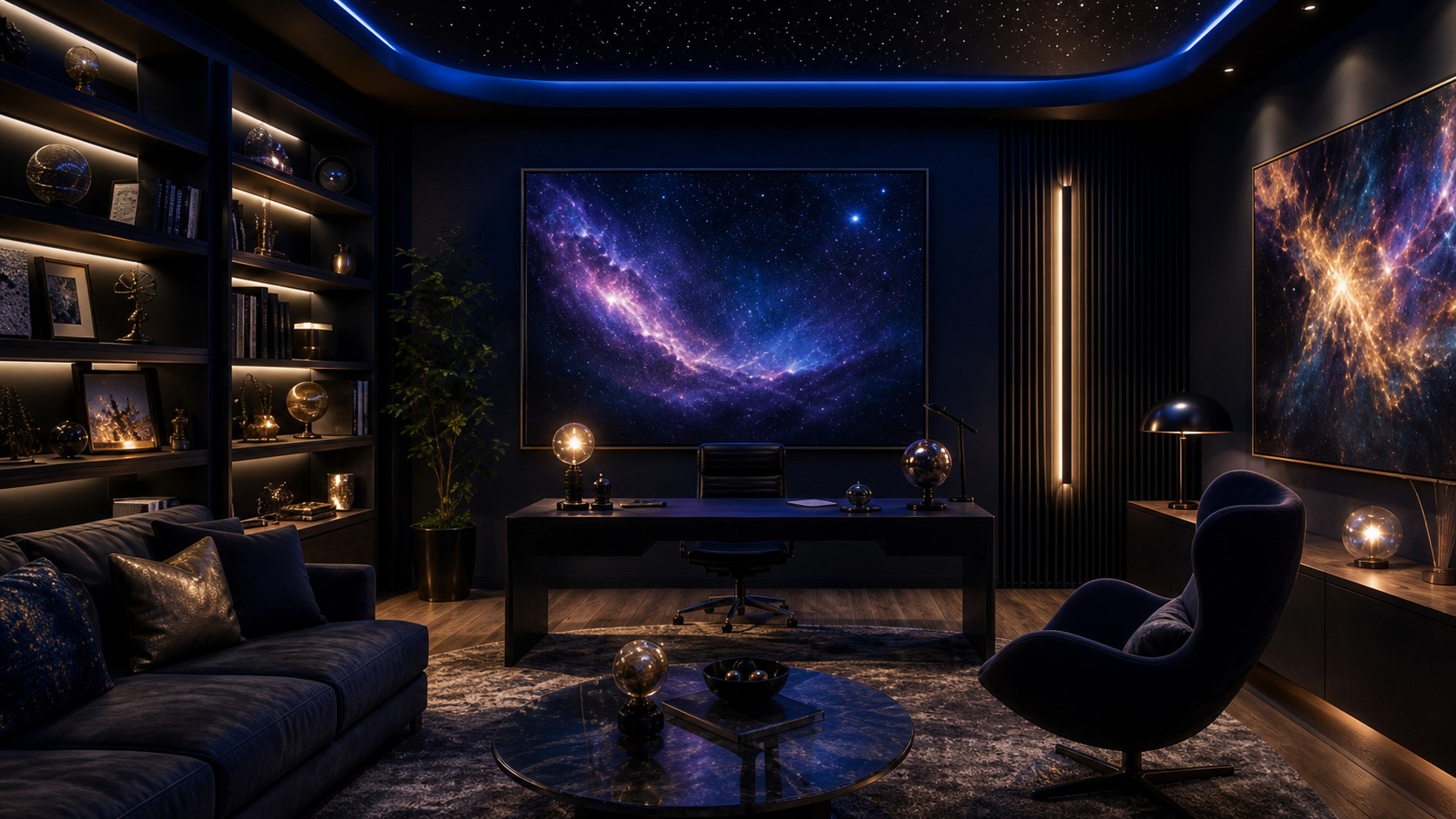
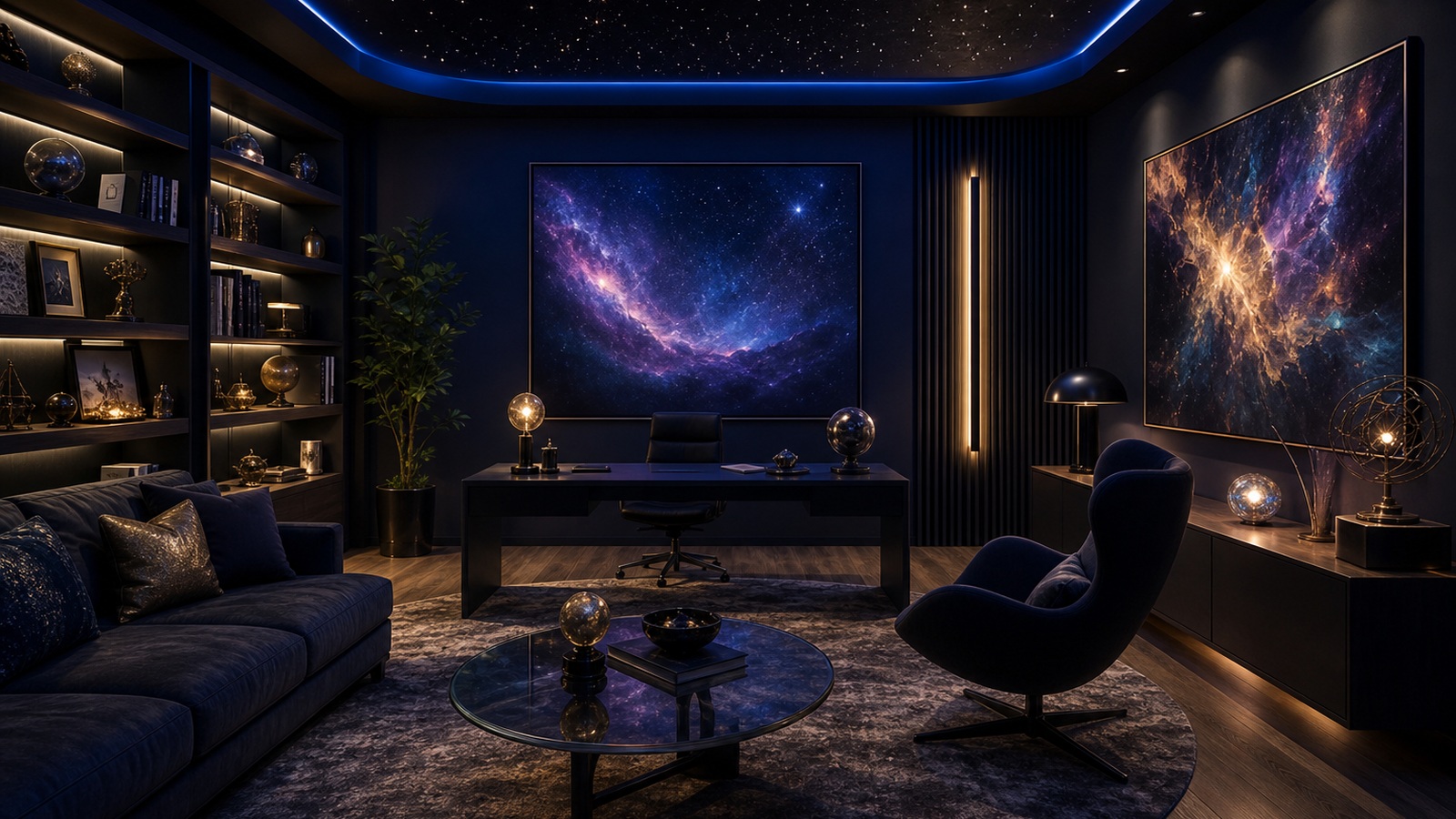
A space and galaxy aesthetic can be dramatic, dreamy, futuristic, or quietly luxurious, but it becomes strongest when it feels immersive rather than cluttered. The room should suggest depth, darkness, distant light, orbit, reflection, and wonder. That does not mean covering every surface in stars. It means choosing cosmic color, layered lighting, smooth shapes, dark contrast, and a few memorable details that make the room feel like it belongs to a larger universe.
A: No, deep navy, charcoal, aubergine, or a dark ceiling can create depth without full black walls.
A: Yes, when it uses restrained lighting, quality materials, and fewer literal motifs.
A: Layered lighting usually makes the biggest difference because it creates depth and glow.
A: They can be, especially when adjustable and used as one layer rather than the entire design.
A: Hide strips, manage cords, and use dimmable settings with a limited color range.
A: Yes, a dark feature wall, soft bedding, and one glowing focal point can be enough.
A: Low, curved, or clean-lined pieces usually support the atmosphere without visual clutter.
A: Use it sparingly and choose pieces with good form, finish, or personal meaning.
A: Warm white with occasional blue or violet accents is easier to live with than constant saturated color.
A: Create one immersive feature, then edit the rest of the room to support it.
Decide Whether the Room Is Dreamy or Futuristic
Galaxy style can move in several directions. A dreamy version uses nebula colors, soft textiles, glowing lamps, and celestial art. A futuristic version uses cleaner lines, darker contrast, metallic surfaces, and controlled LED lighting. A child's version might include planets and playful stars, while an adult lounge might rely on deep navy, velvet, smoked glass, and sculptural light.
Choosing the direction early prevents the room from feeling confused. A pastel galaxy canopy, chrome gaming desk, astronaut figurines, and zodiac art can all be interesting, but together they may compete. Pick the emotional target first: calm wonder, cinematic drama, sleek technology, or playful exploration.
Architecture can help you decide. A small bedroom may work best as a cocoon with soft glow and dark paint. A media room can handle more drama, including star ceiling effects and deep seating. A study may benefit from a subtle cosmic palette rather than obvious themed decor.
Use Dark Color With Intention
Deep navy, ink, black-blue, charcoal, aubergine, and midnight green can create the sense of space. These colors make light more visible and give artwork or metallic details a stronger presence. The risk is heaviness, so dark color needs careful balance through texture, reflection, and lighting.
You do not have to paint every wall. One deep feature wall, ceiling, alcove, or built-in can create enough depth. If the room is small, a dark ceiling with lighter walls can feel surprisingly enveloping. If the room has little natural light, use dark color where you can support it with lamps and reflective accents.
Layer Light Like Stars at Different Distances
Lighting is what turns a galaxy aesthetic from a color scheme into an experience. Think of light in distances: tiny points like stars, soft washes like nebulae, focused lamps like planets, and hidden glow like a horizon. A room with only one LED strip can feel flat. A room with several types of glow feels deeper and more atmospheric.
Star projectors, fiber-optic ceilings, small pin lights, cove lighting, shaded lamps, and backlit shelves can all work, but they should be controlled. Choose warm or adjustable light when the room needs to relax. Blue and purple light can be beautiful, but constant saturated color may become tiring for daily use.
Practical light still matters. A reading chair needs a real lamp. A desk needs task light. A bedroom needs an easy way to turn the room down at night. The cosmic mood should support life in the room rather than make every ordinary task harder.
A good lighting plan also includes darkness. Leave some corners quiet, allow shadows behind furniture, and avoid outlining every edge with light. Space feels vast because light and darkness exist together, and a room needs that same contrast to feel sophisticated.
Choose Surfaces That Catch and Soften Glow
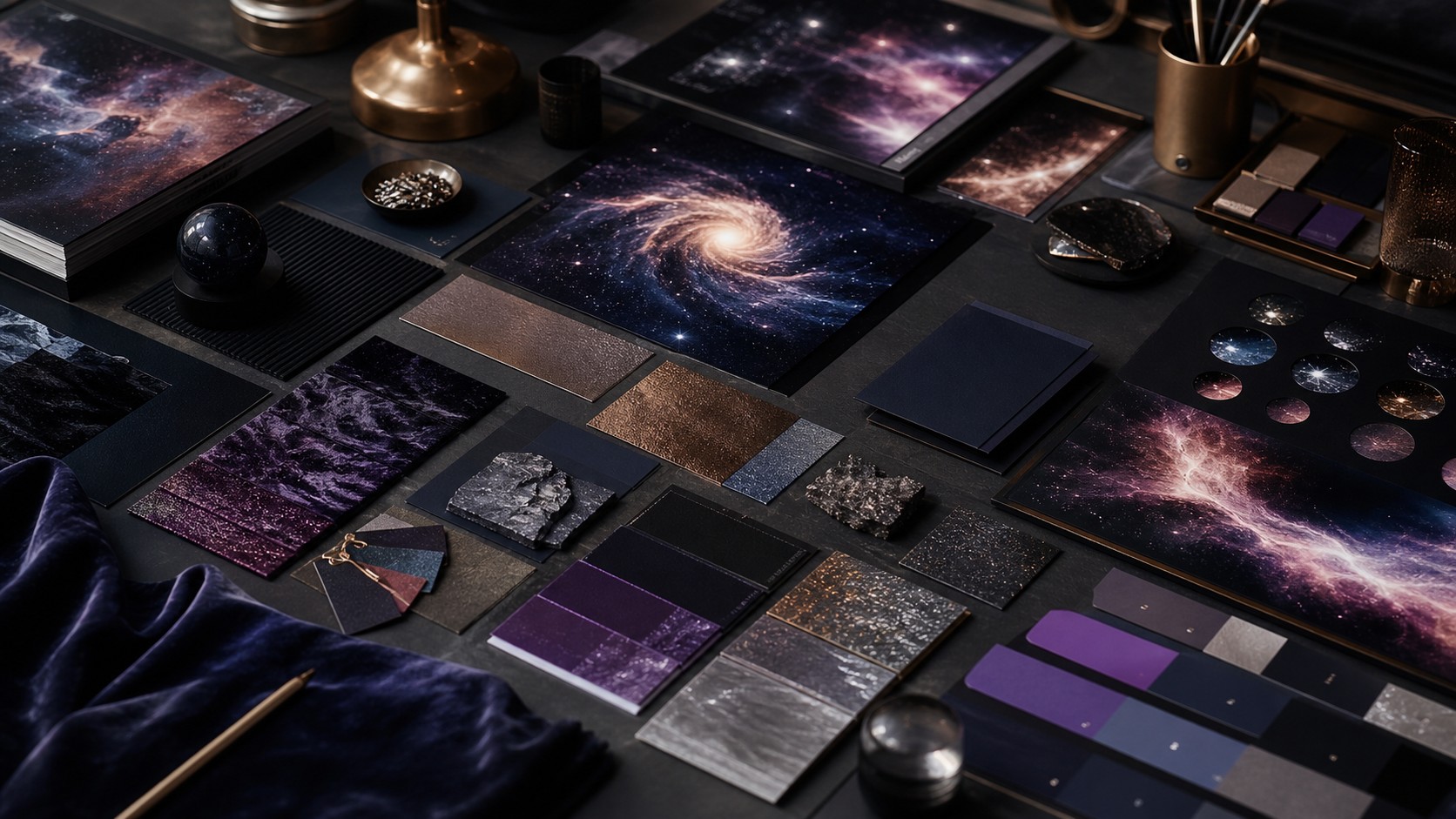
Galaxy rooms benefit from contrast between matte darkness and small reflective moments. Velvet, wool, matte paint, and dark wood absorb light, while smoked glass, chrome, brass, mirror, polished stone, and glossy ceramics reflect it. The interaction makes the room feel dimensional.
Avoid using reflective surfaces everywhere. A mirrored wall, metallic bedding, glossy furniture, and shiny floors together can become harsh. Place reflective elements where they catch a lamp or a star-like light source. A smoked glass table, metallic lamp, or framed nebula print can be enough.
Texture also prevents a dark room from feeling empty. A plush rug, ribbed wall panel, velvet chair, quilted bedding, or acoustic panels can add depth without visual clutter. Space-inspired design often looks best when the surfaces feel tactile as well as dramatic.
Use Celestial Motifs Sparingly
Stars, moons, planets, rockets, constellations, and zodiac symbols are all tempting. The strongest rooms usually choose only a few. A constellation print above a bed, a moon-like lamp, or a planet-inspired mobile can be beautiful. When every object repeats the same motif, the room becomes less immersive because the symbols pull attention away from atmosphere.
For children, motifs can be more direct and joyful. Even then, give the room a base that can grow: dark blue paint, simple storage, comfortable bedding, and adjustable lighting. The planets and rockets can change as interests change.
Make Furniture Feel Grounded
A galaxy room needs furniture with enough visual weight to hold the darkness. Low seating, curved chairs, platform beds, dark wood desks, black metal frames, and upholstered headboards can all work. The shapes should feel calm and intentional so the lighting and wall treatments have something stable to play against.
Curves often feel more cosmic than fussy detail. A round table, arched mirror, crescent chair, or spherical lamp can suggest orbit without literal decoration. Straight modern furniture can also work when the room leans futuristic. The important part is consistency: choose a shape language and repeat it quietly.
Comfort is essential. A room may look impressive in photographs, but if the chair is hard, the lighting is annoying, or the bed is overwhelmed by decor, the design fails in daily life. Let the cosmic effect frame comfort rather than replace it.
Storage can be part of the furniture strategy. Closed cabinets, dark shelving, and simple desk systems hide the everyday items that would interrupt the atmosphere. The fewer loose objects on display, the more powerful the intentional celestial pieces become.
Create One Immersive Wall or Ceiling Moment
A galaxy aesthetic often needs one bold surface. That could be a dark painted ceiling with tiny lights, a nebula mural, a large cosmic artwork, a backlit shelving wall, or a headboard wall with moody color and metallic accents. The surface should feel intentional enough to anchor the room.
If you use a mural, choose one with depth and softness rather than a crowded collage of planets, stars, and bright colors. If you use wallpaper, make sure the scale suits the wall. If you use lighting, hide wires and controllers so the room feels polished.
The rest of the room should support the feature. A dramatic ceiling may call for simpler walls. A nebula wall may need quiet bedding. A backlit shelf may need fewer objects. A stunning galaxy room is edited around its best moment.
Keep the Aesthetic Livable
The practical side of a space-themed room is easy to overlook. Dark surfaces show dust, LED controls can become messy, and novelty decor can quickly crowd shelves. Plan storage, cable management, cleaning access, and lighting controls early. The more seamless the practical systems are, the more magical the room feels.
For bedrooms, make sure the room can become truly dark or truly calm when needed. For media rooms, reduce glare on screens. For studies, keep task zones clear and comfortable. Galaxy design is most successful when it makes ordinary routines feel more atmospheric without interrupting them.
A stunning space and galaxy aesthetic is not about using every cosmic symbol available. It is about depth, glow, proportion, and restraint. Build the room around darkness and light, add texture that catches the glow, choose a few celestial references, and let wonder arrive through atmosphere.
Controls should be simple. If the room requires several remotes, hidden apps, or confusing switches, the magic becomes maintenance. Group lighting on clear zones so the room can move from bright use to deep atmosphere without frustration.
Use Art to Suggest Scale
Large-scale art can make a galaxy aesthetic feel more mature than many small themed objects. A nebula print, abstract star field, moon photograph, or dark atmospheric painting gives the room a window into depth. The image should have enough visual quiet to live with daily, especially in bedrooms.
Frame choices matter. Thin black frames feel modern, brass adds warmth, and frameless canvas can feel more immersive. Leave space around the artwork so it reads as a portal or focal point rather than one more object in a busy collection.
Adapt the Aesthetic for Different Rooms
A bedroom should use galaxy elements for calm: dimmable light, soft textiles, dark color, and one dreamy focal point. A media room can be more cinematic with deeper paint, star lighting, acoustic texture, and low seating. A workspace needs restraint so the atmosphere inspires focus rather than distraction.
Children's rooms can be more literal, but the base should still be practical. Use sturdy storage, washable bedding, safe lighting, and changeable wall decor. That way the room can celebrate curiosity without becoming difficult to clean or update.
The ultimate galaxy aesthetic is not a single look. It is a way of handling depth, glow, and wonder in the room you actually have. When the design serves the room's purpose, the cosmic atmosphere feels intentional instead of pasted on.
Make the Final Edit Feel Cinematic
A cinematic galaxy room has a clear foreground, middle ground, and background. The foreground may be a chair, bed, or desk; the middle ground may be a rug, table, or lamp; the background may be the dark wall, ceiling, or artwork. Thinking this way prevents every object from fighting for attention.
Remove details that do not contribute to depth, glow, comfort, or story. A novelty object may be fun, but if it interrupts the line of light or crowds the best surface, it weakens the room. Strong galaxy design often depends on what is left out.
Photograph the room from the doorway and from the main seat or bed. These views show whether the lighting is balanced, whether the feature wall is visible, and whether everyday clutter has drifted into the scene. The camera is not the final judge, but it reveals composition quickly.
When the edit is finished, the room should feel like a place to enter rather than a collection of space-themed things. Depth should pull the eye inward, glow should guide attention, and the practical furniture should make the atmosphere easy to live inside.
A final object pass can focus on scale. One large artwork, one sculptural lamp, or one glowing shelf often feels more impressive than many small stars and planets. The galaxy theme gains power when the eye can travel through space instead of stopping at clutter.
This restraint also makes the room easier to update. A new artwork, a different lamp color, or a changed bedding layer can shift the whole atmosphere without rebuilding the design. The room keeps its sense of wonder while still adapting to the person who lives there.
The best sign that the edit is working is emotional: the room feels quiet for a second before it feels dramatic. That pause gives the glow, color, and scale room to register.
That is what makes the aesthetic feel expansive instead of simply decorated.