Choosing the Right Materials for Immersive Theme Design
Immersive theme design lives or dies by its materials. While storytelling, lighting, sound, and spatial flow all shape an experience, materials are what guests physically see, touch, and subconsciously trust. The wrong surface can shatter immersion in an instant, while the right one disappears entirely—convincing the brain that what it’s seeing is real, ancient, futuristic, or fantastical. Choosing materials for immersive environments is not about decoration; it’s about illusion engineering. Every texture, finish, edge, and seam must serve the story while meeting practical demands like durability, safety, maintenance, and cost. This article explores how professional designers choose materials for immersive theme environments, from scenic rockwork and architectural facades to interior finishes and hidden structural systems. Whether designing a themed attraction, branded environment, museum exhibit, or experiential space, understanding material behavior is essential to creating worlds that feel authentic, last under heavy use, and remain visually compelling over time.
A: Weight, cracking, cost, and maintenance make faux materials more practical.
A: Yes when properly coated and reinforced for the environment.
A: Well-built installations often last decades with maintenance.
A: Most scenic systems are designed for patching and repainting.
A: Absolutely—surface finish and texture are critical.
A: Many modern systems prioritize low VOCs and reuse.
A: Poor prep, rushed sealing, and ignored expansion.
A: Not always, but it usually reduces long-term costs.
A: Modular scenic systems make updates easier.
A: Choosing materials before defining the story.
Understanding Immersion Through Material Psychology
Immersion is rooted in perception. Human brains are extraordinarily good at detecting inconsistencies, especially in environments meant to simulate reality. When a material looks like stone but sounds hollow, reflects light unnaturally, or chips in a way real stone never would, the illusion collapses. Successful immersive materials replicate not only the appearance of real-world references, but also their visual weight, surface irregularities, and aging patterns.
Material psychology also plays a role in emotional response. Rough textures evoke age, danger, or history. Smooth, seamless surfaces signal futurism or sterility. Warm materials like wood and leather feel inviting, while cold metals and glass can feel industrial or intimidating. Designers leverage these subconscious reactions to guide mood, pacing, and narrative tone without guests ever realizing it’s happening.
Scenic Materials: Creating Believable Illusions
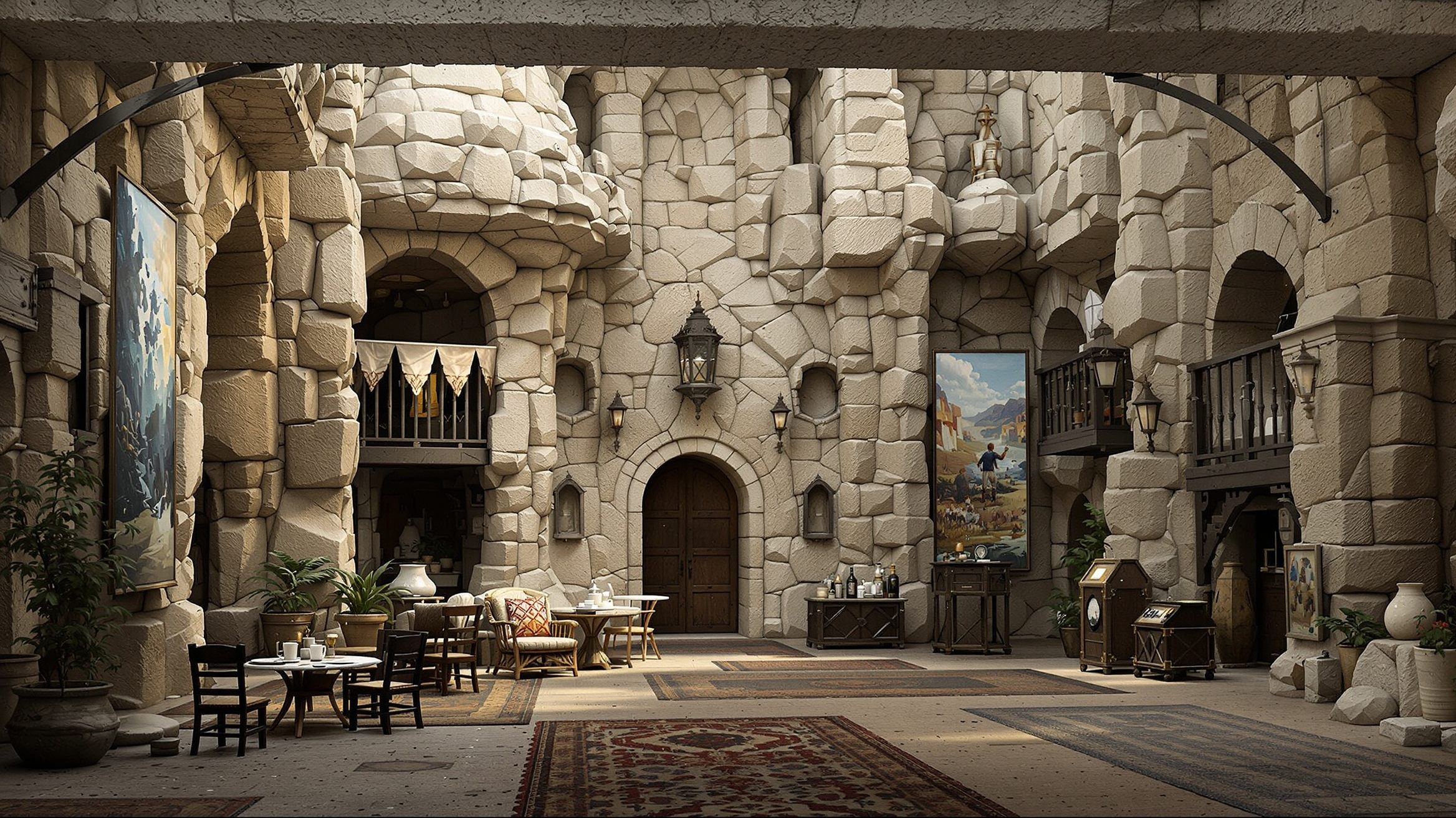
Scenic materials form the backbone of most immersive environments. These are the surfaces that visually define the world—rockwork, carved walls, themed architecture, and environmental structures. Among professionals, glass fiber reinforced concrete, commonly known as GFRC, is one of the most widely used scenic materials. It allows designers to create highly detailed textures that mimic stone, masonry, or carved architecture while remaining lightweight and structurally efficient.
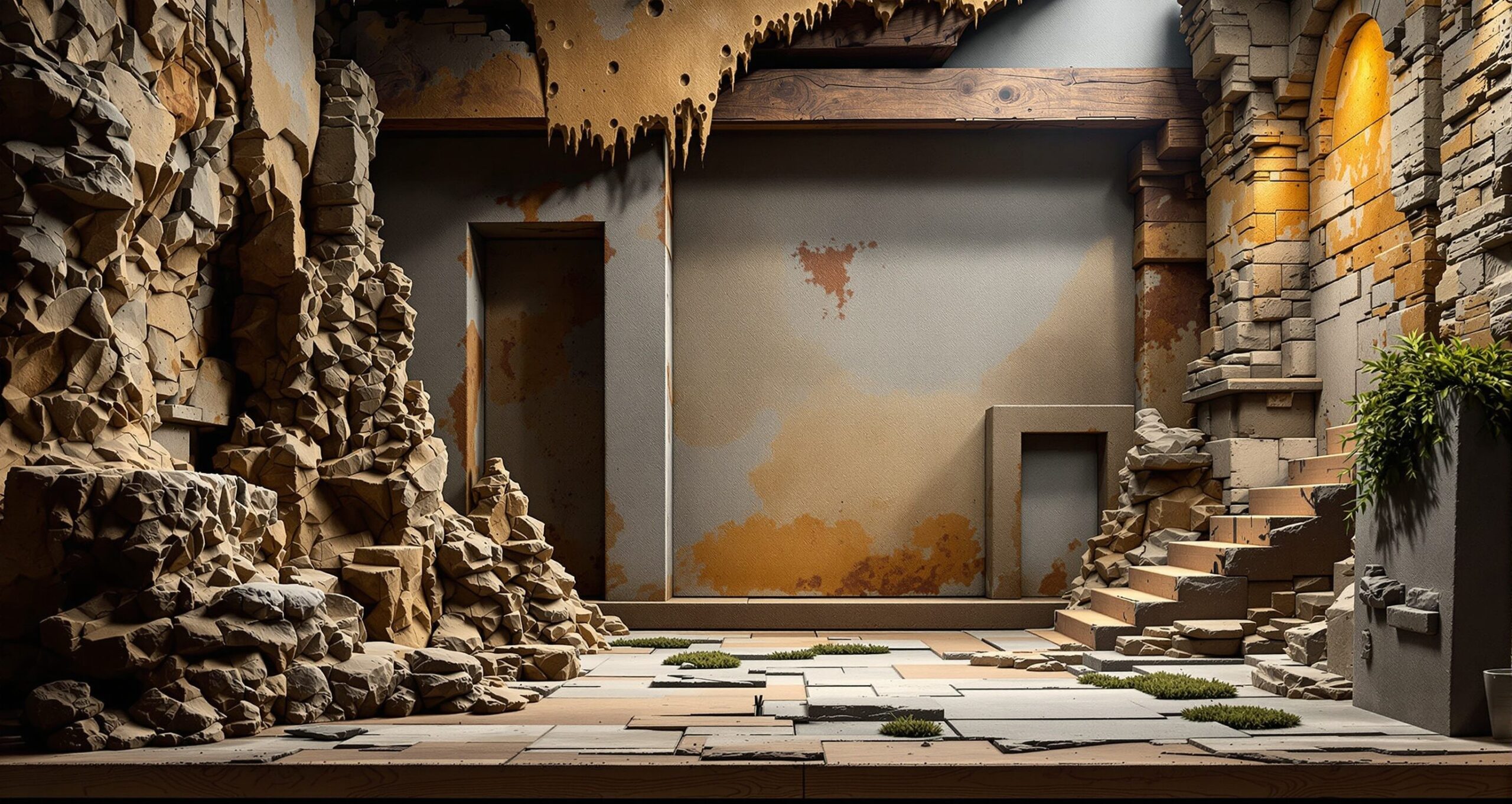
Foam carving systems are another staple of immersive design. High-density foam can be sculpted into complex organic forms such as cliffs, ruins, tree roots, and fantasy architecture. Once carved, these surfaces are coated with hard shells and scenic paints that add strength and realism. The success of foam-based scenic work depends heavily on finishing techniques. Poor coatings or rushed paint jobs result in flat, artificial surfaces, while layered scenic finishes create depth, shadow, and natural variation. Designers often combine scenic materials strategically. A rock wall might use steel framing for structure, foam for shape, GFRC panels for durability, and hand-applied scenic paint for realism. This hybrid approach balances cost, performance, and visual fidelity.
Structural Materials Hidden Beneath the Story
Behind every immersive environment is a hidden layer of structural materials doing the real work. Steel framing, aluminum systems, plywood substrates, and composite panels are rarely seen, but they determine whether an environment is safe, durable, and buildable. Choosing the right structural materials is a matter of engineering as much as design.
Steel is frequently used for large scenic structures due to its strength and reliability, especially in outdoor or load-bearing applications. Aluminum is favored where weight reduction matters, such as suspended scenic elements or modular exhibit components. Wood-based products like plywood and engineered lumber remain popular for interior environments due to their flexibility and ease of modification during installation.
The key is designing structural systems that support scenic materials without telegraphing their presence. Visible seams, straight lines where organic shapes should exist, or repetitive patterns can expose the illusion. Skilled designers collaborate closely with fabricators and engineers to ensure the structure serves the story, not the other way around.
Surface Finishes and Texture Fidelity
Surface finish is where immersion is won or lost. Two materials may be structurally identical, yet feel worlds apart based on how they are finished. Texture depth, paint layering, weathering techniques, and light interaction all influence how a surface reads at different distances and lighting conditions.
Scenic painting is a specialized discipline within immersive design. It involves more than color matching; it’s about creating visual complexity. Real-world materials are rarely uniform. Stone contains mineral variation, dirt accumulation, and erosion patterns. Metal oxidizes unevenly. Wood grains shift and darken over time. Scenic finishes replicate these imperfections intentionally.
Matte finishes are often preferred for immersive environments because they absorb light and reduce glare, helping surfaces feel more natural. Glossy finishes are used sparingly, typically for wet effects, polished metals, or futuristic aesthetics. Designers also consider how finishes will age. A material that looks perfect on opening day but degrades poorly can quickly undermine the experience.
Indoor vs Outdoor Material Considerations
Material selection changes dramatically depending on whether an environment is indoors or outdoors. Indoor themed spaces offer greater control over temperature, humidity, and UV exposure, allowing for more delicate finishes and lightweight materials. Outdoor environments must contend with weather, sunlight, thermal expansion, and moisture intrusion.
Exterior immersive materials must be UV-stable, water-resistant, and capable of handling temperature swings without cracking or warping. GFRC, sealed concrete, treated metals, and high-performance coatings are common choices. Designers also plan for drainage, expansion joints, and maintenance access from the start.
Indoor materials, while less exposed, still face wear from guest interaction. Touch points like railings, doorways, and interactive elements require tougher finishes and reinforced substrates. Designers often use layered systems, where a durable base material is paired with a replaceable scenic skin that can be refreshed over time.
Durability, Safety, and Code Compliance
Immersive design is not exempt from building codes, fire regulations, and safety standards. Materials must meet flame spread ratings, structural requirements, and accessibility guidelines while still delivering on visual goals. This balancing act is one of the defining challenges of professional theming.
Fire-rated materials and coatings are essential, particularly in enclosed environments. Many scenic foams and fabrics require specialized treatments to meet code. Slip resistance is another major consideration, especially in environments designed to feel rugged, ancient, or natural. Floors must look irregular while remaining safe under heavy foot traffic.
Designers also account for vandalism, abrasion, and cleaning protocols. Public-facing immersive spaces demand materials that can withstand thousands of daily interactions without constant repair. Choosing the right material often means selecting the one that fails gracefully rather than the one that looks best in a showroom.
Sustainability and Responsible Material Choices
Sustainability has become an increasingly important factor in immersive material selection. Designers are now asked to consider not just how materials look and perform, but where they come from and how they impact the environment. Recycled content, low-VOC coatings, and responsibly sourced wood products are becoming standard considerations.
Interestingly, immersive design can align naturally with sustainable practices. Lightweight scenic materials reduce transportation emissions. Modular construction allows components to be reused or reconfigured. Durable finishes reduce waste by extending the life of installations. Designers who plan for longevity often find their projects are more sustainable by default.
Sustainability also extends to operational efficiency. Materials that are easy to clean, repair, or repaint reduce long-term resource consumption. Thoughtful material selection can lower maintenance costs while supporting environmental goals.
Matching Materials to Story and Theme
Every immersive environment tells a story, and materials are one of its primary languages. A medieval village demands different materials than a futuristic space station. Designers begin by identifying the narrative tone, cultural references, and emotional goals of the environment, then selecting materials that reinforce those ideas.
For historical or fantasy settings, designers often favor materials that show age and craftsmanship, such as textured stone, distressed wood, and hand-forged metal finishes. For sci-fi or modern themes, smooth composites, integrated lighting surfaces, and precision-milled components may dominate. The key is consistency. Mixing material languages without narrative justification can confuse the guest experience.
Designers also consider how materials transition between spaces. A gradual shift in texture or finish can signal a change in story chapter, while abrupt transitions can feel jarring. Material continuity helps guide guests intuitively through an environment.
Budget Strategy and Value Engineering
Budget constraints are an unavoidable reality in immersive design, but cost-cutting does not have to mean sacrificing quality. Skilled designers practice value engineering by understanding where materials matter most. Highly visible, guest-facing surfaces receive the highest investment, while hidden or low-impact areas use simpler solutions.
Material substitution is common, but must be done carefully. Replacing real stone with scenic alternatives can save money while maintaining appearance, but replacing textured finishes with flat panels rarely succeeds. Designers prioritize tactile realism in areas where guests are closest and visual complexity in areas viewed from a distance.
Long-term cost is another factor. Spending more upfront on durable materials often reduces maintenance and replacement expenses over the life of the project. Successful immersive environments are designed with their full lifespan in mind, not just opening day impact.
Collaboration Between Designers and Fabricators
Material selection is rarely a solo decision. Designers collaborate closely with fabricators, scenic artists, engineers, and installers to ensure materials can be fabricated, transported, installed, and maintained as intended. Early collaboration prevents costly redesigns and ensures creative ideas are grounded in reality.
Fabricators often bring valuable insights into material behavior, production efficiencies, and finishing techniques. A material that looks ideal in concept art may prove impractical at scale, while an alternative suggested by a fabricator may exceed expectations. Open communication leads to better outcomes for both creativity and execution.
The Future of Materials in Immersive Design
Advancements in materials science continue to expand what’s possible in immersive environments. Lightweight composites, digital fabrication techniques, and advanced coatings are allowing designers to create more complex forms with greater durability. 3D printing is increasingly used for detailed scenic components, while CNC machining enables precision textures at scale.
Smart materials and integrated technology are also shaping the future. Surfaces that react to light, sound, or touch blur the line between material and media. As immersive experiences become more interactive, materials will play an even greater role in storytelling and engagement.Despite technological advances, the core principle remains unchanged: materials must feel right. No matter how advanced a surface is, it must serve the story and disappear into the experience.
Material Mastery
Choosing the right materials for immersive theme design is both an art and a science. It requires an understanding of storytelling, psychology, engineering, and craftsmanship. The best immersive environments are not defined by expensive materials, but by thoughtful choices made in service of narrative, durability, and guest experience. When materials are chosen well, guests stop noticing them entirely. They stop seeing foam and paint and begin seeing ancient ruins, alien worlds, or magical places. That moment—when the material vanishes and the story takes over—is the true measure of success in immersive theme design.