Best Materials for Themed Environments: What Designers Actually Use
Creating a convincing themed environment is not about decoration alone. It is about material intelligence. The difference between a space that feels immersive and one that feels artificial often comes down to what it is physically made from, how those materials age, and how they behave under real-world conditions. Designers working in themed environments—whether for attractions, museums, experiential retail, restaurants, exhibitions, or branded spaces—think far beyond surface appearance. They balance storytelling, durability, safety, maintenance, and budget while crafting spaces meant to be experienced, touched, and remembered. This article explores the materials that professional designers actually use when building themed environments. Not the materials that look good in renders, but the ones that survive crowds, lighting heat, humidity, cleaning crews, and time itself. Understanding these materials provides insight into how immersive spaces are truly built.
A: Weight, cost, and maintenance make them impractical at scale.
A: High-density foam with fiberglass or resin skins.
A: Typically 7–15 years with proper upkeep.
A: Yes—edges, coatings, and fire ratings are strictly controlled.
A: Most scenic finishes are designed for spot repair.
A: Techniques yes; exact materials rarely.
A: Through mockups, lighting tests, and guest sightline studies.
A: Moisture intrusion and unplanned impact loads.
A: Increasingly, especially recycled foams and low-VOC coatings.
A: Durability that preserves illusion over time.
Why Material Choice Defines Immersion
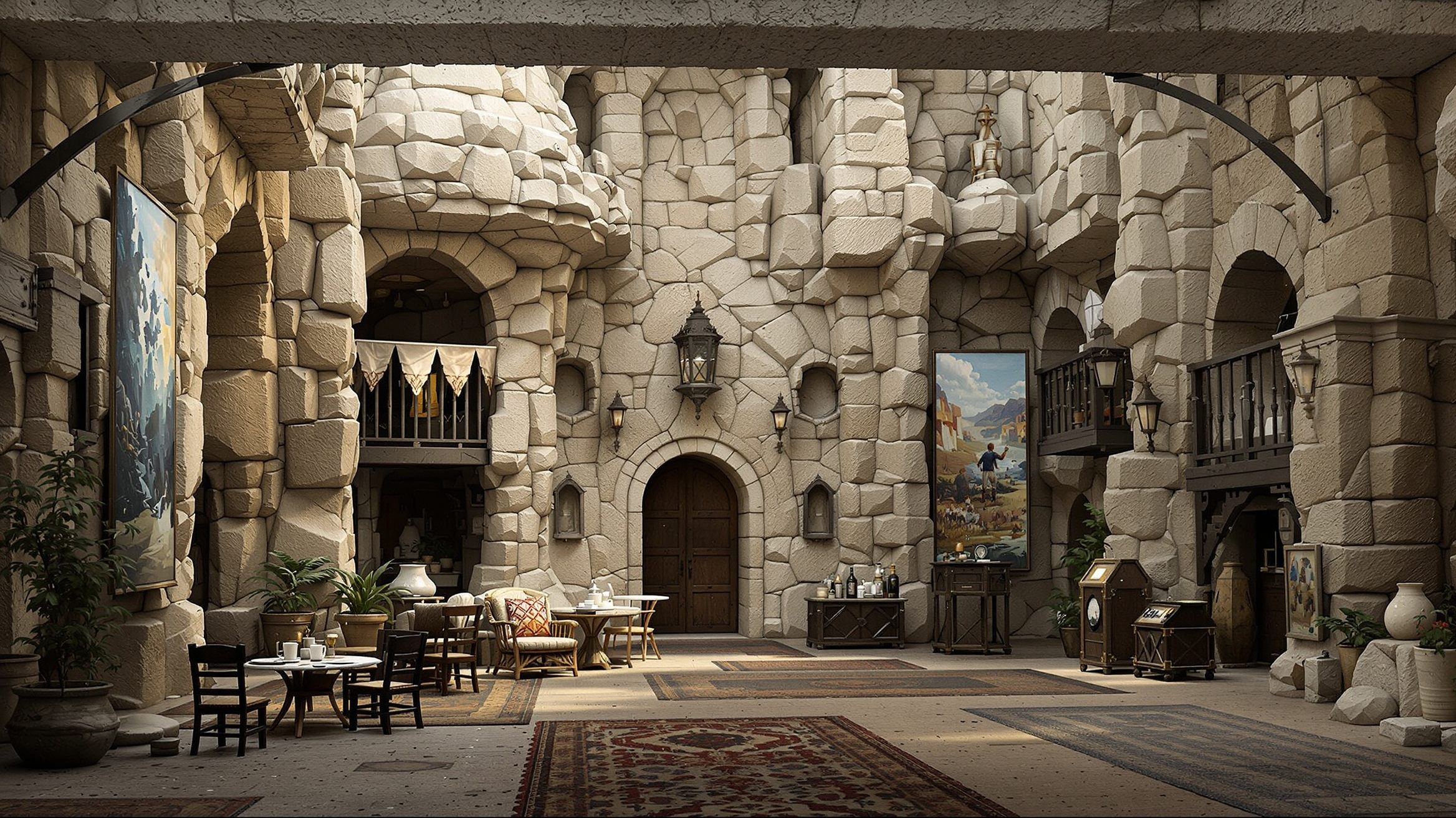
In themed environments, materials are not neutral. Every surface communicates information to the brain. Texture, weight, reflectivity, temperature, and even sound absorption subtly shape how a space is perceived. A faux stone wall that feels hollow or plasticky immediately breaks immersion, even if it looks convincing from a distance. Conversely, a lightweight scenic material that responds correctly to light and shadow can feel more “real” than an actual stone slab used incorrectly.
Designers choose materials not just for realism, but for control. They want predictable aging, safe interactions, and consistent performance under stress. A themed environment may host thousands of visitors per day, endure constant cleaning, and operate under theatrical lighting for years without renovation. Material selection becomes one of the most strategic decisions in the entire design process.
Sculpted Foam and Hardcoat Systems: The Backbone of Theming
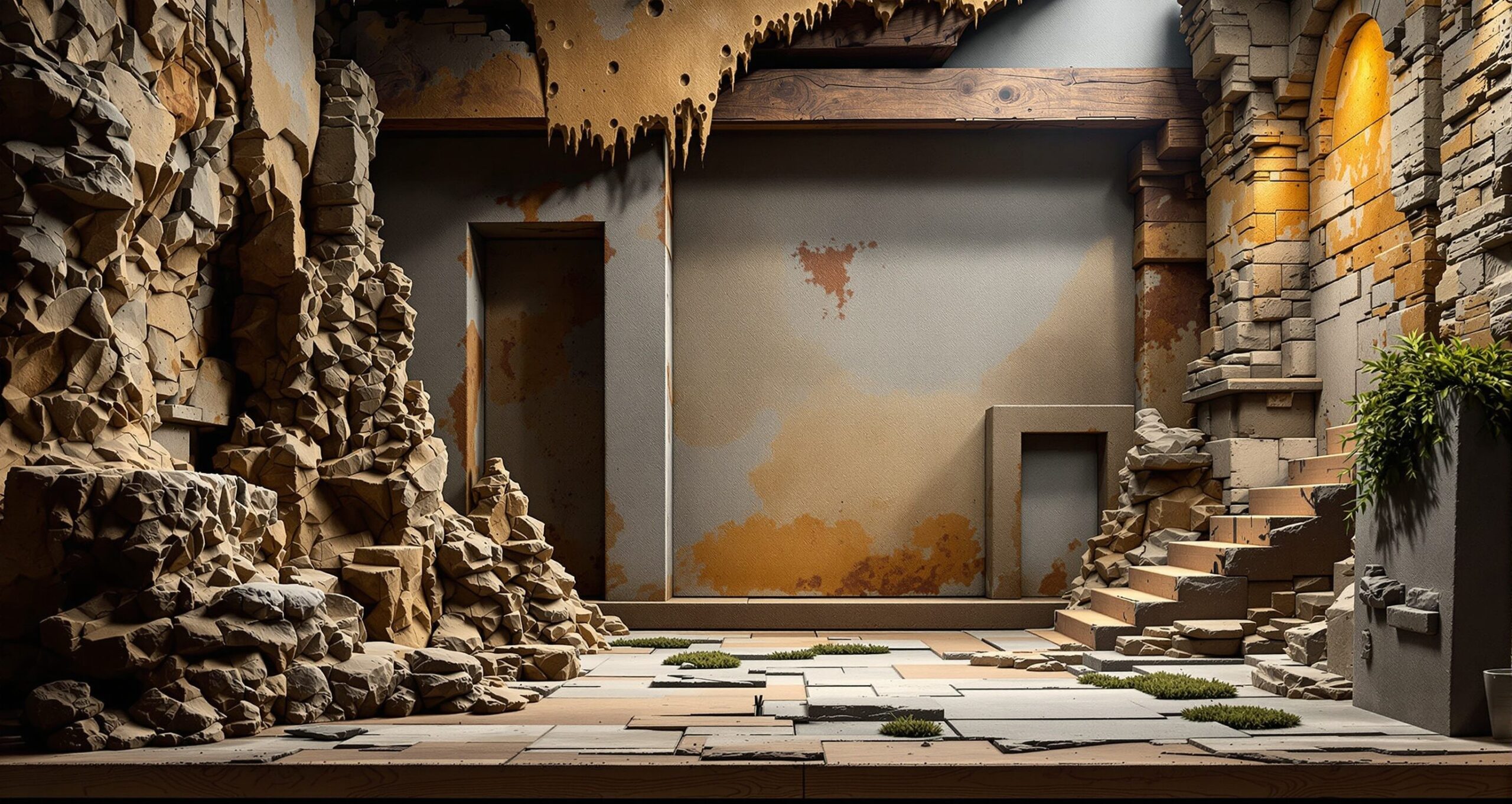
One of the most widely used materials in themed environments is sculpted foam, typically expanded polystyrene or polyurethane foam, finished with hardcoat systems. These materials allow designers to create rockwork, ruins, architectural details, tree trunks, and organic forms that would be prohibitively expensive or structurally impossible using real stone or wood.
Foam is lightweight, shapeable, and adaptable. It can be carved by hand, CNC-cut, or hot-wire shaped into complex forms. Once sculpted, it is coated with cementitious or polymer-based hardcoats that provide impact resistance and fire performance. When properly finished and painted, these surfaces convincingly replicate stone, aged masonry, or eroded landscapes.
Designers rely on foam not because it is cheap, but because it offers creative freedom. It allows storytelling to drive form rather than structural limitations. The best themed environments use foam invisibly, integrating it so seamlessly that guests never question its authenticity.
Glass Fiber Reinforced Concrete and Plaster
Glass Fiber Reinforced Concrete, often abbreviated as GFRC, is a staple material in high-end themed construction. It combines cement with glass fibers, creating panels and sculptural elements that are strong, thin, and far lighter than traditional concrete. Designers use GFRC for architectural façades, decorative columns, carved panels, and detailed relief surfaces.
GFRC excels where realism and durability intersect. It has the mass and acoustic properties of stone, responds beautifully to light, and withstands weather exposure in both indoor and outdoor environments. Unlike foam, it can support structural loads in certain applications, making it ideal for walk-through environments and guest-accessible features.
Similarly, reinforced plaster systems are used extensively for interior themed elements. These materials allow for fine detailing and smooth transitions, especially in controlled environments like museums and indoor attractions. Designers often choose plaster when subtlety matters more than brute durability.
Real Wood and Engineered Timber Applications
Despite the prevalence of synthetic materials, real wood remains a powerful storytelling tool in themed environments. Designers use wood strategically, often in areas where tactile authenticity matters most. Handrails, door frames, furniture, ceiling beams, and trim elements frequently use real or reclaimed wood to anchor the environment in reality.
However, raw wood is rarely left untreated. Designers often use engineered timbers, laminated veneers, or thermally modified wood to improve dimensional stability and resistance to moisture. In outdoor or high-humidity environments, wood may be sealed, stained, or artificially aged to control its appearance over time.
In many cases, wood is paired with scenic finishes to create hybrid solutions. A structural wood element may be wrapped, textured, or selectively enhanced to maintain both authenticity and longevity.
Metal Alloys for Authentic Aging and Industrial Themes
Metal plays a critical role in themed environments, particularly those inspired by industrial, steampunk, sci-fi, or historical settings. Designers commonly use steel, aluminum, brass, and copper alloys—not only for strength, but for how they age.
Steel can be treated to rust intentionally, sealed to freeze corrosion at a specific stage, or painted to simulate decades of wear. Brass and copper develop natural patinas that add depth and realism impossible to replicate with paint alone. Aluminum is often used where weight matters, especially for overhead elements and modular structures.
Designers understand how metals interact with light and sound. A metal surface reflects not just illumination but ambiance, reinforcing mood and atmosphere. Properly integrated, metal elements elevate the tactile credibility of a space.
Scenic Paints and Faux Finishes: The Illusion Layer
While materials form the foundation, scenic paint is what brings themed environments to life. Designers rely heavily on multi-layer paint systems, glazes, washes, and dry-brushing techniques to simulate age, depth, and environmental exposure. A flat paint job immediately signals artificiality; layered finishes tell a story.
High-quality scenic paints are formulated for durability, UV resistance, and compatibility with unusual substrates. Designers often work closely with scenic artists who specialize in replicating stone veins, wood grain, mineral deposits, soot buildup, or water staining.
The key to scenic finishes is restraint. Professional designers know that imperfection sells realism. Subtle asymmetry, inconsistent coloration, and selective wear patterns are more convincing than uniform detail.
Textiles, Soft Goods, and Environmental Absorption
Fabric is often overlooked in discussions of themed materials, yet it plays a vital role in shaping acoustics, comfort, and visual softness. Designers use textiles for banners, drapery, wall coverings, canopies, upholstery, and set dressing elements. In immersive environments, fabric helps control echo, dampen sound, and create intimacy.
Modern themed environments rely on flame-retardant, UV-stable, and stain-resistant textiles engineered for public spaces. Natural fibers may be used selectively, but most fabrics are blends designed to meet safety codes and longevity requirements.
The movement of fabric also adds life to a space. A gently shifting banner or hanging textile subtly reinforces environmental realism, especially in historical or fantasy settings.
Stone, Tile, and Masonry Where It Matters Most
While synthetic materials dominate large-scale theming, real stone and masonry still play an important role. Designers often use authentic materials at touchpoints—floors, thresholds, stair treads, or hand-height walls—where guests physically interact with the environment.
Stone tile, brick, and concrete pavers provide durability and weight underfoot, grounding the experience. These materials are chosen carefully to balance slip resistance, maintenance needs, and visual cohesion with surrounding scenic elements.
Designers understand that real materials do not need to be everywhere to be effective. Strategic placement amplifies authenticity while controlling cost and complexity.
Plastics and Acrylics in Disguise
Plastics are everywhere in themed environments, though rarely in obvious ways. Acrylics, polycarbonates, and resins are used for lenses, illuminated elements, protective covers, sculptural features, and water effects. When finished properly, these materials disappear into the narrative.
Designers favor plastics for their versatility and safety. They can be molded into complex shapes, colored internally, and lit from within. Acrylic panels may simulate glass while offering impact resistance and reduced weight.
In futuristic or fantasy environments, plastics are often celebrated rather than hidden, becoming part of the visual language of the space.
Lighting-Integrated Materials
Modern themed environments are inseparable from lighting. Many materials are chosen specifically for how they interact with illumination. Translucent resins, perforated metals, textured surfaces, and reflective coatings are selected to shape light distribution and color perception.
Designers increasingly integrate lighting directly into materials, embedding LEDs behind panels, within cracks, or beneath surfaces. This approach allows environments to shift mood dynamically, transitioning from day to night or calm to dramatic without physical changes.
Material choice directly affects lighting efficiency and emotional impact, making this relationship central to contemporary theming.
Durability, Safety, and Code Compliance
Behind every beautiful themed environment is a web of safety considerations. Designers must select materials that meet fire codes, slip resistance standards, structural requirements, and accessibility guidelines. Many scenic materials are tested extensively to ensure they perform under worst-case scenarios.
Professional theming prioritizes predictability. Materials must behave consistently over time, resisting cracking, fading, or degradation that could compromise safety or storytelling. This often means choosing proven systems over experimental alternatives, even if the latter appear more visually impressive.
Sustainability and Material Responsibility
Sustainability is becoming an increasingly important factor in material selection. Designers now consider lifecycle impact, recyclability, and sourcing alongside performance. Reclaimed wood, recycled metals, low-VOC coatings, and modular construction systems are gaining traction in themed environments.
However, sustainability in theming is nuanced. A material that lasts decades without replacement may be more responsible than a biodegradable option requiring frequent renewal. Designers weigh long-term impact rather than focusing on single-use metrics.
How Designers Think About Materials Holistically
Experienced designers do not select materials in isolation. They think in systems. A wall finish is evaluated alongside lighting, sound, guest behavior, cleaning protocols, and narrative intent. The best themed environments feel cohesive because every material decision supports a unified vision.
Materials are chosen not just for what they are, but for what they allow designers to control. Control over aging, control over perception, and control over maintenance. This is the quiet expertise behind immersive spaces that feel effortless to guests.
The Real Secret of Great Themed Materials
The truth is that no single material creates immersion on its own. Immersion emerges from how materials work together. Foam becomes stone through artistry. Paint becomes history through restraint. Metal becomes memory through wear. Designers succeed not by choosing exotic materials, but by understanding how familiar ones behave. The best themed environments are material stories told with discipline. They are built by designers who know that authenticity is not about realism alone, but about believability, consistency, and emotional resonance. When material choices are made thoughtfully, guests stop noticing surfaces and start experiencing worlds. And that is the real goal of themed design.