The Psychology of Movement: Why Guests Walk Where They Walk
Movement through space is never random. Whether strolling through a theme park, navigating a museum, wandering a retail environment, or exploring an immersive attraction, guests are constantly responding to subtle psychological cues. Paths feel inviting or restrictive. Corners spark curiosity or caution. Lighting, sound, texture, and spatial proportions quietly influence decisions long before conscious thought kicks in. Understanding why guests walk where they walk is not just a matter of crowd control; it is a foundational principle of experience design. When movement aligns with human psychology, spaces feel intuitive, immersive, and memorable. When it does not, even the most visually impressive environment can feel confusing or exhausting. At its core, the psychology of movement blends cognitive science, environmental psychology, and behavioral design. Humans instinctively read spaces for safety, efficiency, and meaning. Designers who understand these instincts can guide guests effortlessly, shaping emotional journeys without overt signage or instruction. Movement becomes storytelling, and walking becomes part of the narrative itself.
A: Lack of visual cues or perceived safety often discourages use.
A: By adding texture, detail, and vertical interest.
A: Design cues are processed faster and feel more natural.
A: They hide destinations, increasing curiosity.
A: Yes, directional audio is a powerful navigation tool.
A: Sudden narrowing or unclear transitions.
A: Bright light accelerates, dim light slows.
A: Not always—controlled ambiguity can enhance storytelling.
A: Visual complexity or emotional triggers cause pauses.
A: Core instincts are shared, but culture influences interpretation.
How the Human Brain Reads Space
The human brain evolved to interpret environments quickly. Long before modern architecture or themed spaces existed, survival depended on rapid spatial assessment. Open areas suggested safety and visibility, while narrow passages implied risk or transition. Elevated ground offered advantage, while darkness demanded caution. These primal responses still shape modern movement behavior, even in controlled environments.
When guests enter a space, their brains immediately begin mapping it. They look for clear sightlines, recognizable landmarks, and logical routes. Spaces that feel legible encourage exploration, while confusing layouts trigger hesitation or avoidance. This mental mapping process happens subconsciously and is heavily influenced by how information is presented visually and spatially. People also prefer paths that minimize cognitive effort. If a route appears obvious, well-lit, and purposeful, it will be favored over one that feels ambiguous or visually cluttered. Designers who respect this mental economy can guide guests smoothly, reducing stress while increasing engagement.
The Power of Visual Gravity
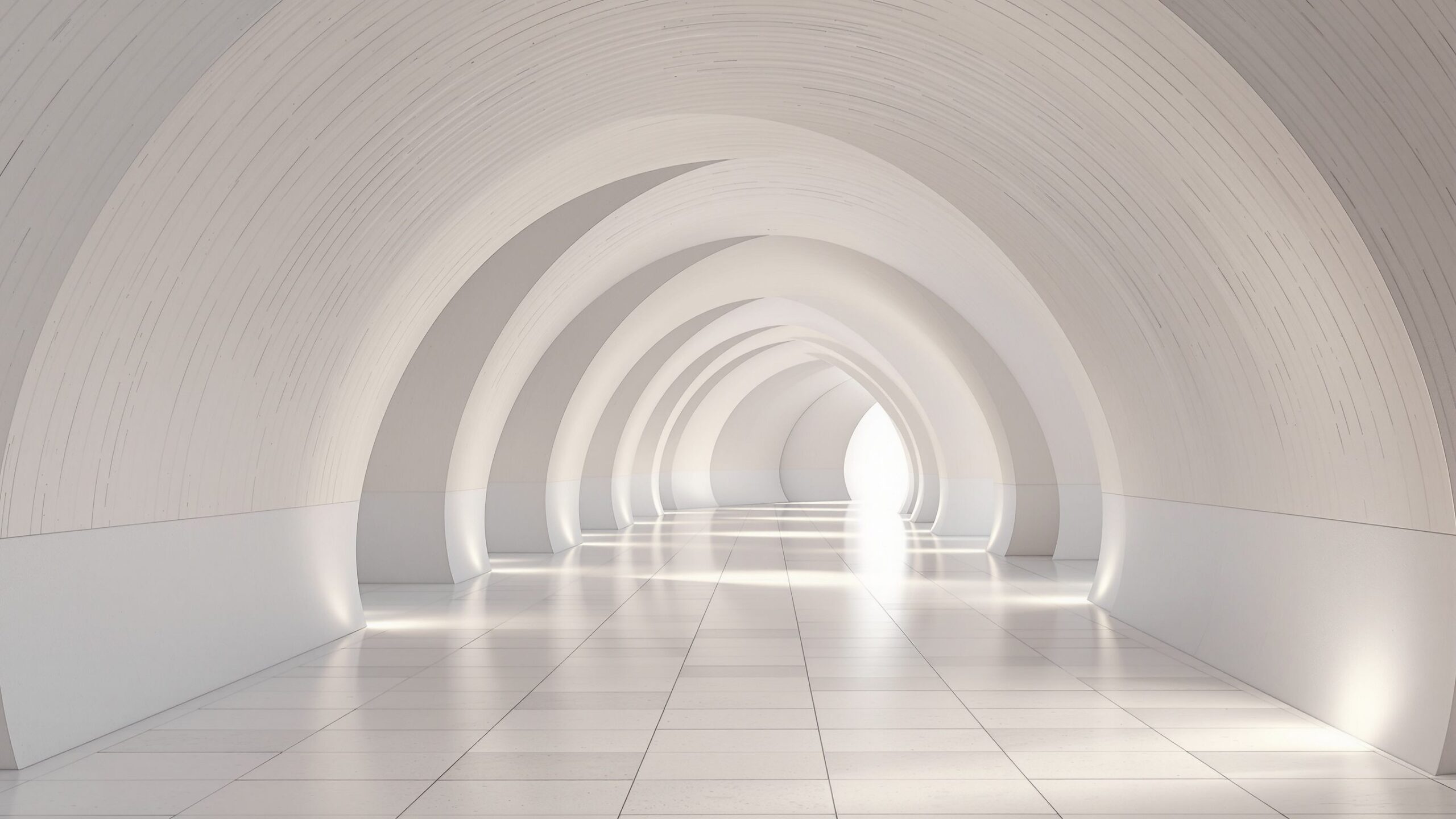
Visual gravity refers to the way certain elements pull attention and, consequently, movement. Humans naturally walk toward what they can see clearly and what appears important. Brightly lit areas, strong focal points, contrasting colors, and recognizable forms act like magnets within a space. A distant focal point at the end of a corridor encourages forward motion, even if the destination is not fully understood. This is why castles, monuments, or dramatic set pieces are often placed along primary axes. Guests may not consciously decide to walk toward them, but visual gravity does the work automatically.
Conversely, areas lacking visual interest or clarity tend to be bypassed. If a path disappears into shadow or visual clutter, it signals uncertainty. Even subtle differences in ceiling height or material finish can influence perceived importance. Movement follows meaning, and meaning is often communicated visually before it is understood intellectually.
Natural Pathfinding and the Desire for Flow
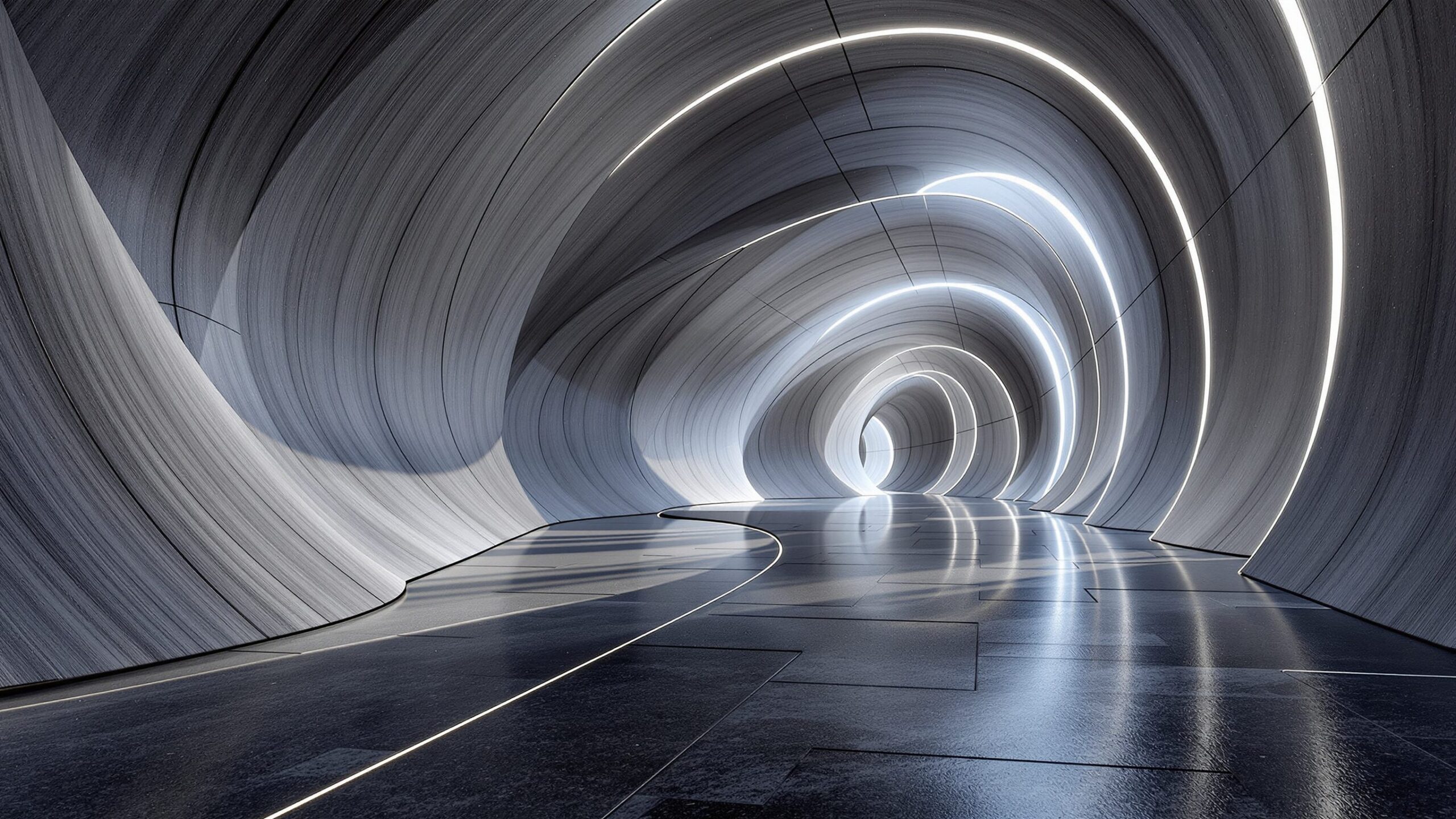
Humans are wired to seek flow. We prefer routes that feel smooth, continuous, and uninterrupted. Sharp turns, dead ends, and abrupt transitions disrupt flow and cause friction. This is why curved pathways are so effective in immersive environments. Curves suggest continuation without revealing everything at once, inviting guests forward through anticipation rather than instruction.
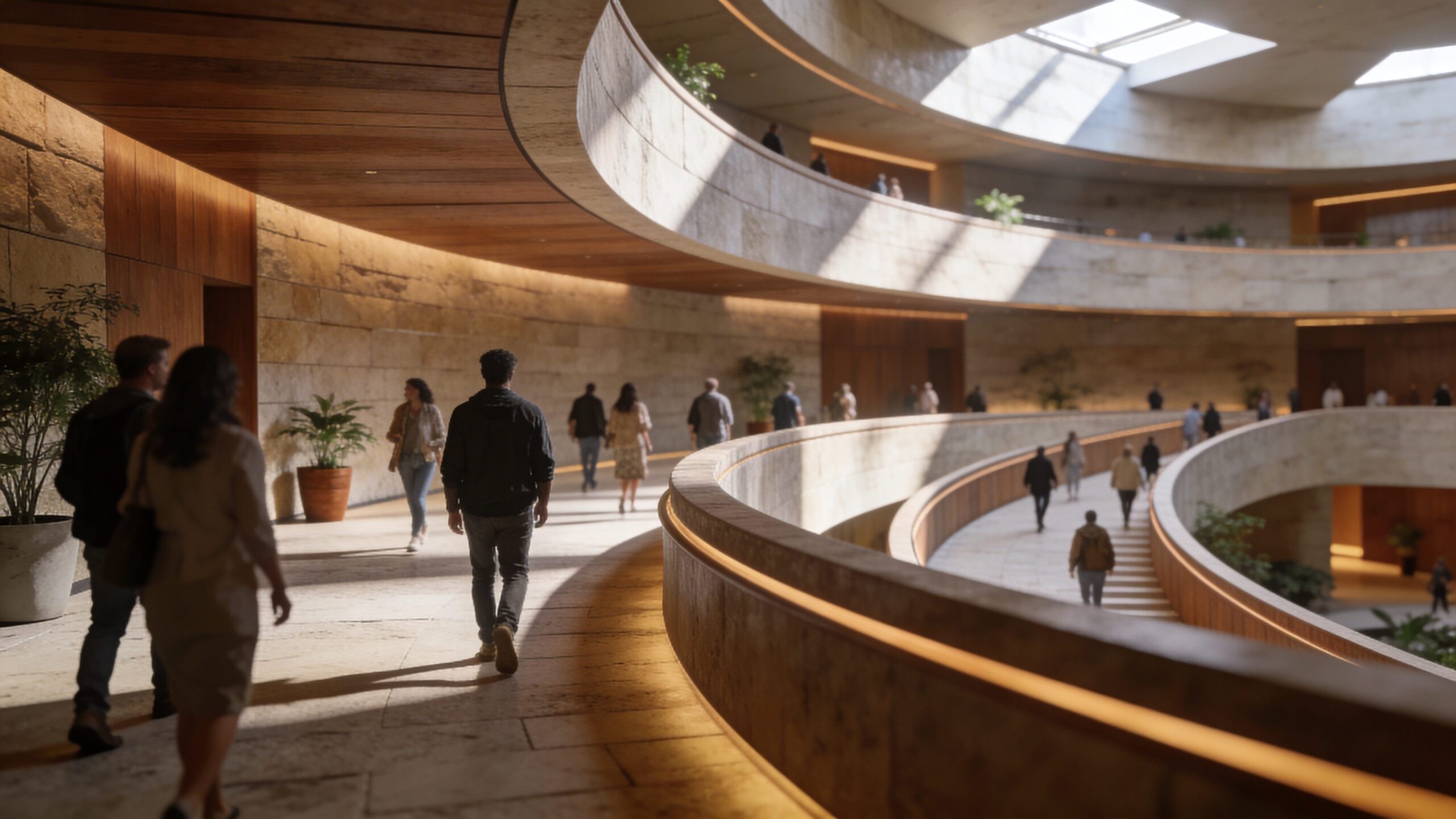
Flow also relates to rhythm. Alternating between narrow and wide spaces, low and high ceilings, or quiet and active zones creates a physical cadence. Guests move more slowly through compressed areas and speed up in open ones. This natural modulation can be used to control pacing without guests feeling managed. When flow is disrupted unintentionally, guests feel it immediately. Bottlenecks, unclear intersections, or conflicting visual cues create hesitation. People stop, look around, and break immersion. Understanding flow psychology allows designers to choreograph movement as carefully as dialogue in a story.
The Role of Curiosity and Partial Revelation
Curiosity is one of the strongest drivers of movement. Humans are compelled to resolve uncertainty, especially when the promise of reward is implied. Spaces that reveal just enough information encourage exploration. A glimpse of light around a corner, the sound of activity beyond a wall, or a partial view into another environment triggers forward motion.
This principle is known as partial revelation. Instead of presenting everything at once, designers strategically conceal and reveal elements to pull guests along. Straight corridors that expose their full length often feel transactional, while winding paths that tease what lies ahead feel experiential.
Curiosity-driven movement is especially powerful in themed environments. Guests are not just walking to get somewhere; they are uncovering a story. Each step becomes a choice motivated by intrigue rather than obligation.
Safety, Comfort, and the Invisible Boundaries of Movement
While curiosity pulls guests forward, comfort determines whether they follow. Humans are acutely sensitive to perceived safety, even in controlled environments. Adequate lighting, clear boundaries, and visible exits contribute to a sense of security that allows guests to relax and explore.
People tend to avoid areas that feel too confined, too exposed, or poorly maintained. Rough textures, low ceilings, or ambiguous edges can trigger subconscious discomfort. This does not mean such elements should be avoided entirely. When used intentionally, they can heighten tension or focus attention. However, they must be balanced carefully to avoid pushing guests away unintentionally. Invisible boundaries also shape movement. Changes in flooring texture, subtle shifts in lighting color, or variations in sound can signal transitions without physical barriers. Guests instinctively respect these cues, adjusting their behavior and pace accordingly.
Social Behavior and Group Dynamics
Movement is rarely an individual act. Most guests experience spaces in groups, and group psychology plays a significant role in how paths are chosen. People tend to follow others, especially in unfamiliar environments. A path that appears popular or well-used feels safer and more trustworthy than one that looks empty.
This herd behavior can amplify design intentions or undermine them. If a secondary path is poorly signaled, it may be ignored entirely once guests observe others bypassing it. Conversely, a single strong visual cue can redistribute movement by making an alternative route feel equally valid.
Group size also affects pace and spacing. Families move differently than couples, and large groups require wider paths and clearer decision points. Designing for movement psychology means accounting not just for individuals, but for social units and how they interact with space together.
Decision Points and the Psychology of Choice
Every intersection is a moment of decision. At these points, guests briefly shift from subconscious movement to conscious evaluation. Poorly designed decision points create confusion, hesitation, and congestion. Well-designed ones feel effortless, even when multiple options exist.
Clarity is essential. Each path should communicate its purpose visually. Differences in width, lighting, or thematic emphasis help guests understand where each route leads. When options appear equal without context, people often default to the path straight ahead, reinforcing the importance of axial design. Reducing the number of choices at any given moment also improves movement flow. Too many options increase cognitive load and slow movement. Staggered decision-making, where choices unfold gradually, keeps guests engaged without overwhelming them.
Emotional States and Their Influence on Movement
Emotion and movement are deeply linked. Excitement increases speed and willingness to explore, while anxiety slows movement and narrows focus. Designers can influence emotional states through environmental cues, indirectly shaping how guests move.
Warm lighting, inviting textures, and open sightlines create comfort and encourage lingering. Cooler tones, dramatic contrasts, and compressed spaces increase alertness and anticipation. Soundscapes also play a role, with rhythmic or ambient audio guiding pace and direction.
By aligning emotional tone with intended movement, designers ensure that guests move not just physically, but emotionally through the experience. The journey feels cohesive rather than disjointed.
Cultural and Learned Behaviors in Spatial Navigation
Not all movement psychology is universal. Cultural norms and learned behaviors influence how guests interpret space. For example, people accustomed to dense urban environments may be comfortable with tighter circulation, while those from more spacious contexts may prefer wider paths.
Directional reading habits also matter. In cultures where reading flows left to right, visual emphasis on the right side of a space may feel more intuitive. Designers working with diverse audiences must consider these variations to avoid unintentional bias in movement patterns. However, certain principles remain consistent across cultures, such as the preference for clarity, safety, and meaningful destinations. Balancing universal instincts with contextual sensitivity is key to effective movement design.
Storytelling Through Spatial Progression
Movement is one of the most powerful storytelling tools available to designers. The order in which spaces are experienced shapes narrative comprehension. Just as chapters build upon one another, spatial progression creates context, tension, and resolution.
Early spaces set expectations and establish tone. Transitional areas prepare guests for change, while climactic spaces deliver impact. Movement through these sequences should feel intentional, with each step reinforcing the story being told.
When guests reflect on an experience, they often remember how it unfolded rather than specific details. A well-designed movement narrative leaves a lasting impression because it aligns physical journey with emotional arc.
The Cost of Ignoring Movement Psychology
When movement psychology is overlooked, the consequences are immediate and tangible. Guests feel lost, rushed, or fatigued. Bottlenecks form where they were never intended. Beautiful spaces go unnoticed because they fall outside natural paths.
Poor movement design also increases reliance on signage and staff intervention, breaking immersion and adding operational complexity. In contrast, environments that respect psychological movement principles feel intuitive. Guests rarely notice the guidance because it feels natural. Ignoring movement psychology is not just a design flaw; it is a missed opportunity. Every step a guest takes is a chance to deepen engagement or dilute it.
Designing for Intuition, Not Instruction
The most successful environments guide guests without telling them what to do. This is the ultimate goal of movement psychology. When design aligns with instinct, guests move confidently and comfortably, believing they chose their path freely.
Achieving this requires restraint as much as creativity. Overdesigning movement cues can feel manipulative or overwhelming. Subtlety is key. The best guidance often goes unnoticed, functioning as an invisible hand rather than a visible signpost. By prioritizing intuition over instruction, designers create experiences that feel seamless, respectful, and immersive.
Why Movement Is the Backbone of Experience Design
Movement connects every element of an environment. It determines how stories are revealed, how emotions unfold, and how memories are formed. Visual design may capture attention, but movement sustains engagement. Understanding why guests walk where they walk empowers designers to shape experiences holistically. Instead of reacting to behavior after the fact, they can anticipate it, designing spaces that work with human psychology rather than against it. In immersive environments especially, movement is not a logistical concern. It is a creative medium. When harnessed thoughtfully, it transforms walking into wonder and space into story.