Why Vintage Design Feels So Enduring
Vintage design is less about copying an old room exactly and more about understanding why certain shapes, finishes, colors, and objects still feel emotionally rich. A beginner can look at a carved chair, a curved lamp, or a faded floral textile and sense history, but the room only works when those pieces are edited with intention. The best vintage interiors feel collected rather than crowded. They balance patina with comfort, ornament with breathing room, and nostalgia with the way people actually live now.
A: Mid-century is often easiest because its simple shapes mix well with modern pieces.
A: Yes, if you choose fewer stronger objects and let their materials carry the atmosphere.
A: No, but they should relate through warmth, contrast, or repeated undertones.
A: Not always, but honest new pieces usually look better than exaggerated fake aging.
A: Two or three can work if one era clearly leads the design.
A: Purpose, scale, condition, and editing turn old objects into design.
A: Yes, through lighting, rugs, textiles, art, and freestanding storage.
A: Only after wiring and sockets are checked or updated.
A: Start with an anchor piece that solves a real room need.
A: Balance age with clean surfaces, fresh textiles, and current comfort.
Start With the Era, Not the Object
A common beginner mistake is treating every older-looking object as part of the same design language. Vintage rooms become clearer when you begin with an era, because each period has its own attitude toward shape, comfort, craft, and display. Victorian rooms tend to love detail and density. Art deco prefers glamour, geometry, shine, and theatrical contrast. Mid-century spaces simplify the line, lower the furniture, and let wood grain, tapered legs, and practical forms carry the beauty.
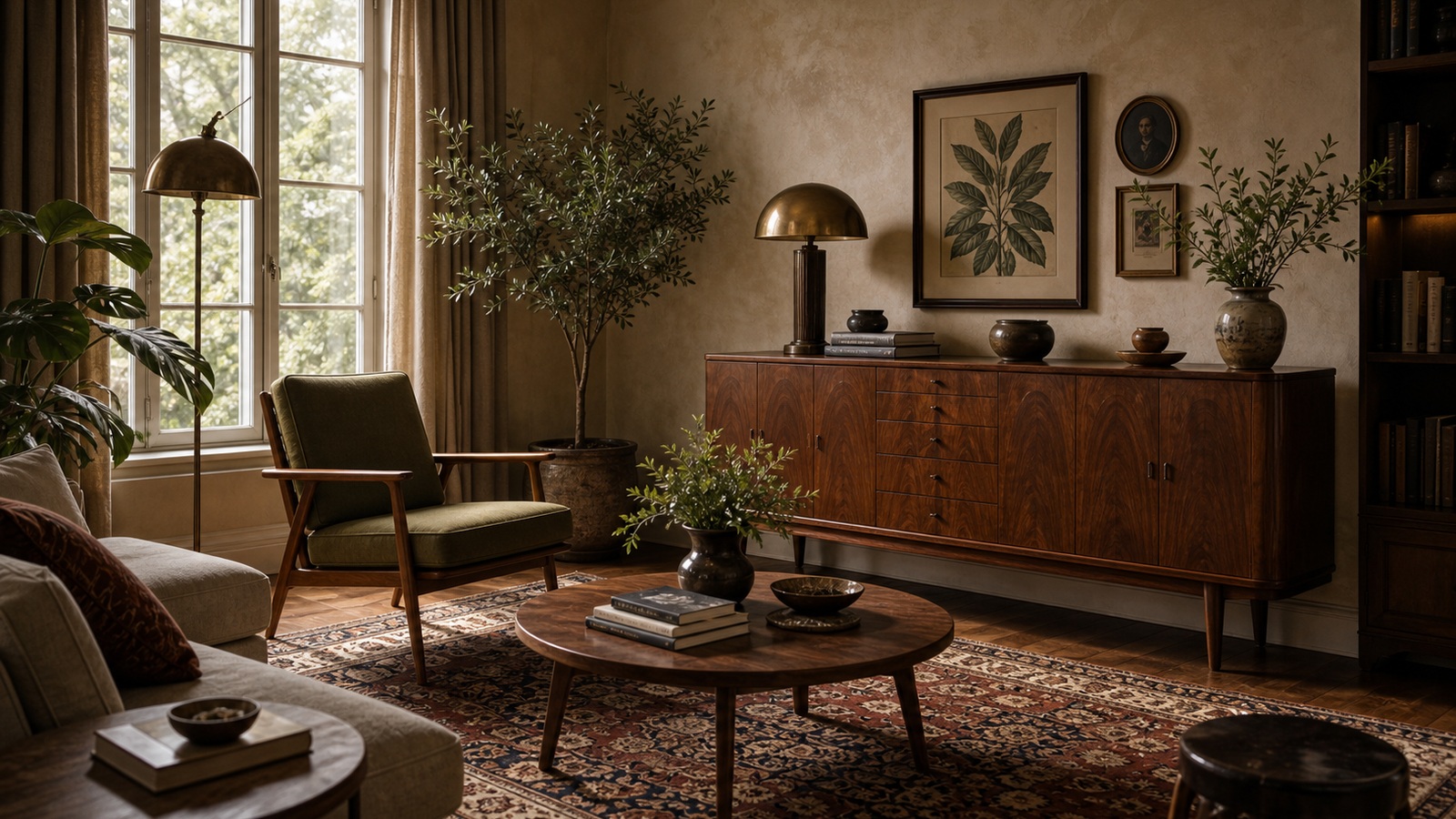
Choosing an era first does not mean every piece must match. It simply gives the room a visual anchor. A living room might use a mid-century sofa as the main silhouette, then bring in a 1930s mirror or an older carved side table for tension. The key is knowing which element is leading the conversation. Once that is clear, the supporting pieces can vary without making the room feel accidental.
Beginners should study proportions before shopping. A high-backed Victorian chair changes posture and formality. A low slung lounge chair relaxes the room. A deco cabinet with stepped edges makes a wall feel architectural. When you notice those structural differences, vintage style stops being a pile of pretty things and becomes a set of design decisions you can repeat with confidence.
Recognize the Main Vintage Families
Victorian and Edwardian styling often bring turned legs, carved wood, tufting, fringe, botanical motifs, and layered fabric. These details can be beautiful, but they need space around them. One ornate piece can become a focal point; five can start to feel heavy. Beginners do well by pairing a decorative antique or vintage-inspired piece with cleaner walls, simpler lighting, and fewer competing patterns.
Art deco and art moderne are easier to recognize through geometry. Look for fan shapes, arches, stepped forms, glossy wood, chrome, smoked glass, lacquer, and strong symmetry. Deco rooms can become overly stage-like if every surface gleams, so a softer rug, linen curtain, or matte wall color helps the glamour feel livable. It is a style that rewards restraint because each strong line wants to be seen.
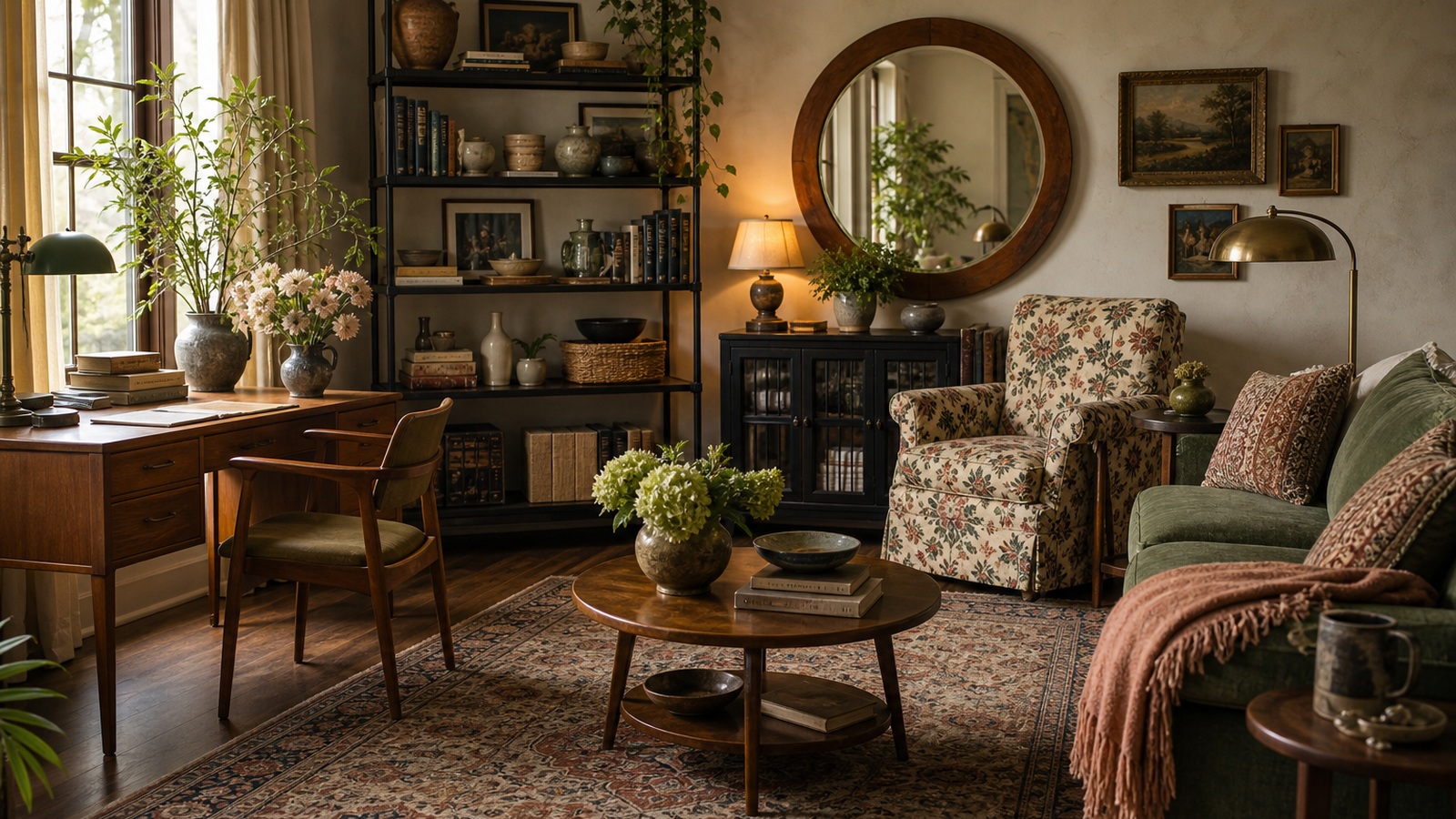
Mid-century modern is probably the most familiar vintage family today. Its popularity comes from its adaptability: simple seating, warm woods, readable silhouettes, and practical storage. To keep it from looking like a showroom, mix in texture and age. A wool rug, handmade ceramic, old landscape painting, or softly worn leather chair adds the human layer that makes the room feel settled rather than staged.
Use Color as a Time Signal
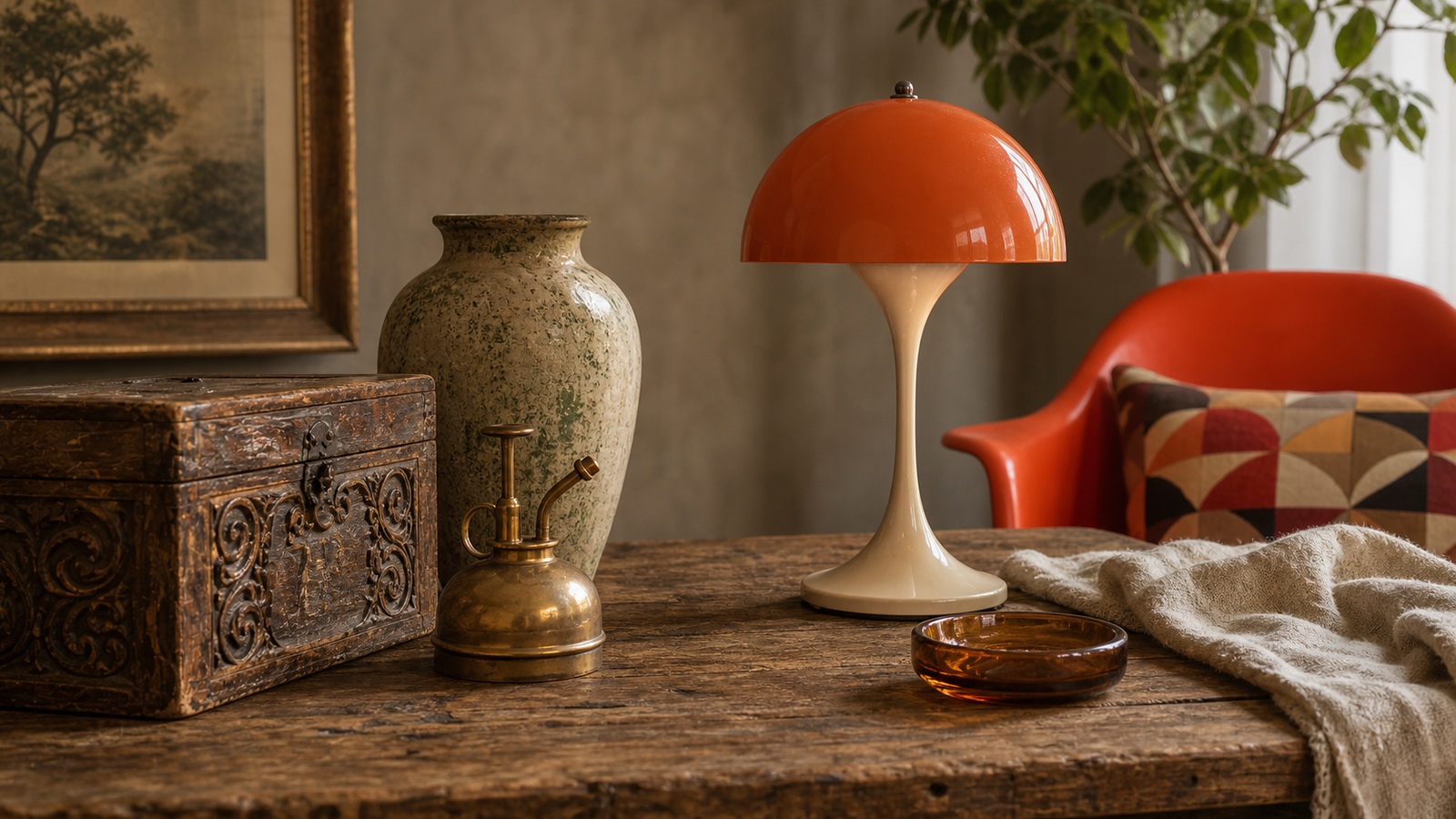
Color can suggest an era before a guest notices a single object. Dusty rose, oxblood, moss, cream, and deep walnut can lean old-world. Peacock blue, black, ivory, gold, and emerald can suggest deco drama. Avocado, mustard, teak, burnt orange, and warm brown often point toward the 1960s and 1970s. The goal is not to reproduce a dated palette blindly; it is to borrow the emotional temperature of the period.
A beginner-friendly approach is to choose one historical color family and modernize the amount of it. Instead of painting every wall avocado, use olive velvet on a chair or moss green tile around a fireplace. Instead of covering a room in floral wallpaper, frame the pattern on one wall and echo its tones in pillows. Vintage color works best when it feels deliberate, edited, and connected to the materials already in the room.
Let Patina Do Some of the Work
Patina is one of the biggest reasons vintage pieces feel alive. A rubbed brass handle, softened leather arm, crazed ceramic glaze, or slightly uneven wooden surface tells the eye that the object has been touched, used, and kept. That sense of continuity is hard to fake. It gives a room warmth even when the layout is simple.
The trick is separating graceful age from neglect. A scratched table can be charming if the structure is sound and the finish still reads as cared for. A fraying electrical cord, unstable chair joint, or musty upholstered seat is not romance; it is a repair project. Beginners should inspect function first, then beauty. The strongest vintage interiors usually combine old surfaces with modern safety, clean upholstery, and practical lighting.
Patina also needs contrast. If every object is worn, the room can feel tired. A clean sofa, crisp lampshade, fresh wall color, or contemporary artwork gives the older pieces a reason to shine. Vintage design is a duet between preservation and renewal.
Mix New Pieces Without Breaking the Mood
Most real homes need new mattresses, durable sofas, efficient lighting, and storage that fits current life. New pieces can sit comfortably in a vintage room when their shapes, finishes, or scale respect the older elements nearby. A new sofa with a simple arm can support a vintage coffee table. A modern floor lamp in aged brass can bridge old and new. A plain linen curtain can calm a patterned rug without erasing it.
Avoid buying new items that imitate age too aggressively. Faux distressing, exaggerated antique finishes, and novelty reproduction pieces often look less convincing than simple modern objects with honest materials. If the real vintage item is the star, the new supporting pieces should be quieter. This keeps the room from becoming costume-like.
Build a Vintage Room Slowly
Vintage rooms improve when they are assembled over time. The slow pace helps you compare finishes, learn what sizes work, and avoid filling corners just because something is available. Start with one anchor: a rug, cabinet, dining table, bed frame, or pair of lamps. Then add layers that solve real needs. A reading chair should be comfortable. A sideboard should hold what you own. A mirror should improve light or proportion, not merely announce a style.
It is also wise to leave small pauses in the design. Empty wall space, a simple table surface, or a plain lampshade can make the vintage pieces feel more valuable. Beginners often think character means every inch must be decorated, but the eye needs contrast to appreciate detail. A room with fewer stronger choices usually feels more timeless than one full of minor finds.
Classic vintage design succeeds when it respects the past without freezing the present. Learn the eras, choose a clear anchor, edit for comfort, and let authentic materials carry the atmosphere. The result is not a museum room. It is a home with memory, personality, and enough restraint to keep its charm from becoming clutter.
How Beginners Can Practice the Eye
The fastest way to improve with vintage design is to compare rooms slowly instead of scrolling past them. Look at where the weight sits, how high the furniture rises, whether the legs are slim or substantial, and how much ornament appears on each surface. A beginner who studies these details starts recognizing why one room feels formal, another relaxed, and another glamorous. That visual practice makes shopping easier because you are no longer reacting only to charm. You are noticing structure.
Museums, estate sales, older hotels, historic homes, and even film interiors can become useful references. You do not need to copy them exactly. Instead, notice the relationship between wall color, trim, lighting, textiles, and furniture shape. An old library might teach you how shaded lamps warm dark wood. A vintage hotel lobby might reveal how a single large mirror can make ornament feel architectural rather than fussy.
Keep a small reference folder divided by mood rather than by decade. Save examples for quiet vintage, polished vintage, rustic vintage, romantic vintage, and modern vintage. Over time, patterns will appear. You may discover that you love curved silhouettes but dislike heavy fabric, or that you prefer worn brass to polished chrome. Those preferences become a personal filter, which is more useful than any rigid list of rules.
When you bring an item home, test it before redesigning the whole room around it. Move it to different walls. Try it under daylight and lamplight. Pair it with a plain object, then a patterned one. Vintage pieces often change character depending on what surrounds them. A chair that looked too formal in one corner may feel relaxed beside a linen curtain and a simple table.
The beginner goal is not perfection. It is learning how age, proportion, finish, and comfort work together. Once you can see those relationships, vintage design becomes less intimidating and much more enjoyable. You can choose pieces with patience, leave space for discovery, and build a room that looks gathered through real attention rather than purchased all at once.
A Simple First-Room Method
For a first vintage project, choose one room and one anchor instead of trying to transform the whole home. A bedroom might begin with a headboard, pair of lamps, or old dresser. A living room might begin with a rug, coffee table, or lounge chair. Once the anchor is chosen, repeat one color, one material, and one shape from it elsewhere in the room.
Next, decide what should stay modern. Mattresses, task lighting, electrical parts, and heavily used upholstery often benefit from current standards. This is not a compromise; it is what lets vintage pieces remain enjoyable. A room that functions well will be loved longer, and loved rooms are the ones that develop real character over time.
Finally, leave space for future finds. Vintage design becomes richer when it is allowed to accumulate slowly. A blank wall is not a failure if the right artwork has not appeared yet. An empty corner may be waiting for the right chair. Patience is part of the style, because the best rooms look discovered as much as designed.
What to Buy First and What to Delay
Buy the pieces that determine scale before buying small decorative objects. Rugs, tables, storage, beds, and seating set the room's proportions. If those are wrong, the prettiest accessories will not rescue the space. Once the major sizes are working, lamps, art, ceramics, mirrors, and textiles can refine the mood.
Delay purchases that depend on color until the room has real light and furniture in place. A pillow, shade, or paint color can look different once wood tones and upholstery arrive. Vintage rooms are especially sensitive to undertone because older finishes often contain amber, red, gray, or green casts that are easy to miss online.
Also delay anything that is only charming for a moment. A small object should earn its place through meaning, usefulness, material, or relationship to the rest of the room. Vintage design rewards selectivity. The fewer weak pieces you buy, the more attention the strong ones receive.
When in doubt, choose the item with the better shape and condition over the item with the louder period signal. A well-proportioned simple piece can live in many rooms. A highly themed piece may become difficult once your taste evolves.