Vintage Themes Work Best When They Have a Point of View
The most popular vintage themes endure because they offer more than old objects. Each one gives a room a point of view: glamorous, practical, romantic, rustic, tailored, playful, or quietly timeworn. Choosing a vintage theme helps narrow decisions about color, furniture shape, lighting, and texture. It also prevents the room from becoming a random collection of nice finds. The goal is not to trap a space in one decade, but to use a recognizable vintage mood as a framework for comfort and personality.
A: Yes, if one is dominant and the second repeats selected colors or materials.
A: Mid-century is often easiest because its shapes mix well with current furniture.
A: Art deco and regency styles tend to read as the most glamorous.
A: Yes, when patterns are edited and plain surfaces balance the softness.
A: It can be, if large heavy pieces are limited and storage is useful.
A: No, authentic vintage, new basics, and selected reproductions can work together.
A: Use the theme as a material guide rather than a literal set design.
A: A strong rug, cabinet, mirror, or light fixture can set the direction.
A: It helps, but contrast can work when scale and finishes are thoughtful.
A: Collect images, find the shared mood, and build around that common thread.
Art Deco Glamour
Art deco remains popular because it makes interiors feel intentional almost immediately. The style uses symmetry, strong outlines, rich contrast, polished surfaces, and geometric rhythm. A deco-inspired room might include a curved sofa, fluted cabinet, fan motif, black-and-ivory palette, brass lighting, or a mirror with a stepped frame. Even one or two of these details can give the room ceremony.
The danger is excess shine. If every object is glossy, the room can feel like a hotel lobby rather than a home. Matte walls, velvet upholstery, wool rugs, and natural stone help soften the glamour. Deco works beautifully in dining rooms, bars, powder rooms, and entry spaces because those rooms can handle drama without needing to be visually quiet all day.
For beginners, the best route is to choose a few architectural cues and repeat them. Curves, vertical fluting, brass, and dark wood can be enough. Keep accessories disciplined. Deco is strongest when each element has room to pose.
Mid-Century Warmth
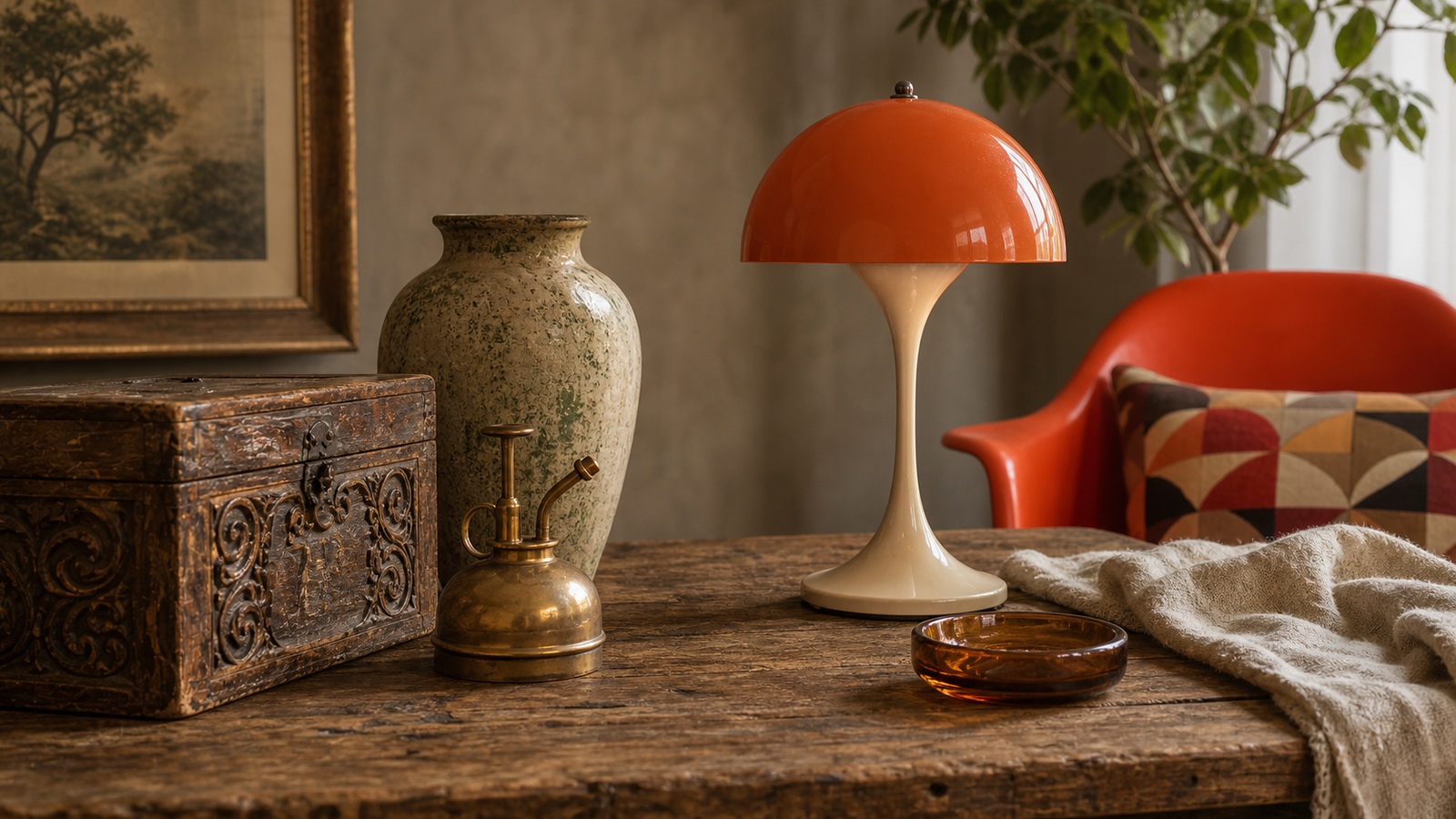
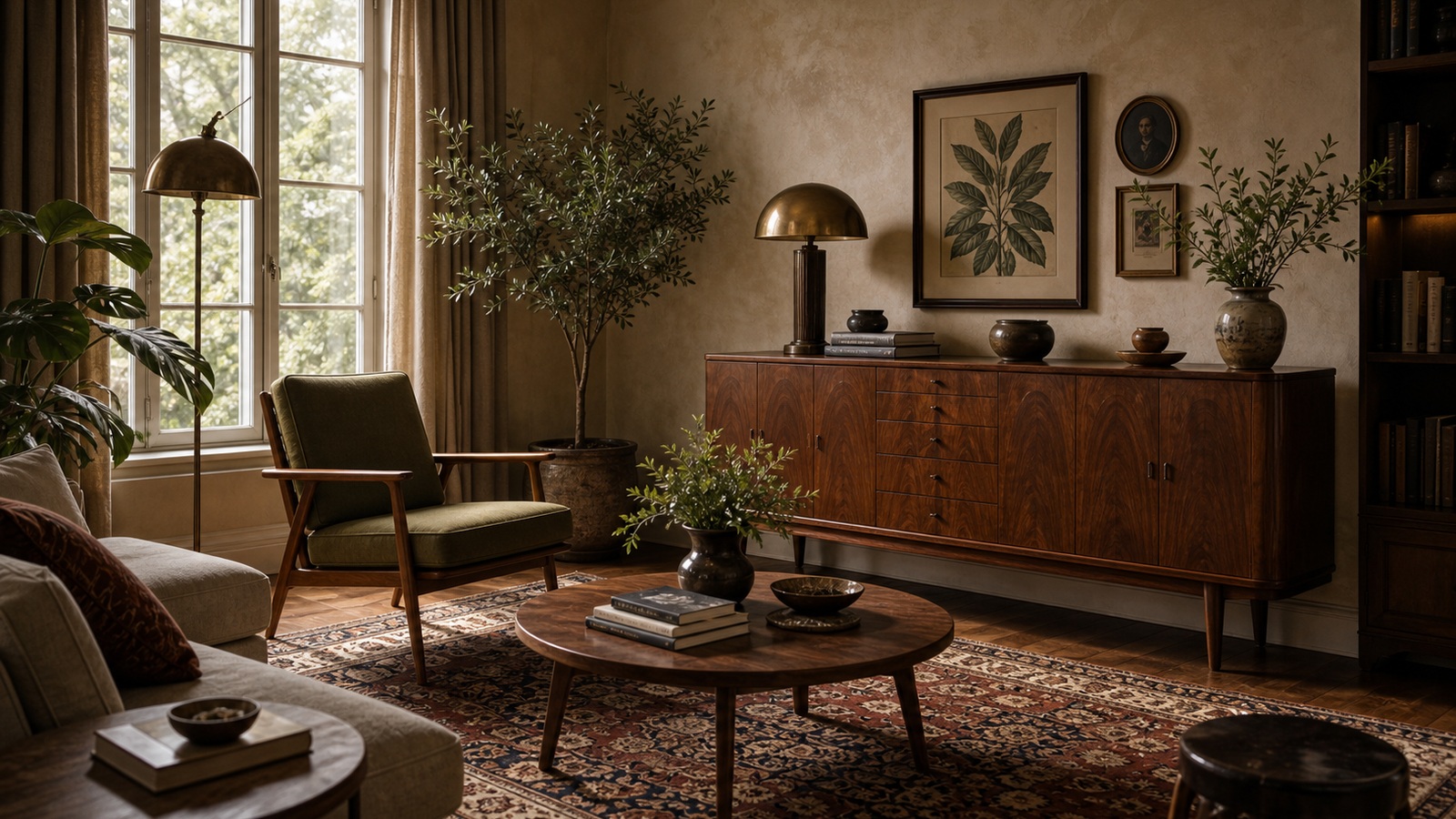
Mid-century vintage is popular because it is adaptable. Its furniture is usually lower, lighter, and simpler than earlier antique styles, which makes it easier to combine with modern pieces. Warm wood, slim legs, practical storage, organic curves, and graphic textiles can make a room feel relaxed without becoming plain.
The style works especially well in living rooms, offices, and open-plan spaces. A credenza can organize media or dining storage. A lounge chair can create a reading corner. A teak table can bring warmth into a white room. Because the forms are efficient, mid-century pieces often suit smaller homes and apartments.
To keep the theme from feeling overdone, avoid buying only icons. Mix in handmade ceramics, older books, plants, textured rugs, and art that does not look like a catalog poster. Mid-century design has enough restraint to welcome those human layers.
Cottage and Heritage Vintage
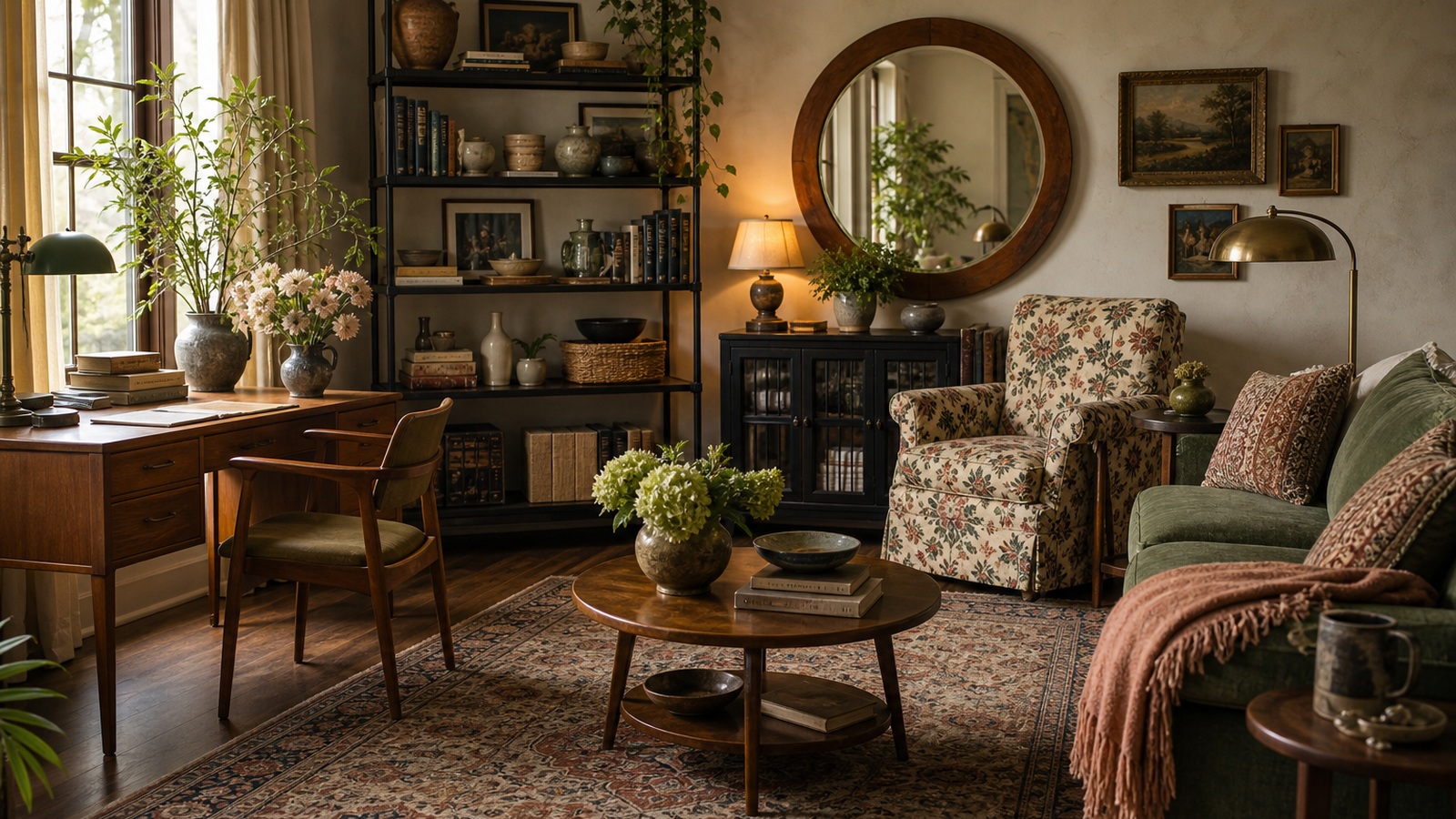
Cottage vintage leans into softness, memory, and imperfection. It may include floral textiles, painted wood, skirted tables, iron beds, quilts, framed botanicals, woven baskets, and gentle color. The appeal is emotional: these rooms feel cared for, personal, and unhurried.
Heritage vintage can be a little more tailored. It might use plaid, ticking stripes, darker woods, library lighting, traditional rugs, and framed landscapes. Both versions benefit from authenticity. Natural fibers, real wood, old ceramics, and useful storage keep the look from becoming sugary.
The secret is editing the sweetness. A cottage room needs some plain surfaces, sturdy furniture, and practical lighting. Without that structure, it can become sentimental clutter. With it, the theme feels restful and deeply livable.
Industrial Vintage
Industrial vintage comes from factories, workshops, warehouses, and utility spaces. Metal stools, task lights, old shelving, worktables, casters, rivets, concrete, brick, and weathered wood all belong to the vocabulary. It remains popular because it gives interiors toughness and texture.
This theme works best when balanced with comfort. A room full of hard surfaces can echo, glare, and feel cold. Leather, wool, linen, warm bulbs, plants, and upholstered seating make industrial pieces feel residential. The contrast between rough structure and soft use is what makes the style compelling.
Industrial vintage also rewards restraint. One substantial worktable or steel shelving unit has more power than a room full of small novelty objects. Choose pieces that still perform a useful function, and the theme will feel grounded rather than decorative.
Hollywood and Regency Revival
Hollywood regency and related vintage glamour themes are theatrical by nature. They use contrast, mirrors, lacquer, brass, sculptural lamps, animal-inspired pattern, and dramatic seating. The look is less about historical accuracy and more about confidence. It suits people who want rooms to feel social, polished, and a little cinematic.
Because the style is expressive, it needs discipline. Choose a tight palette and repeat finishes carefully. A black lacquer console, pair of brass lamps, velvet chair, and bold mirror can do more than a dozen shiny accessories. Negative space makes glamour look expensive.
This theme works beautifully in bedrooms, dressing areas, lounges, and dining spaces. In family rooms, it may need softer fabrics and durable finishes. The room should still invite people to sit down, not merely admire it from the doorway.
Choosing the Right Theme
The right vintage theme should fit the architecture, the amount of natural light, the existing furniture, and the way the room is used. A dark deco palette may be stunning in a dining room but oppressive in a small work area. Cottage florals may feel perfect in a bedroom but too delicate for a busy entry. Industrial pieces may solve storage beautifully but need softness nearby.
Start by naming the mood you want before naming the style. Do you want polish, comfort, romance, strength, nostalgia, or playfulness? Once the emotional target is clear, the theme becomes a tool rather than a costume. You can borrow the best parts and leave behind the rest.
Popular vintage themes last because they are flexible. They give you a vocabulary, not a prison. Use one as the lead voice, mix thoughtfully, and let the room become more personal over time.
How to Personalize a Popular Theme
A popular vintage theme becomes interesting when it passes through your own habits, architecture, and memories. Two people can choose mid-century warmth and end up with completely different rooms because one loves low sculptural chairs while the other cares most about storage and warm wood. The theme is only a starting vocabulary. The personal choices are what make it feel alive.
Begin by identifying what attracted you to the theme in the first place. Was it the color, the furniture shapes, the feeling of travel, the sense of glamour, or the comfort of nostalgia? Once you name that attraction, you can emphasize it without copying every familiar element. Someone drawn to deco geometry may not need a full black-and-gold room. A fluted cabinet, arched mirror, and tailored lighting might be enough.
Architecture should also influence the translation. A cottage vintage theme in a city apartment may need cleaner lines and fewer florals than it would in an old house. Industrial vintage in a suburban living room may need softer seating and warmer lamps than it would in a loft. Adapting the theme to the building keeps it from feeling imported without context.
Personal objects are useful when they share the room's material or emotional language. A family photograph, inherited bowl, travel textile, or favorite book can sit comfortably inside a vintage theme if it relates to the palette, scale, or mood. These pieces stop the room from looking like a store display. They remind the eye that style is serving a life.
The strongest vintage interiors usually include one surprise. A contemporary painting in a heritage room, a rustic stool in a deco hallway, or a sleek lamp beside cottage furniture can make the theme feel chosen rather than copied. Popular themes give structure, but the small departures give sophistication.
Before buying, describe the room in one sentence. A phrase like quiet mid-century reading room or romantic cottage guest room can guide dozens of decisions. If an object does not support that sentence or solve a real need, it can wait. This simple filter protects the design from trend fatigue and keeps the final room coherent.
Turning Inspiration Into a Real Room
After choosing a vintage theme, translate it into a short list of room decisions. Name the main wood tone, the metal finish, the textile direction, the wall color family, and the level of pattern. This step turns inspiration into a plan. Without it, shopping can drift from one attractive object to another until the room loses its center.
Scale should be decided early. Some vintage themes rely on substantial furniture, while others feel better with lighter silhouettes. A small apartment may not handle a massive industrial cabinet, but it may welcome a metal side table and task lamp. A large dining room may need the gravity of darker wood or a dramatic mirror to make the theme visible.
Lighting is often the detail that completes the transformation. Deco needs glow and contrast. Cottage rooms need soft shaded lamps. Industrial rooms need warm task lights rather than cold warehouse glare. Mid-century rooms often benefit from sculptural floor lamps. When lighting matches the theme, the furniture suddenly feels more intentional.
Edit once the major pieces are in place. Remove accessories that repeat the same idea too loudly. Keep the ones that add scale, usefulness, or a personal layer. A popular vintage theme should not feel mass-produced in your home. It should become a framework for choices that are specific to the room and to you.
How to Keep a Theme Flexible
A flexible vintage theme has a core and a perimeter. The core includes the elements that must stay consistent: perhaps warm wood, curved forms, shaded lamps, and muted color. The perimeter includes pieces that can change seasonally or as your taste develops. This structure keeps the room recognizable without making it rigid.
Textiles are the easiest perimeter layer. Pillows, throws, bedding, curtains, and table linens can adjust the mood without replacing furniture. A mid-century room can become warmer in winter with wool and deeper color. A cottage room can feel fresher in summer with lighter linen and fewer layers.
Art also gives a theme flexibility. A contemporary piece can sharpen a romantic vintage room. An old portrait can deepen a modern one. Because art sits on the wall rather than changing function, it is a powerful way to shift the emotional register without disturbing comfort.
Do not make the theme depend on fragile trends. If every choice comes from what is popular this month, the room may tire quickly. Build the foundation around materials and proportions you genuinely like, then let trendier accents remain easy to move, sell, or replace.
Flexibility also comes from avoiding complete sets. A full matching bedroom suite or dining suite can be handsome, but it leaves less room for evolution. Mixing compatible pieces gives the room a more collected rhythm and makes future changes easier.
The final test is whether the room still works if one decorative layer is removed. If the theme collapses without a few accessories, the foundation is too weak. If the room still feels coherent because the materials, silhouettes, palette, and lighting agree, the theme has become part of the design rather than a surface treatment.
That is why popular themes should be treated as living systems. A room can keep its vintage identity while swapping art, plants, table objects, or textiles, as long as the deeper design logic stays intact.