A Dark Castle Aesthetic Needs Weight, Texture, and Warm Light
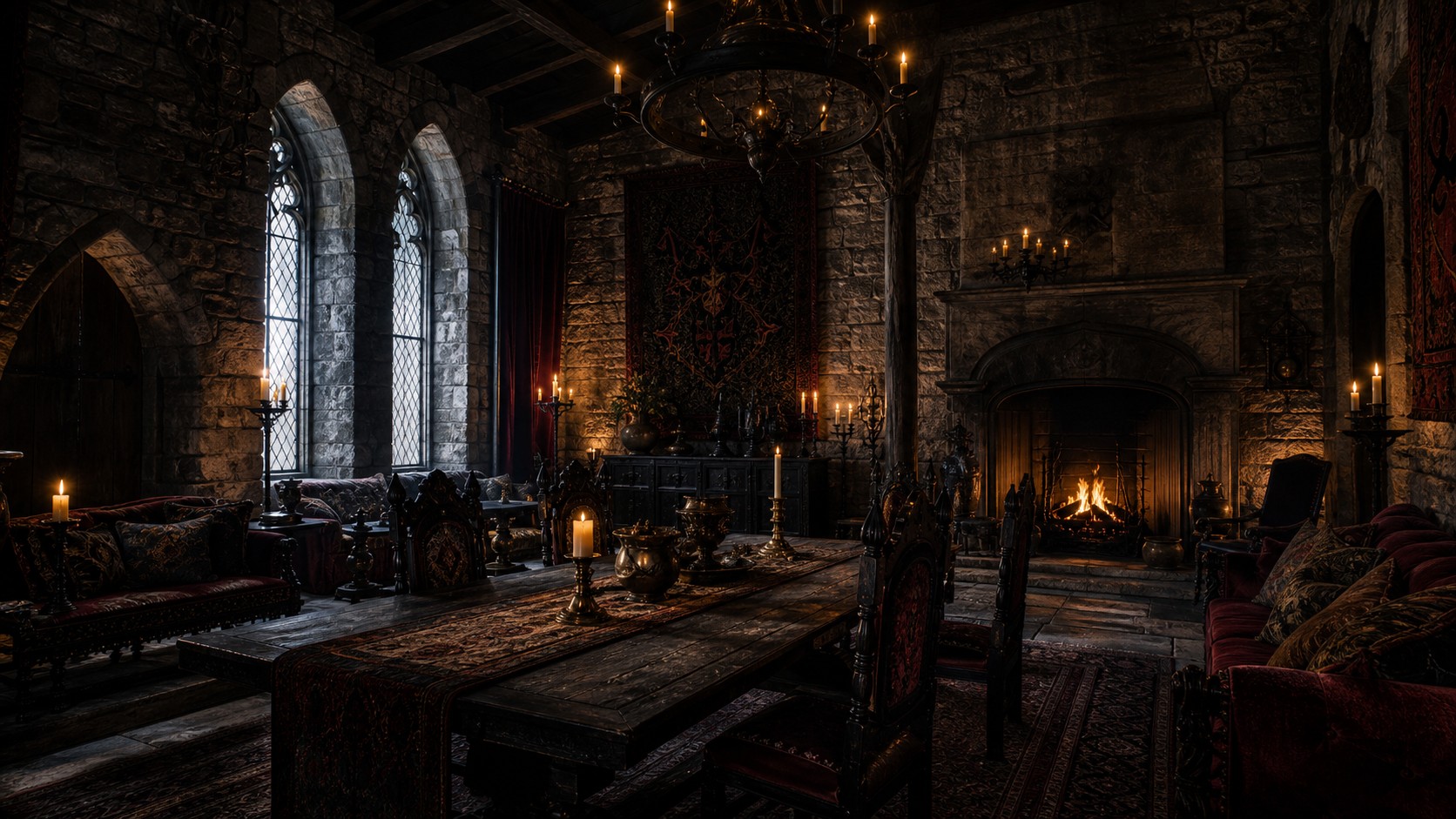
A dark medieval castle aesthetic should feel dramatic without turning into a room full of props. The mood comes from shadowed architecture, heavy materials, carved wood, blackened iron, velvet, wool, stone texture, deep color, and warm low lighting. The room should suggest age and mystery, but it still has to function as a place to read, sleep, eat, talk, and move comfortably. The strongest version feels built from atmosphere rather than decorated with obvious medieval references.
A: Yes. Dark plaster, slate tile, rough wood, iron, textiles, and lighting can create the mood.
A: No. Charcoal, black plum, moss, oxblood, umber, and dark oak often feel richer.
A: Use warm lamps, lighter linen or parchment notes, and enough texture to catch light.
A: Use very few. A carved chest, lantern, old books, or tapestry is usually stronger than novelty pieces.
A: Warm sconces, shaded lamps, lantern-style fixtures, and dimmers create the right atmosphere.
A: Yes. Use curtains, rugs, lamps, mirrors, removable texture, and freestanding furniture.
A: Use one strong textile or rug pattern, then keep most surrounding surfaces quieter.
A: Start with the focal wall, rug, lighting, or one substantial wood piece.
A: Keep silhouettes cleaner and let old-world materials carry the drama.
A: Cheap faux finishes, bright overhead light, cluttered props, and shiny plastic accessories.
Build the Mood Around One Heavy Feature
A dark castle-inspired room needs a sense of weight. That weight can come from a stone fireplace, dark plaster wall, slate floor, arched mirror, carved cabinet, timber beam, or tall bookcase. The feature should feel older and more permanent than the smaller objects around it. Without that anchor, the room can become a collection of dark accessories instead of a complete atmosphere.
Choose the feature based on the room’s natural focal point. A bedroom may use a dark headboard wall or heavy curtains. A living room may use the fireplace, bookcase, or central table. A dining room may rely on a trestle table, chandelier, or stone-look wall. Let one feature carry the drama, then keep the supporting pieces more restrained.
Use Darkness With Dimension
Dark color is essential to the aesthetic, but flat black everywhere rarely creates the richest effect. Charcoal, black plum, oxblood, deep moss, umber, dark oak, tarnished gold, and parchment tones can make the room feel layered. These colors respond beautifully to warm lamps and candle-style lighting. They also give the room more depth than a single dark paint color.
The deepest colors should appear in materials with texture. Velvet, wool, aged leather, dark wood, plaster, and stone all make color feel dimensional. A flat black wall and glossy black furniture may look severe, while charcoal plaster with a velvet chair and warm brass lamp feels atmospheric. The room should look different as the light changes.
Choose Stone and Plaster Carefully
Stone texture is a natural fit for this style, but it needs to be believable. Real stone, slate, limewash, mineral paint, matte tile, dark plaster, and rough concrete can all work. Fake stone panels with repeating patterns can weaken the entire room. If the budget or rental rules limit permanent finishes, use smaller stone gestures such as a hearth, tray, lamp base, tabletop, or sculptural object.
Placement matters. Stone belongs around fireplaces, floors, niches, bathrooms, entries, or architectural features. A random accent wall can work, but only if it relates to furniture and lighting. Side lighting is especially useful because it brings out rough texture and makes the wall feel deeper.
Let Iron Look Structural
Blackened iron and dark metal should appear where they seem to hold, frame, hang, or protect something. Sconces, chandeliers, curtain rods, mirror frames, bed frames, table bases, fire tools, and hardware all make sense. The metal should feel useful, not sprinkled around as decoration.
Aged finishes are important. Oil-rubbed bronze, blackened steel, dull iron, and antique brass usually fit better than glossy black or shiny chrome. When metal looks too new, it can break the illusion of age. Use enough iron to create structure, then soften it with fabric and wood.
Bring in Carved Wood and Old Books
Wood gives the dark castle aesthetic warmth and history. A carved chest, dark oak table, walnut cabinet, canopy bed, framed mirror, or heavy shelf can make the room feel more grounded. The wood should show grain, depth, or carving, but it does not need to be overly ornate. One substantial piece is often enough.
Books are especially useful because they bring age without looking like novelty decor. Old hardcovers, leather bindings, dark shelves, and reading lamps can turn a corner into a castle-like library moment. Avoid overfilling every shelf. Empty space and shadow help the objects feel collected rather than staged.
Use Textiles to Add Comfort
Without textiles, a dark medieval room can feel cold. Velvet, wool, linen, tapestry-style weaves, leather, and heavy cotton bring softness, sound control, and comfort. A wool rug can warm a stone or wood floor. Velvet curtains can make windows feel more sheltered. Linen bedding can keep a dark bedroom breathable.
Pattern should be used with care. One tapestry-style textile, patterned rug, or embroidered pillow can support the mood. Too many medieval patterns can make the room feel busy or theatrical. The goal is richness, not costume. Let texture do much of the work.
Plan Candle-Style Lighting for Real Use
Lighting is what turns dark materials into atmosphere. Warm sconces, shaded lamps, lantern forms, chandeliers, picture lights, and dimmers can create the feeling of candlelight while still making the room practical. Real candles can be beautiful, but they should be used safely and never be the only light source.
Layer light at different heights. A chandelier can give overhead glow, sconces can graze walls, table lamps can support reading, and small accent lights can reveal shelves or niches. Avoid bright cool overhead light, which can flatten the entire mood. The room should feel shadowed, not unusable.
Create a Library or Study Mood
A dark medieval castle aesthetic works especially well in rooms meant for reading, writing, music, or quiet conversation. A study corner with books, a dark desk, a shaded lamp, and a wool rug can carry the entire mood without needing many decorative objects. This approach makes the style feel intellectual and atmospheric rather than merely dramatic.
Even a living room can borrow from a library. Add deeper shelves, a reading chair, a side table, and warm light near the books. Keep the arrangement useful. If the books are unreachable or the chair has no lamp, the moment looks staged. When the corner works, it gives the whole room a stronger sense of purpose.
Control Shine and Modern Contrast
Shine should be limited in a dark castle room. Glossy paint, polished chrome, bright plastic, and reflective black furniture tend to feel too modern for the atmosphere. Matte, aged, brushed, and softened finishes are easier to blend with stone, iron, wood, and velvet. A small glint of brass or glass can be beautiful, but it should feel like candlelight rather than sparkle.
Modern contrast can still help the room. A clean sofa, simple bed, or plain table may keep the space from feeling too heavy. The trick is choosing modern pieces with quiet shapes and serious materials. Let them support the room’s comfort while the older-feeling textures carry the mood.
Bring the Mood Into Bedrooms
Bedrooms are a natural place for a dark medieval castle aesthetic because shadow, fabric, and enclosure already belong there. A dark headboard wall, blackened metal bed, linen sheets, wool blanket, heavy curtains, and warm bedside lamps can make the room feel dramatic without sacrificing rest. The bed should feel sheltered, not staged.
Avoid making the bedroom too hard. Stone texture, iron, and dark wood need soft bedding and a rug nearby. If the room feels cold in the morning, add lighter linen, warmer bulbs, or a softer curtain. The best dark bedroom feels protective and calm as well as dramatic.
Make Dining Rooms Feel Like Great Halls
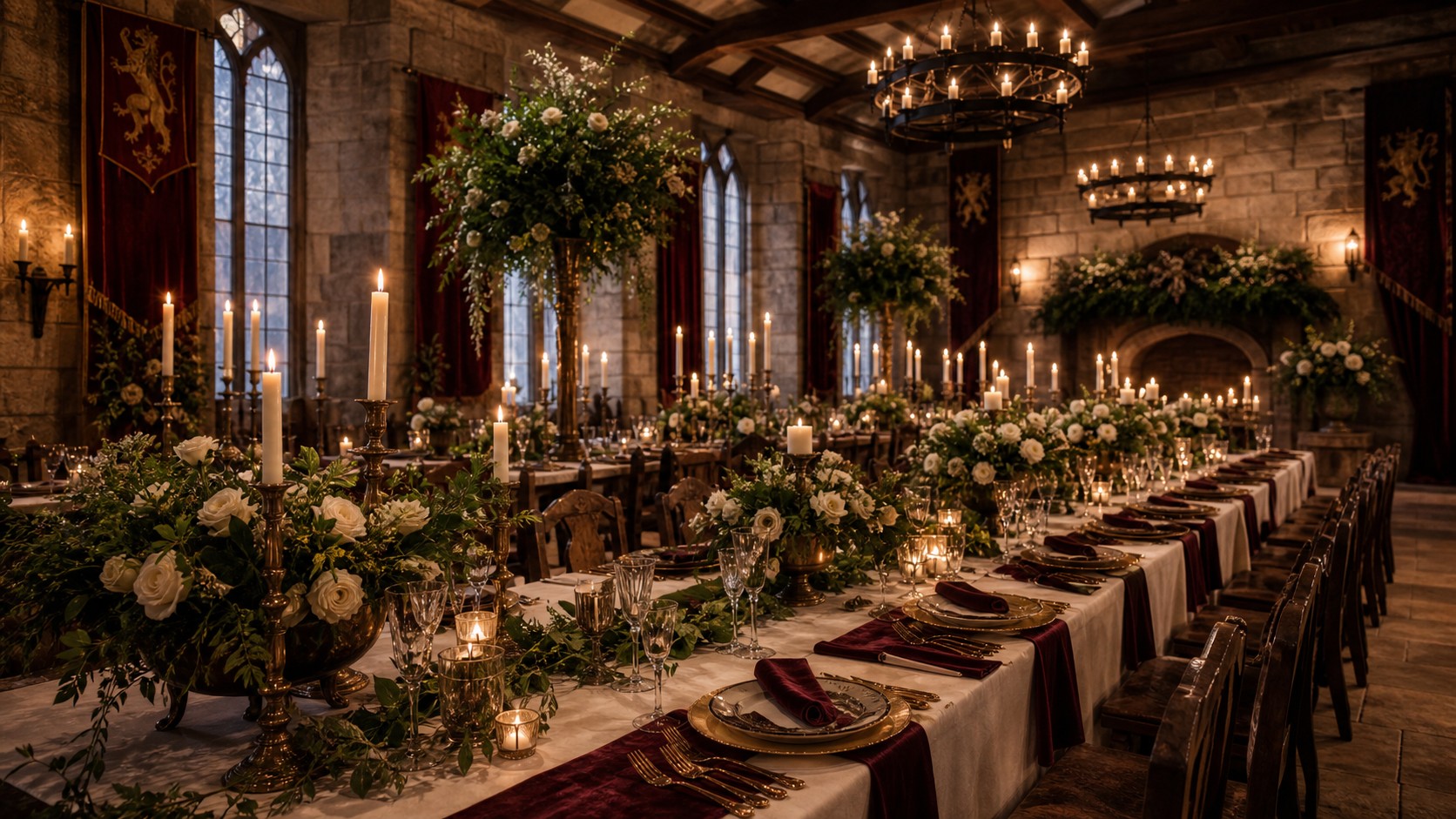
A dining room can carry more medieval drama than a casual living room. A long table, heavy chairs, iron chandelier, candles, dark runner, pottery, and carved wood can suggest a great hall without needing theatrical props. Keep the table settings useful and tactile rather than decorative for their own sake.
Lighting is especially important here. Guests need to see food and faces while still feeling the glow of the room. Use a central fixture, sideboard lamps, wall sconces, or protected candles to create layers. A dramatic dining room works when people want to linger there after the meal.
Keep the table partly clear between meals so the room does not feel permanently staged. A tray, bowl, branch arrangement, or pair of candleholders can be enough for everyday atmosphere. The dining room should feel ready for a gathering without looking like a set piece that cannot be touched.
Edit Medieval Symbols Hard
Medieval symbols are easy to overuse. Shields, swords, crests, goblets, crowns, and faux artifacts can quickly make the space feel like a themed room. Use symbolic objects only when they have quality and restraint. A carved chest, iron lantern, old book, tapestry, or crest-like detail can be enough.
Ask whether each object would still look good if the theme were never mentioned. If the answer is no, remove it. The dark castle mood should be felt through material, light, color, and scale. It does not need every object to announce the period.
Keep the Room Comfortable
Dramatic interiors still need comfort. Chairs should be comfortable, pathways should stay clear, lamps should support reading, and bedding should feel good against the skin. Dark rooms make clutter more noticeable because objects disappear into shadow. Storage and circulation are part of the design.
Pay attention to how the room feels at different times of day. In daylight, the colors should still have depth. At night, there should be enough light for real activities. If the room only works in a photograph, it is not finished. The best dark castle rooms invite people to stay.
Use Modern Pieces Quietly
A dark medieval castle aesthetic can include modern pieces if they do not interrupt the mood. Clean sofas, simple beds, plain curtains, and modern lamps can work when their materials and colors fit the room. In many homes, a cleaner silhouette keeps the style from becoming too heavy.
Hide or soften modern intrusions when possible. Cords, bright plastics, shiny hardware, and visible electronics can pull attention away from the atmosphere. Use cabinets, trays, dark frames, and careful placement to keep daily technology from dominating the room.
Finish With Restraint and Shadow
The final layer should be quiet. A bowl, candleholder, book stack, branch arrangement, iron tray, or framed artwork can complete the room without crowding it. Leave dark corners and empty surfaces where they make the atmosphere stronger. Shadow is part of the design.
This is also where scent, sound, and texture can help quietly. A wood fire, beeswax candle, wool underfoot, or low music can make the room feel more immersive without adding visible clutter. Those sensory details are subtle, but they often make the aesthetic feel less like a look and more like an experience.
Look at the room from the doorway before adding anything else. If the first impression already feels weighty, quiet, and warm, the design may need less than expected. Dark rooms are easily weakened by too many finishing objects, so restraint should remain part of the atmosphere until the end.
A successful dark medieval castle aesthetic feels mysterious, warm, and usable. It uses weight, texture, aged materials, and low light to create drama. When the room avoids cheap props and gives comfort, circulation, storage, and daily function as much attention as mood, the result feels dramatic in a way that can last. The room should invite people in, not merely impress them from the doorway.