How to Design a Futuristic World That Feels Believable
Designing a futuristic world is an exercise in imagination, but making that world feel believable is a discipline rooted in logic, consistency, and human understanding. The most compelling futuristic settings are not defined by how advanced they appear, but by how convincingly they function. Whether you are building a setting for a novel, film, game, or immersive experience, the goal is not simply to predict the future, but to construct a world that feels like a natural evolution of the present. A believable future is one that audiences can intuitively understand, emotionally connect with, and intellectually accept.
A: Plausibility matters more than accuracy—stay consistent with your rules.
A: No—leave gaps to create intrigue and depth.
A: Subvert expectations or combine familiar ideas in new ways.
A: Build beyond what’s shown—depth creates authenticity.
A: Internal consistency and logical consequences.
A: No—limitations create conflict and realism.
A: Critical—technology shapes people, but people shape meaning.
A: Yes—hybrid worlds often feel more original.
A: Begin with one strong idea and expand logically.
A: Prioritizing visuals over function and logic.
Start With the Present, Not the Future
A common mistake in futuristic worldbuilding is starting too far ahead. While it may be tempting to imagine a world filled with interstellar travel, artificial intelligence, and hyper-advanced societies, the most grounded futures are those that evolve logically from current realities. Begin by analyzing the present day. Look at existing technologies, cultural shifts, economic pressures, and environmental conditions. These elements form the foundation upon which your future world should be built.
For example, advancements in artificial intelligence today suggest a future where automation reshapes labor markets. Climate change points toward altered landscapes and resource scarcity. Social media hints at deeper integration between humans and digital identity. By extrapolating these trajectories, your futuristic world becomes less of a fantasy and more of a projection. This approach creates continuity, which is essential for believability.
Build Technology With Constraints
Technology is often the centerpiece of futuristic worlds, but without limitations, it quickly becomes unconvincing. Every piece of technology in your world should have clear rules, costs, and consequences. These constraints make the technology feel grounded and prevent it from solving every problem too easily.
Consider energy sources, maintenance requirements, accessibility, and failure points. If a society relies heavily on advanced robotics, what happens when systems fail? If teleportation exists, what are its risks or limitations? By introducing friction, you create tension and realism. Technology should not just exist as a spectacle; it should influence how people live, work, and interact.
Another important aspect is technological inequality. Not everyone in your world should have equal access to advanced tools. Economic disparity, political control, or geographic limitations can create uneven distribution. This imbalance adds depth and reflects real-world patterns, making your world feel more authentic.
Design Societies That Adapt, Not Just Advance
A believable futuristic world is not defined solely by its technology, but by how society adapts to that technology. Cultural norms, social structures, and human behavior evolve in response to new tools and environments. This evolution should feel organic rather than arbitrary.
Think about how daily life changes. How do people communicate, form relationships, or define identity in your world? If humans augment themselves with technology, how does that affect concepts of self and humanity? If life expectancy increases dramatically, how does that reshape family structures, careers, and governance?
Societal adaptation also includes resistance. Not everyone embraces change at the same pace. Some groups may reject new technologies or cling to traditional ways of life. This tension between progress and preservation creates dynamic storytelling opportunities and reinforces realism.
Create Economies That Make Sense
Economics is often overlooked in worldbuilding, but it is one of the strongest pillars of believability. A futuristic world must have systems of production, distribution, and value that align with its technological and societal context. Without a functioning economy, the world risks feeling hollow.
Ask practical questions. What resources are scarce? What industries dominate? How do people earn a living? If automation replaces most jobs, what replaces income as a means of survival? Concepts like universal basic income, digital currencies, or resource-based economies can shape your world in meaningful ways.
Trade and conflict often emerge from economic pressures. Control over rare materials, access to energy, or ownership of data can drive political tension. By grounding your world in economic logic, you create a framework that supports both realism and narrative complexity.
Develop Political Systems With Internal Logic
Politics in a futuristic world should reflect the challenges and opportunities created by technological and societal change. Governance is not static; it evolves alongside the conditions it must manage. A believable political system is one that responds to the realities of your world.
Consider who holds power and why. Is authority centralized in a global government, or fragmented among competing factions? Do corporations wield more influence than traditional states? How is law enforced in a world where digital and physical spaces overlap?
Political systems should also have flaws. Corruption, inefficiency, and conflict are inherent in any form of governance. These imperfections make the system feel real and provide opportunities for tension and storytelling. A perfect system is rarely believable.
Shape Environments That Reflect the Future
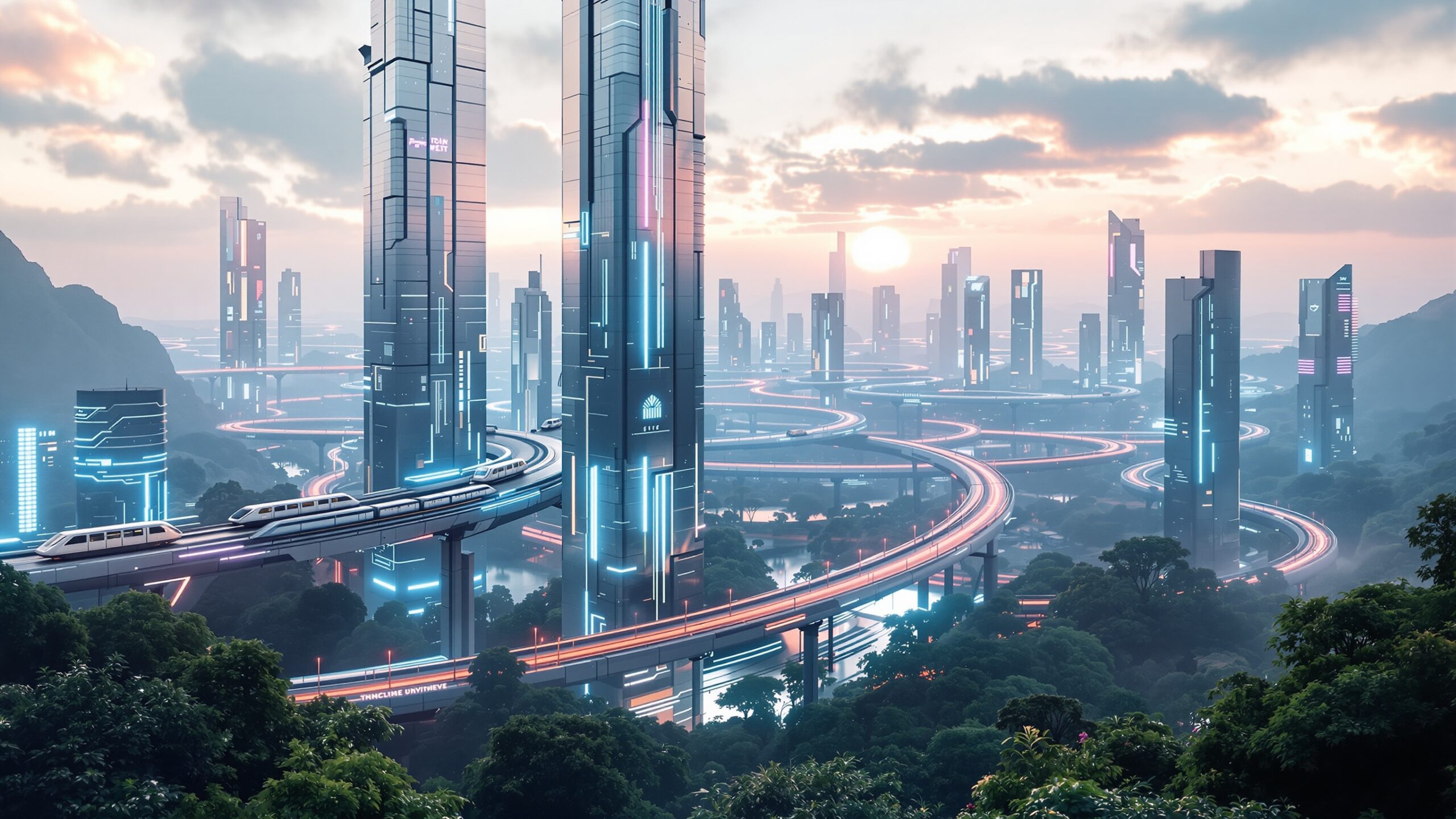
The physical environment of your world is a visual and thematic expression of its underlying systems. Cities, landscapes, and ecosystems should reflect the technological and societal changes you have established. A futuristic environment is not just about sleek architecture or neon lights; it is about how space is used and experienced.
Urban design, for example, might prioritize vertical living, autonomous transportation, and integrated green spaces. Rural areas might be transformed by advanced agriculture or abandoned due to urban migration. Environmental changes, whether caused by climate shifts or technological intervention, should be visible and impactful.
Attention to detail is critical. Small elements, such as signage, infrastructure, and everyday objects, contribute to the sense of immersion. When every aspect of the environment aligns with the logic of your world, it becomes more convincing.
Humanize the Future
No matter how advanced your world becomes, it must remain anchored in human experience. Believability comes from emotional resonance. Audiences need to see themselves in the characters and situations you create. This means focusing on universal themes such as ambition, fear, love, and conflict.
Technology may change how people live, but it does not eliminate human nature. People will still struggle with identity, relationships, and purpose. By emphasizing these elements, you ensure that your futuristic world feels relatable rather than alien.
Characters are the bridge between the audience and the world. Through their perspectives, readers or viewers understand how the world functions. Their experiences should reflect the opportunities and challenges of the setting, providing insight into its complexities.
Maintain Internal Consistency
Consistency is one of the most critical factors in creating a believable world. Once you establish rules, whether related to technology, society, or physics, they must be followed. Inconsistencies break immersion and undermine credibility.
This does not mean your world cannot evolve or reveal new information. However, changes should be justified within the established framework. If a new technology is introduced, it should align with existing principles or expand them logically. Consistency creates trust between the creator and the audience.
Documentation can be a valuable tool in maintaining consistency. Keeping detailed notes on systems, rules, and timelines helps ensure that all elements of your world remain aligned.
Balance Innovation With Familiarity
A futuristic world should feel new and exciting, but not so unfamiliar that it becomes difficult to understand. Striking the right balance between innovation and familiarity is essential. Audiences need reference points to orient themselves within the world.
Familiar elements can include recognizable social structures, cultural practices, or physical environments. These anchors make the world accessible, while innovative aspects provide intrigue and novelty. The interplay between the two creates a sense of plausibility.
For example, a futuristic city might feature advanced transportation systems, but still have neighborhoods, markets, and public spaces that resemble those of today. This blend of old and new reinforces the idea that the future is an extension of the present.
Incorporate Ethical and Philosophical Questions
A believable futuristic world does more than present advanced technology; it explores the implications of that technology. Ethical and philosophical questions add depth and realism, prompting audiences to consider the consequences of progress.
Issues such as privacy, autonomy, and the definition of humanity become increasingly relevant in advanced societies. If artificial intelligence achieves consciousness, what rights does it have? If humans can modify their bodies or minds, what defines identity? These questions do not need definitive answers, but they should be embedded in the fabric of your world.
By addressing these themes, your world becomes more than a setting; it becomes a space for exploration and reflection. This intellectual engagement enhances believability and impact.
Use Language and Culture to Reinforce Realism
Language and culture are often overlooked, yet they play a significant role in making a world feel lived-in. Over time, language evolves, influenced by technology, globalization, and social change. Incorporating subtle shifts in terminology, slang, or communication styles can add authenticity.
Cultural practices, traditions, and art forms should also reflect the world’s evolution. New technologies might inspire new forms of expression, while historical influences persist in unexpected ways. This layering of old and new creates a rich cultural landscape.
Avoid overcomplicating these elements. Small, consistent details are more effective than extensive, unexplained systems. The goal is to suggest depth without overwhelming the audience.
Introduce Conflict as a Natural Outcome
Conflict is essential for storytelling, but in a believable futuristic world, it should arise naturally from the systems you have created. Technological advancement, economic disparity, and political tension all provide fertile ground for conflict.
For instance, competition over limited resources can lead to geopolitical struggles. Disagreements over the use of technology can create ideological divisions. Personal conflicts can emerge from the pressures of living in a rapidly changing world.
When conflict is rooted in the logic of the world, it feels inevitable rather than forced. This enhances both the narrative and the believability of the setting.
Test Your World With Real-World Logic
One of the most effective ways to ensure believability is to stress-test your world using real-world logic. Consider how systems interact and whether they hold up under scrutiny. Look for unintended consequences or contradictions.
For example, if your world features widespread automation, consider its impact on employment, education, and social structure. If energy is abundant, how does that affect industry and geopolitics? By asking these questions, you refine your world and uncover new layers of complexity.
Consulting real-world disciplines such as economics, sociology, and engineering can provide valuable insights. While your world does not need to be perfectly realistic, it should feel plausible within its own framework.
Evolve the World Over Time
A believable futuristic world is not static. It changes and evolves, shaped by events, decisions, and unforeseen developments. Incorporating a sense of history adds depth and realism. Even the future has a past.
Consider major events that have shaped your world. Technological breakthroughs, environmental crises, and political revolutions can all leave lasting impacts. These events influence current conditions and provide context for the present state of the world.
By showing how the world has changed over time, you create a sense of continuity and progression. This historical perspective reinforces the idea that your world is a living, dynamic system.
Crafting Futures That Feel Real
Designing a futuristic world that feels believable is a balance between imagination and discipline. It requires a deep understanding of how systems interact, how people adapt, and how change unfolds over time. By grounding your world in the realities of the present, introducing constraints, and maintaining internal consistency, you create a setting that resonates with authenticity. Ultimately, the most believable futures are those that feel inevitable. They are worlds that audiences can look at and think, this could happen. By combining creativity with logical rigor, you transform speculative ideas into immersive realities, crafting futures that are not only fascinating, but convincingly real.