Understanding Theme Architecture and Why It Matters
Theme architecture is the art and science of designing environments that tell stories, evoke emotions, and create unforgettable experiences. It is most often associated with theme parks, immersive attractions, museums, and entertainment venues, but the principles behind it extend far beyond those spaces. Theme architecture blends storytelling, spatial design, psychology, engineering, and visual artistry to create environments that feel alive. Unlike conventional architecture, which primarily focuses on functionality and aesthetics, theme architecture centers on experience. Every element of a themed environment—from pathways and lighting to textures and soundscapes—is intentionally crafted to guide visitors through a narrative. Guests are not simply entering a building or walking through a park; they are stepping into a world. This approach has transformed how people interact with physical spaces. A well-designed themed environment can transport visitors to ancient civilizations, futuristic cities, enchanted forests, or distant planets. These spaces engage the senses, ignite imagination, and create lasting emotional memories. The most successful themed environments feel effortless, even though they are the result of extraordinary planning and interdisciplinary collaboration. Designers, architects, storytellers, engineers, and artists work together to construct environments that blur the boundary between reality and fiction. Understanding the core principles behind theme architecture reveals how these immersive worlds come to life.
A: It is the design of buildings and spaces that support a cohesive story or immersive environment.
A: A narrative helps unify every visual element and enhances guest engagement.
A: A design trick that makes structures appear taller or farther away than they really are.
A: Utilities are concealed within themed facades, rockwork, or decorative structures.
A: Lighting establishes mood, directs attention, and reinforces story themes.
A: Sculpted foam, fiberglass, resin, and scenic paint techniques.
A: By controlling sightlines, sounds, textures, and architectural consistency.
A: Using surroundings to communicate a narrative without spoken explanation.
A: They help guide navigation and create memorable visual icons.
A: When architecture, storytelling, technology, and design details blend seamlessly.
Story as the Foundation of Design
At the heart of every themed environment lies a story. This narrative serves as the blueprint for every architectural decision. Without a compelling story, themed spaces risk becoming superficial collections of decorative elements rather than meaningful experiences.
The story determines the setting, tone, and purpose of a themed environment. It establishes the world guests are entering and defines the emotional journey they will experience. Whether the narrative is rooted in mythology, history, fantasy, or science fiction, it must be clear, consistent, and immersive.
Theme architects often refer to storytelling as the “spine” of a project. Just as a film relies on a script, themed environments rely on narrative frameworks that guide design choices. Architectural forms, textures, materials, lighting, and even scents contribute to reinforcing that story.
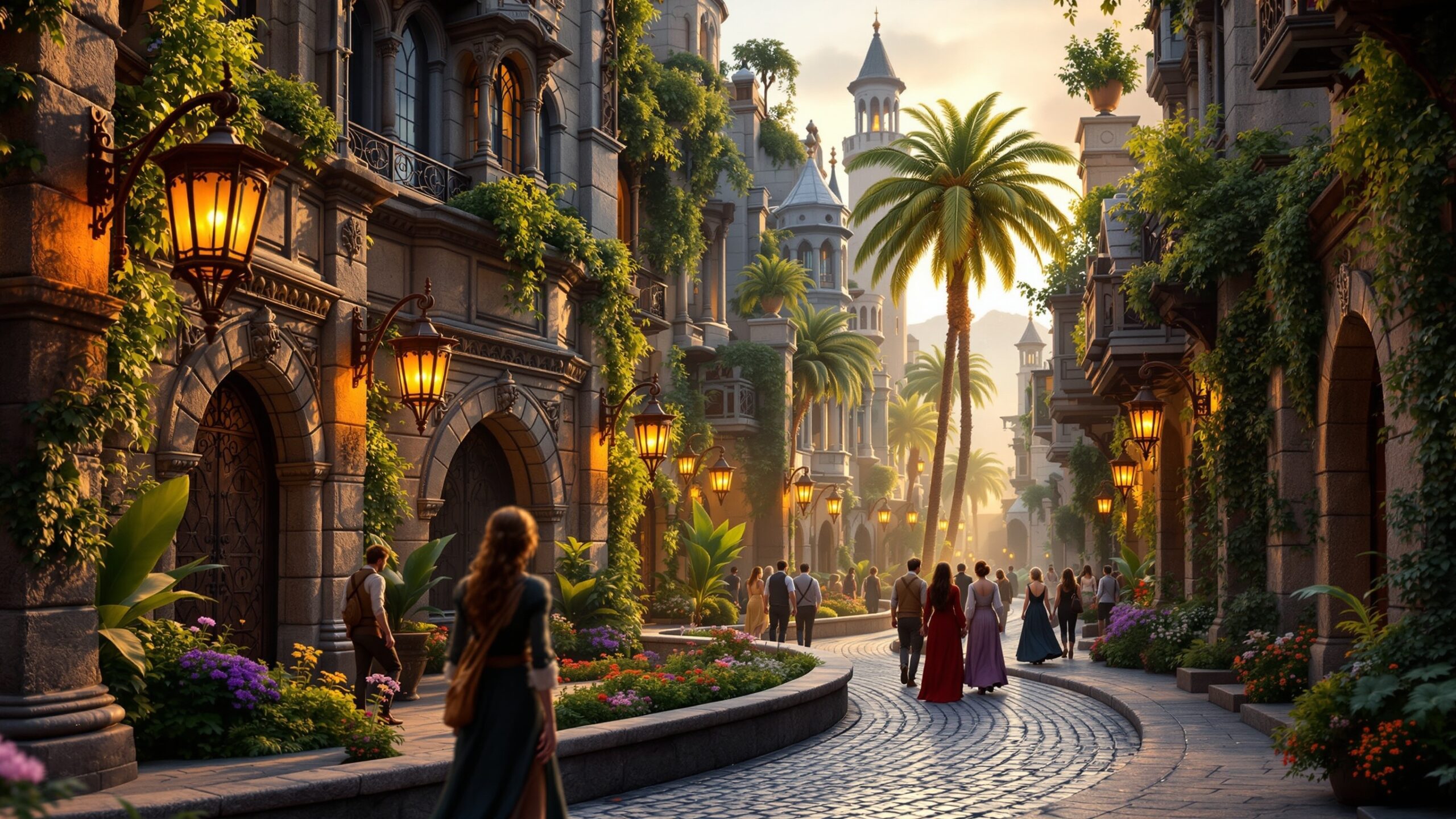
For example, a themed village inspired by medieval Europe would incorporate stone textures, timber framing, irregular street layouts, and warm lantern lighting to create authenticity. Every design choice must support the illusion that the space belongs to that time and place.
Story-driven design ensures that visitors do not simply observe an environment—they feel like participants within it.
Environmental Immersion and World-Building
One of the defining goals of theme architecture is immersion. Immersion occurs when visitors feel fully surrounded by an environment that convincingly represents another world. Achieving this level of believability requires attention to both large-scale planning and small details.
Immersive design begins with environmental continuity. Guests should not see elements that break the illusion of the themed world. This means carefully concealing modern infrastructure such as electrical systems, mechanical equipment, and safety components.
The physical layout of themed spaces also contributes to immersion. Designers often use curved pathways, landscape elements, and architectural transitions to block sightlines that might reveal areas outside the theme. This technique allows guests to gradually discover new environments without disrupting the narrative.
Textures and materials further strengthen immersion. Weathered wood, aged stone, rusted metal, and hand-painted signage create a sense of authenticity. Even artificial materials are carefully sculpted and painted to resemble real-world surfaces.
Sound design and ambient audio also play a significant role. Subtle environmental sounds—such as distant machinery, rustling leaves, or village chatter—reinforce the illusion of a living environment.
When all these elements work together, guests become emotionally and psychologically absorbed in the world around them.
The Role of Emotional Design
Theme architecture is deeply connected to human psychology. Designers carefully shape environments to evoke specific emotional responses.
Lighting is one of the most powerful emotional tools in architectural design. Warm lighting can create feelings of comfort and nostalgia, while cool lighting may evoke mystery or futuristic themes. Dramatic shadows and spotlighting can heighten suspense or guide attention toward key visual moments.
Scale and proportion also influence emotional perception. Grand entrances and towering structures create awe and anticipation, while smaller, intimate spaces encourage exploration and discovery.
Color palettes further shape emotional experiences. Vibrant colors may communicate excitement and energy, while muted tones may suggest history, realism, or tranquility.
Theme architects also design emotional pacing within spaces. Just as a story builds toward a climax, themed environments often guide guests through sequences of calm areas, high-energy moments, and dramatic reveals.
This intentional emotional choreography helps create memorable experiences that resonate long after visitors leave.
The Importance of Visual Hierarchy
Visual hierarchy is a critical principle in theme architecture because it helps guide the guest’s attention and movement through an environment. In immersive spaces, designers must carefully control what visitors notice first and where they naturally choose to walk.
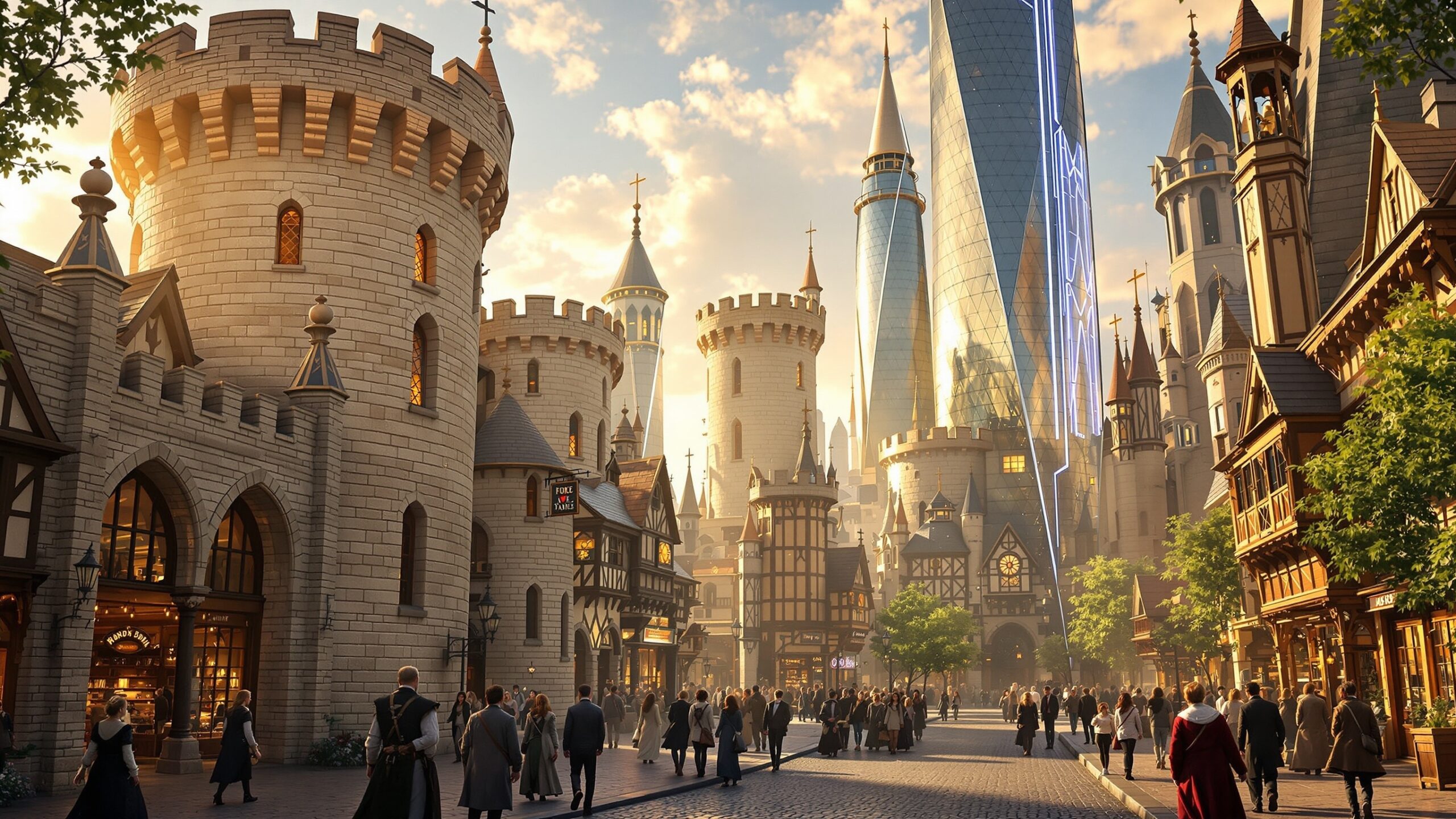
Landmark structures often serve as visual anchors within themed environments. Towers, castles, mountains, or monumental sculptures become focal points that orient guests within the space. These landmarks provide both aesthetic impact and practical wayfinding.
Architectural layering also contributes to visual hierarchy. Designers arrange buildings and environmental elements in foreground, midground, and background layers. This technique adds depth and realism to themed environments while reinforcing the illusion of a larger world beyond the visible space.
Color contrast, lighting highlights, and architectural framing further guide attention toward key attractions, entrances, and storytelling elements.
Through visual hierarchy, theme architecture subtly directs the flow of visitors without relying on obvious signage or instructions.
Forced Perspective and Spatial Illusion
One of the most fascinating techniques used in theme architecture is forced perspective. This design strategy manipulates scale and proportion to create illusions of greater size, distance, or height.
By gradually reducing the size of architectural elements as they rise upward or move farther away, designers can make structures appear taller than they truly are. This technique has been famously used in many iconic theme park landmarks.
For example, upper floors of a building may feature smaller windows, bricks, or decorative details than the lower floors. When viewed from a distance, the structure appears much taller because the eye interprets these elements as being farther away.
Forced perspective can also make streets appear longer or landscapes appear more expansive than their actual dimensions. Carefully arranged scenery, background paintings, and scaled-down architectural elements contribute to these illusions.
This principle allows theme architects to create grand, cinematic environments within limited physical space.
Seamless Integration of Technology
Modern themed environments rely heavily on technology, but one of the key principles of theme architecture is ensuring that technology remains invisible to guests.
Behind the scenes, sophisticated systems power lighting effects, audio environments, animatronics, projection mapping, and ride mechanics. However, these technologies must be carefully integrated into the architecture so they do not disrupt immersion.
Control systems often manage thousands of synchronized elements simultaneously. Lighting cues, soundtracks, special effects, and mechanical movements work together to create dynamic storytelling moments.
Projection mapping has become an especially powerful tool in recent years. Buildings can transform into animated storytelling surfaces, shifting appearances through light and motion while maintaining their architectural integrity.
When technology is seamlessly integrated, it enhances storytelling without drawing attention to itself.
Guest Flow and Spatial Navigation
Theme architecture must account for how people move through environments. Designing for guest flow involves understanding crowd behavior, spatial comfort, and accessibility.
Wide walkways and open plazas help distribute crowds efficiently, while narrower paths may encourage slower exploration. Designers often create multiple pathways and loops so guests can navigate environments without feeling trapped or overwhelmed.
Entry points and transitions between themed areas are particularly important. These thresholds signal a shift in narrative, often through changes in architecture, landscaping, or sound design.
Wayfinding in themed environments tends to be subtle. Rather than relying solely on signs, designers use architectural cues, visual landmarks, and intuitive pathways to guide visitors naturally.
Effective guest flow ensures that environments remain enjoyable even during high attendance periods.
Authenticity Through Detail
The difference between a convincing themed environment and a superficial one often lies in the details. Theme architecture relies on an extraordinary level of craftsmanship and visual storytelling.
Surface textures, props, signage, and decorative elements all contribute to the illusion of authenticity. Designers often include environmental storytelling details—such as worn pathways, aged materials, or subtle references to fictional events.
These details suggest that the environment has a history beyond the moment guests arrive. A themed shop may display tools used by fictional characters, while a weathered wall may hint at past adventures or conflicts within the story world.
This layered storytelling encourages guests to explore and discover new elements each time they visit.
Collaboration Across Disciplines
Theme architecture is rarely the work of a single architect or designer. It is the result of collaboration between many disciplines.
Architects design the structural framework and spatial layout of environments. Concept artists and illustrators develop visual styles and storytelling themes. Engineers design ride systems, mechanical components, and safety infrastructure.
Set designers and fabricators create scenic elements that mimic natural materials or historical architecture. Lighting designers shape the mood and atmosphere of environments, while sound designers craft immersive audio landscapes.
This multidisciplinary collaboration ensures that every element of the environment works together cohesively.
Sustainability and the Future of Theme Architecture
As environmental awareness grows, sustainability has become an increasingly important consideration in themed design.
Modern projects often incorporate energy-efficient lighting systems, renewable energy sources, and environmentally responsible materials. Water conservation, green landscaping, and sustainable construction methods are also becoming standard practices.
Designers are also exploring adaptive environments that can evolve over time. Modular scenic elements and flexible storytelling spaces allow attractions to be updated without major structural changes.
Advances in digital technology, virtual reality, and interactive systems are further expanding the possibilities of themed environments.
The future of theme architecture will likely blend physical and digital storytelling in new ways, creating experiences that are even more immersive and personalized.
Why Theme Architecture Leaves Lasting Impressions
The power of theme architecture lies in its ability to create emotional connections. Visitors may forget specific details of a ride or attraction, but they rarely forget how a place made them feel.
The combination of storytelling, immersive design, emotional pacing, and artistic craftsmanship creates experiences that resonate deeply with guests. These environments allow people to escape everyday reality and step into imaginative worlds where anything feels possible.
Theme architecture also taps into a fundamental human desire for storytelling and exploration. By carefully orchestrating physical space, designers create environments that invite curiosity, wonder, and discovery.
When done well, themed environments become more than attractions. They become living stories that visitors remember for years.
The Enduring Magic of Immersive Design
Theme architecture represents one of the most powerful intersections of design, storytelling, and human experience. It transforms ordinary spaces into extraordinary worlds that inspire imagination and create lasting memories.
Through principles such as narrative-driven design, environmental immersion, emotional architecture, and technological integration, themed environments achieve a level of engagement rarely found in traditional architecture.
As technology continues to evolve and designers push the boundaries of immersive storytelling, theme architecture will continue to shape how people experience entertainment, culture, and shared spaces.
Ultimately, the true magic of theme architecture lies not just in what people see, but in what they feel. When every detail works together to tell a story, visitors do not simply walk through an environment—they become part of it.